

Here’s the uncomfortable truth: Your medical website could have the cure for cancer, but if Google doesn’t trust you, nobody’s reading it.
Welcome to the high-stakes world of medical E-A-T SEO – where ranking isn’t just about keywords anymore. It’s about proving you’re not some keyboard warrior in pajamas dispensing health advice between TikTok scrolls.
Google’s got trust issues with medical content (and honestly, can you blame them?). One sketchy “miracle cure” article, and suddenly someone’s drinking bleach for wellness. That’s why understanding healthcare expertise signals and mastering E-A-T (Expertise, Authoritativeness, and Trust) isn’t optional – it’s the difference between page one and page oblivion.
In this guide, I’ll show you exactly how to optimize your medical website for E-A-T guidelines without needing a PhD in algorithm-speak. Whether you’re a solo practitioner building credibility or a healthcare organization scaling trust signals, this is your playbook.
Let’s dive in.
Table of Contents
ToggleWhat Exactly Is Medical E-A-T SEO (And Why Should You Care)?
Medical E-A-T SEO is Google’s quality framework for evaluating healthcare content. E-A-T stands for Expertise, Authoritativeness, and Trust – and it’s now technically E-E-A-T (adding “Experience” to the mix).
Think of it as Google’s BS detector on steroids.
For medical websites, these signals tell search engines: “Hey, this isn’t Dr. TikTok’s conspiracy corner. This is legit healthcare information that won’t accidentally kill someone.”
Pro Tip: Google updated their Search Quality Rater Guidelines in December 2022, adding “Experience” as the first E. For medical content, this means patient experiences, clinical practice, and real-world healthcare delivery now matter even more than theoretical knowledge.
The stakes? Your Medical Life, Your Money (YMYL) content gets scrutinized harder than a suspicious mole at a dermatology convention. One weak trust signal, and your rankings tank faster than a hypochondriac’s WebMD spiral.
Why Do Medical Websites Need E-A-T Optimization More Than Other Industries?
Simple answer: People could literally die from bad medical advice.
Google learned this the hard way during what SEO nerds call the “Medic Update” of August 2018. Thousands of health websites got wiped out overnight. The common thread? Weak healthcare expertise signals and questionable authorship.
Here’s what makes medical E-A-T different:
The consequence scale is brutal. Bad tech advice means someone buys the wrong laptop. Bad medical advice means someone stops taking life-saving medication because they read “natural alternatives” on your blog.
Regulatory scrutiny is intense. Healthcare content intersects with FDA guidelines, medical board standards, and legal liability. Google’s algorithms reflect this reality by demanding higher proof of credibility.
User vulnerability is maximum. People searching health topics are often scared, desperate, or confused. They’re looking for answers that could impact their quality of life or literal survival.
According to a 2023 Pew Research study, 77% of health-seekers start with search engines. That’s a massive responsibility that Google doesn’t take lightly – and neither should you.
For more on navigating these challenges, check out this comprehensive healthcare SEO guide for YMYL compliance.
How Has E-A-T Evolved Into E-E-A-T for Medical Content?
December 2022 changed the game when Google added that extra “E” for Experience.
Here’s the breakdown of E-E-A-T medical websites standards:
Experience: The “Have You Actually Done This?” Factor
This is about first-hand involvement. A surgeon writing about a procedure they’ve performed 500 times? That’s experience. A content mill writer who Googled “knee replacement recovery”? Not so much.
Examples of experience signals:
- Patient testimonials with real outcomes
- Case studies from clinical practice
- Photos from actual procedures (with consent, obviously)
- Before/after documentation
Expertise: The Credentials That Matter
This hasn’t changed much – it’s still about formal qualifications. Medical author credentials like MD, DO, RN, PharmD still carry weight. But now Google’s smarter about sniffing out credential stuffing.
Authoritativeness: Your Reputation in the Healthcare Space
Are other reputable medical sources citing you? Speaking at conferences? Getting mentioned in medical journals? Authority isn’t self-proclaimed – it’s earned through recognition from peers and institutions.
Trust: The Foundation of Everything
This is the “would you trust this site with your health?” test. It includes technical trust (HTTPS, privacy policies) and content trust (accurate, current, reviewed information).
Expert Opinion: Dr. Marie Haynes, SEO consultant specializing in Google algorithms, notes: “For medical sites, trust signals like clear author credentials, editorial review processes, and fact-checking procedures have become non-negotiable since the E-E-A-T update.
What Are the Core E-A-T Signals Google Evaluates for Healthcare Websites?
Let’s get tactical. Here are the trust signals healthcare websites must nail:
Author Credentials and Bylines
Every piece of medical content needs a named author with verifiable credentials. No more “Admin” or “Editorial Team” bylines.
What Google wants to see:
- Full name, not just initials
- Relevant medical credentials (MD, RN, licensed nutritionist)
- Brief author bio with specialization
- Link to detailed author profile page
Physician Profiles Optimization
Your doctor bio pages aren’t just staff directories – they’re E-A-T goldmines. Physician profiles optimization should include:
| Element | Why It Matters | Example |
|---|---|---|
| Board certifications | Proves formal qualification | “Board-certified in Internal Medicine, ABIM” |
| Medical school & training | Educational credibility | “Johns Hopkins School of Medicine, 2010” |
| Years of practice | Experience signal | “15+ years treating cardiovascular disease” |
| Professional memberships | Peer recognition | “Fellow, American College of Cardiology” |
| Publications/research | Thought leadership | “Published in JAMA, New England Journal of Medicine” |
| Hospital affiliations | Institutional trust | “Staff physician, Mayo Clinic” |
Editorial Review Process
Google’s raters look for evidence that medical content isn’t published willy-nilly. Show your work:
- Medical review boards
- Fact-checking protocols
- Update schedules for content
- Clear differentiation between promotional and educational content
References and Citations
Every medical claim needs backup. Link to:
- Peer-reviewed journal articles (PubMed is your friend)
- Government health agencies (CDC, NIH, WHO)
- Medical organizations (American Heart Association, etc.)
- Original research studies, not just news articles about studies
Real-world example: Cleveland Clinic excels at this. Check any of their health library articles – they cite sources inline and provide a full reference list at the bottom. This builds building trust and authority for healthcare websites SEO systematically.
How Do You Build Expertise Signals on a Medical Website?
Expertise isn’t about claiming you’re an expert – it’s about proving it. Here’s how to optimize medical website for E-A-T guidelines from the expertise angle:
Showcase Real Medical Professionals
Stop hiding your staff. Feature them prominently:
Homepage doctor profiles: Don’t bury your physicians three clicks deep. Front and center, folks.
Dedicated “Meet the Team” page: Individual profile pages for each medical professional with photos, credentials, specialties, and personal touches (hobbies, why they chose medicine, etc.).
Author boxes on every article: At minimum, include a small author bio box with credentials and a link to their full profile.
Demonstrate Clinical Experience
Case studies (anonymized): “How We Helped a Patient with Complex Diabetes Management” shows real-world problem-solving.
Treatment outcome data: “Our cardiology department has performed 2,000+ successful catheterization procedures with a 98% success rate.”
Years in practice: Simple but effective. “Dr. Smith has treated over 10,000 patients in her 20-year career” is a powerful trust builder.
Publish Original Research or Insights
You don’t need to cure cancer to show thought leadership:
- Blog posts analyzing new studies in your specialty
- Original patient surveys or data from your practice
- Whitepapers on treatment approaches
- Commentary on healthcare policy changes
Pro Tip: If your physicians speak at medical conferences, publish those presentations (with slides) on your website. Conference speaking is a strong authority signal Google recognizes.
For comprehensive strategies on building healthcare content authority, explore this YMYL-compliant healthcare SEO approach.
What Makes a Medical Author Profile E-A-T Compliant?
Let’s build the perfect medical author credentials profile that makes Google’s algorithm purr:
Required Elements
- Full legal name: No nicknames or pen names for medical content
- Primary medical credential: MD, DO, RN, PharmD, etc. (must be verifiable)
- Medical specialty: “Board-certified dermatologist” not just “doctor”
- Medical license number: (Optional but powerful for state-specific practices)
- Education background: Medical school, residency, fellowships
- Current position/affiliation: Where they practice now
- Professional photo: Headshots build connection and authenticity
Enhanced Elements That Boost Authority
- Publications list with links to PubMed or journals
- Speaking engagements at medical conferences
- Media appearances as expert sources
- Awards or recognitions
- Professional organization memberships
- Research focus areas
- Patient reviews or testimonials
The Profile Structure That Works
Dr. Jennifer Martinez, MD, FAAD
Board-Certified Dermatologist

[Professional headshot]

Dr. Martinez is a board-certified dermatologist specializing in medical and cosmetic dermatology with 12 years of clinical experience treating over 8,000 patients.

Education & Training:
- MD, Harvard Medical School (2008)
- Dermatology Residency, Massachusetts General Hospital (2012)
- Fellowship in Mohs Surgery, University of California San Francisco (2013)

Certifications & Memberships:
- Board Certified by the American Board of Dermatology
- Fellow, American Academy of Dermatology (FAAD)
- Member, American Society for Dermatologic Surgery

Publications & Research:
[Links to 5 most recent publications]

Dr. Martinez currently practices at [Hospital/Clinic Name] in [City, State] and serves as Assistant Clinical Professor of Dermatology at [University].

Contact: [Email] | [Phone] | [Scheduling Link]
Real-world winner: Mayo Clinic’s physician directory is the gold standard. Each doctor has a comprehensive profile with all credentials, publications, and even patient ratings – all structured data optimized.
How Do You Optimize Healthcare Content for Authoritativeness?
Authoritativeness is earned, not claimed. Here’s how to optimize medical website for E-A-T guidelines by building genuine authority:
Get Cited by Other Reputable Sources
This is the healthcare version of getting backlinks, but way more sophisticated:
Medical news outlets: Get quoted in WebMD, Healthline, Medscape Local media: Become the go-to expert for health stories in your area Other healthcare organizations: Partner with hospitals, clinics, or associations for co-published content Academic citations: Having your content referenced in research papers is E-A-T gold
Build Institutional Affiliations
Solo practitioners have it tougher here, but here are strategies:
- Hospital privileges (even if you don’t practice there full-time)
- Teaching positions at medical schools
- Board positions in professional organizations
- Committee memberships in healthcare associations
Create Linkable Assets
Content so valuable others naturally want to link to it:
Original research reports: Patient outcome studies, survey data, treatment efficacy analysis
Comprehensive medical guides: The definitive resource on specific conditions that becomes the reference other sites cite
Medical calculators or tools: BMI calculators, medication dosing tools, symptom checkers
Infographics with data: Visual representations of complex medical information
Pro Tip: When creating linkable assets, use structured data markup (Schema.org) for medical content. This helps Google understand the type of content and its medical relevance, boosting your authoritativeness signals.
Demonstrate Peer Recognition
Google’s algorithm looks for signals that other experts respect you:
- Conference speaking invitations
- Panel participation in medical discussions
- Peer-reviewed publications
- Awards from medical organizations
- Editorial board positions on medical journals
Case study: Dr. Michael Greger’s NutritionFacts.org ranks incredibly well despite being a relatively small operation. Why? He’s a physician with published research, speaking credentials, and his content gets cited by major health organizations. His authority is undeniable.
What Trust Signals Do Healthcare Websites Need to Implement?
Trust is where the rubber meets the road for medical E-A-T SEO. You can have expertise and authority, but without trust signals, you’re still suspicious in Google’s eyes.
Technical Trust Foundations
| Trust Signal | Implementation | Why It Matters |
|---|---|---|
| HTTPS encryption | SSL certificate for entire site | Basic security expectation |
| Privacy policy | Detailed, HIPAA-compliant | Shows you respect user data |
| Terms of service | Clear medical disclaimer | Legal protection and transparency |
| Contact information | Physical address, phone, email | Proves you’re a real business |
| About page | Detailed company/practice history | Transparency about who you are |
| Editorial policy | Explains content creation process | Shows quality control |
Content-Level Trust Signals
Medical disclaimers: Every health article should include a disclaimer that content is educational, not a substitute for professional medical advice.
Example: “This article is for informational purposes only and does not constitute medical advice. Always consult with a qualified healthcare provider before making medical decisions.”
Last updated dates: Show content freshness. Medical information changes; outdated advice erodes trust.
Editorial review stamps: “Medically reviewed by [Name, Credentials]” with date of review.
Conflict of interest disclosures: If you sell products or have partnerships, be transparent about it.
Building Patient Trust
Verified patient reviews: Google My Business reviews, Healthgrades, Vitals – all contribute to trust
Before/after galleries (with consent): Visual proof of treatment efficacy
Patient testimonials with real names (with permission): Generic “A satisfied patient” testimonials are weak; real names and stories are powerful
Clear pricing information: Medical transparency builds trust (where legally allowed)
Expert Opinion: According to BrightLocal’s 2024 survey, 87% of consumers read online reviews for healthcare providers. Responding to reviews – both positive and negative – demonstrates engagement and builds trust further.
For deeper insights on YMYL trust optimization, refer to this healthcare SEO compliance guide.
How Important Are Medical Citations and References for E-A-T?
Extremely. Like, “can’t rank without them” level important.
Every medical claim, statistic, or treatment recommendation needs backup from authoritative sources. Here’s your reference hierarchy:
Tier 1: Gold Standard Sources
- Peer-reviewed medical journals (JAMA, New England Journal of Medicine, The Lancet)
- Government health agencies (CDC, NIH, FDA, WHO)
- Major medical organizations (American Medical Association, American Heart Association)
- Clinical practice guidelines from specialty boards
Tier 2: Solid Supporting Sources
- Major academic medical centers (Mayo Clinic, Cleveland Clinic, Johns Hopkins)
- Systematic reviews and meta-analyses
- University medical school publications
- Government health statistics (National Cancer Institute, etc.)
Tier 3: Use Sparingly
- Health news sites (WebMD, Healthline) – okay for general context, not primary sources
- Medical dictionaries for definitions
- Patient advocacy organizations
Never Cite
- Random blogs without medical credentials
- Social media posts
- Forums or message boards
- Wikipedia as a primary source (though it’s fine for quick fact-checking)
- Commercial sites with clear bias
Citation best practices:
- Link inline, not just at the end: Place citations naturally within content where claims are made
- Use “nofollow” for questionable sources: If you must link to something less authoritative, use rel=”nofollow”
- Archive links for studies: Use DOI numbers or archived versions to prevent link rot
- Date your citations: “According to a 2024 CDC report…” shows currency
- Go to the source: Don’t cite a news article about a study – link to the actual study
Real-world example: Healthline.com rebuilt their entire content strategy around medical author credentials and citations after the Medic Update. Every article now includes:
- Multiple medical expert reviews
- 15-30+ citations from peer-reviewed sources
- Author bios with medical credentials
- Clear last-reviewed dates
Result? They recovered rankings and now dominate medical searches.
What Role Does Content Freshness Play in Medical E-A-T?
Medical information has an expiration date. What was true five years ago might be dangerously outdated today (remember when we thought stomach ulcers were from stress?).
Google knows this. Trust signals healthcare websites must maintain include regular content updates.
Update Frequency Guidelines
| Content Type | Recommended Update Frequency | Why |
|---|---|---|
| Disease symptoms/diagnosis | Annually or when new research emerges | Treatment guidelines evolve |
| Medication information | Every 6 months | Dosing recommendations change, new side effects discovered |
| Treatment protocols | Annually | Best practices shift with new evidence |
| Health statistics | Annually | Population health data updates yearly |
| Prevention guidelines | When authorities update (e.g., CDC vaccine schedules) | Guidelines change based on new data |
| Evergreen health topics | Every 18-24 months | General refresh to maintain relevance |
How to Show Freshness
Visible update dates: Place “Last updated: [Date]” prominently at the top of articles
Update logs: For major articles, consider showing what changed: “Updated June 2025: Added new FDA-approved treatment option
Regular content audits: Quarterly review of high-traffic medical content to ensure accuracy
Breaking news integration: When major medical news breaks (new treatment approved, major study results), update related existing content
Pro Tip: Use Google Search Console to identify which medical pages are losing rankings. These often need content updates to regain trust signals.
How Do You Handle Medical Content Written by Non-Physicians?
Here’s the reality: Not every piece of health content needs to be written by an MD. But it DOES need proper expertise signals.
The Medical Review Model
This is how major health sites maintain E-E-A-T medical websites standards while using professional writers:
- Expert writer creates content: A health writer with journalism or science background researches and writes
- Medical expert reviews: A qualified physician or specialist reviews for accuracy
- Both get credit: “Written by [Writer Name], Medically reviewed by [Dr. Name, Credentials]”
Structure it like this:
Article byline: “By Sarah Johnson, Health Writer | Medically Reviewed by Dr. Robert Chen, MD, Board-Certified Cardiologist | Last Updated: October 2025”
When Non-MD Authorship Works
Registered nurses: Can write about nursing topics, patient care, general health
Pharmacists: Perfect for medication information, drug interactions, supplement content
Registered dietitians: Nutrition, diet, weight management content
Licensed therapists: Mental health topics within their scope
Patient advocates: Patient experience pieces, living with chronic illness
Health journalists: General health news, interviews with experts (with quotes and citations)
When Only Physicians Should Write
- Diagnosis information
- Treatment protocols
- Surgical procedure details
- Prescription medication management
- Complex disease management
- Medical emergency guidance
Case study failure: A popular health blog lost 80% of its traffic post-Medic Update because diabetes management articles were written by a “wellness coach” with no medical credentials. They had to completely overhaul authorship, bringing in endocrinologists to review and rewrite content.
What Are the Biggest E-A-T Mistakes Medical Websites Make?
Let me save you some pain. Here are the medical E-A-T SEO disasters I see repeatedly:
Mistake #1: Anonymous or Generic Authors
“Posted by Admin” or “The Medical Team” doesn’t cut it anymore. Every article needs a real person with real credentials.
Fix: Assign specific authors to content. If using multiple writers, create distinct profiles for each.
Mistake #2: Credentials That Don’t Match Content
A podiatrist writing about heart disease? A psychiatrist discussing orthopedic surgery? Nope.
Fix: Match author expertise to content topic. If a physician writes outside their specialty, add a specialist reviewer.
Mistake #3: No Citations or Weak Sources
“Studies show…” without linking to the actual study is worthless. Citing random health blogs is worse.
Fix: Every factual claim gets a Tier 1 or 2 source citation. Aim for 10-20+ quality citations per comprehensive medical article.
Mistake #4: Outdated Content
That diabetes guide from 2015? It’s actively hurting your E-A-T.
Fix: Content audit quarterly. Update or remove outdated medical information.
Mistake #5: Thin Author Profiles
“Dr. Smith is a physician.” That’s it? That’s all you got?
Fix: Robust physician profiles with education, certifications, experience, specialties, and current affiliations.
Mistake #6: Commercial Content Disguised as Medical Advice
“Best supplements for arthritis” that just happens to recommend products you sell – without disclosure.
Fix: Clear separation between educational content and commercial content. Always disclose affiliate relationships or product sales.
Mistake #7: No Medical Disclaimer
You’re giving health information without a legal disclaimer? Bold move.
Fix: Standard medical disclaimer on every health-related page. Consult with a healthcare attorney for proper wording.
Mistake #8: Ignoring User Experience Signals
E-A-T isn’t just about content. A sketchy-looking site with aggressive ads erodes trust.
Fix: Clean design, limited ads (especially no misleading health ads), fast load times, mobile optimization.
Pro Tip: Run your medical content through Google’s Search Quality Rater Guidelines (available publicly). Ask yourself: Would a quality rater rate this page as having high E-A-T? If you hesitate, you have work to do.
How Do Local Medical Practices Build E-A-T Differently?
Solo practitioners and local clinics face unique challenges with building trust and authority for healthcare websites SEO. You’re competing with massive health systems with huge content teams.
Your Local E-A-T Advantage
Community presence: You’re known locally. Leverage it.
Personal relationships: Your patients actually know you, unlike WebMD’s anonymous experts.
Niche expertise: You might be the only pediatric allergist in a 50-mile radius.
Local Medical E-A-T Tactics
Google Business Profile optimization: This is your E-A-T foundation. Complete every section:
- Verify your practice
- Add all physicians with credentials
- Collect and respond to reviews
- Post regular updates
- Add photos of your facility and staff
Local media appearances: Get quoted in local news about health topics. One local TV appearance as a medical expert beats 100 generic backlinks.
Community involvement:
- Free health screenings
- School presentations
- Local health fairs
- Sponsoring health-related community events
Document all of this on your website’s “Community Involvement” page.
Local medical organization participation:
- County medical society membership
- Hospital staff positions
- Board positions on local health charities
Patient testimonials with location: “Dr. Williams helped my family manage diabetes – we’re so grateful to have such expertise here in Springfield.” The location mention adds local relevance.
Local content: Blog posts like “Managing Seasonal Allergies in [Your City]” or “Flu Season Prep for [Region] Families” show local expertise and experience.
Real-world example: A three-physician family practice in suburban Ohio increased organic traffic by 340% in 18 months by implementing:
- Individual physician blogs (monthly posts by each doctor)
- Video Q&As addressing common patient questions
- Aggressive Google Business Profile management
- Local school partnerships for health education
They couldn’t compete with Mayo Clinic for “heart disease symptoms,” but they dominated “cardiologist near [City]” and local-intent health searches.
For more location-specific healthcare optimization strategies, check out this YMYL healthcare SEO guide.
What’s the Relationship Between E-A-T and Technical SEO for Medical Sites?
Medical E-A-T SEO isn’t just about content quality – technical factors either support or undermine your trust signals.
Technical Factors That Impact Medical E-A-T
HTTPS (SSL certificate): Non-negotiable. A medical site without HTTPS is like a doctor with dirty hands.
Site speed: Slow sites signal unprofessionalism. Google correlates site speed with quality for medical sites.
Mobile optimization: 60%+ of health searches happen on mobile. Poor mobile experience destroys trust.
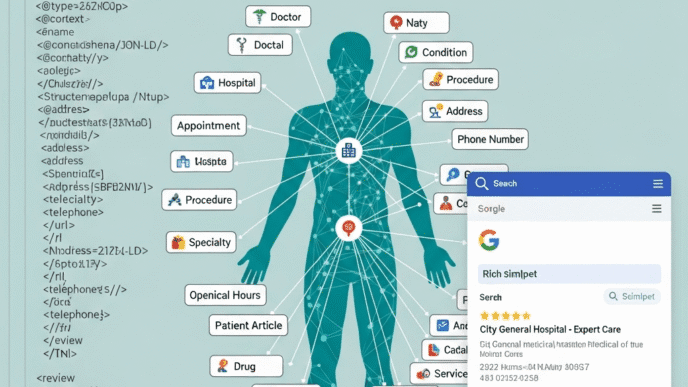
Structured data markup: Use Schema.org medical entity markup:
- MedicalWebPage
- MedicalCondition
- MedicalProcedure
- Physician
- MedicalOrganization
This helps Google understand your content and author expertise programmatically.
Clear site architecture: Users should easily find:
- About us / physician profiles
- Contact information
- Privacy policy
- Editorial policy
- Medical disclaimer
The Trust Intersection
Technical problems create trust problems:
Broken links: Especially to cited medical sources – signals neglect
Mixed content warnings: HTTP elements on HTTPS pages – security red flag
Intrusive ads: Especially misleading health ads – massive trust destroyer
Pop-ups blocking content: Particularly on mobile – poor user experience
Redirect chains: Signal a messy, unprofessional site
Expert Opinion: John Mueller from Google has stated that while technical SEO doesn’t directly impact E-A-T scores, it affects how users and quality raters perceive your site’s trustworthiness. A technically broken site can’t fully achieve high E-A-T ratings.
How Should Medical Websites Handle Controversial or Evolving Health Topics?
Some health topics are landmines. COVID treatments, vaccine debates, alternative medicine, controversial diets – how to optimize medical website for E-A-T guidelines when the medical community itself isn’t aligned?
The Balanced Approach
Present mainstream medical consensus first: Lead with what major medical organizations (CDC, WHO, AMA) recommend.
Acknowledge controversy when relevant: “Some practitioners advocate for [approach], though this hasn’t been validated by large-scale studies.”
Cite both sides with quality sources: If presenting alternative viewpoints, use legitimate medical sources, not fringe websites.
Clear labels for evidence levels:
- “Well-established treatment with extensive research”
- “Emerging approach with limited evidence”
- “Controversial therapy not endorsed by major medical organizations”
What About Alternative Medicine?
Tricky territory. Here’s the framework:
Complementary approaches: (acupuncture, meditation, yoga) – Can discuss with proper context about evidence levels
Unproven claims: (miracle cures, cancer treatments with no research) – Should not promote; can discuss critically with strong warnings
Potentially harmful: (drinking bleach, avoiding vaccines) – Actively discourage with clear medical consensus
The E-A-T test: Can you cite legitimate medical sources supporting this approach? If no, tread carefully or skip it.
Evolving Medical Guidance
Remember early COVID guidance about masks? Medical advice changes with new evidence.
How to maintain E-A-T during uncertainty:
- Date-stamp prominently: “As of October 2025, the CDC recommends…”
- Acknowledge evolution: “Early guidance suggested X, but current evidence supports Y”
- Update frequently: Rapidly evolving topics need weekly or monthly updates
- Show the evidence basis: Link to the current studies informing recommendations
- Separate facts from opinions: “Evidence shows X. Many physicians believe Y. More research is needed to determine Z.”
Pro Tip: For controversial topics, consider a “Last Reviewed” date separate from “Last Updated.” This shows the content is being actively monitored even if not substantially changed.
What Role Do Patient Reviews and Testimonials Play in Medical E-A-T?
Patient reviews are a trust signal Google absolutely pays attention to. But there’s a right way and wrong way to leverage them for healthcare expertise signals.
The Good: How Reviews Boost E-A-T
Social proof of experience: “Dr. Martinez successfully treated my chronic condition” validates real-world clinical experience.
Pattern recognition: 500+ positive reviews about a physician’s expertise signal consistent quality care.
Specific outcome mentions: Reviews describing successful treatments demonstrate effectiveness.
Engagement signals: Physicians who respond to reviews (professionally) show patient-centered care.
The Bad: Review Pitfalls
Fake reviews: Google’s getting scary good at detecting these. Don’t even think about it.
Overly vague reviews: “Great doctor!” doesn’t actually provide trust signals about expertise.
Buying reviews: Will torpedo your trust faster than you can say “HIPAA violation.”
Negative reviews ignored: Not responding to criticism (professionally) signals you don’t care about patient feedback.
How to Use Testimonials Effectively
On your website:
- Real names (with permission) > Anonymous testimonials
- Specific conditions/treatments mentioned > Generic praise
- Photos if patients consent > Text only
- Video testimonials > Written (when possible)
Key platforms for medical reviews:
- Google Business Profile (highest impact)
- Healthgrades
- Vitals
- RateMDs
- Yelp
What to request from patients: “We’d appreciate if you could share your experience with [specific treatment/condition] and how our care helped you achieve [specific outcome].”
What NOT to request: Don’t incentivize reviews (violates platform policies), don’t gate-keep (only ask happy patients), don’t write reviews for patients to post.
Legal note: Always follow HIPAA guidelines. You cannot disclose patient information without consent, and patients must voluntarily choose to share their medical details in reviews.
Responding to Reviews
Positive reviews: Brief thanks, acknowledge the specific care mentioned
“Thank you, Sarah! We’re glad our diabetes management program helped you achieve better control. We appreciate your trust in our care.”
Negative reviews: Professional, empathetic, never defensive, take it offline
“We’re sorry to hear about your experience. Patient concerns are important to us. Please contact our office manager at [phone] so we can address this directly.”
Never discuss specific medical details in review responses – HIPAA violations destroy trust faster than anything.
How Can Medical Websites Demonstrate Real-World Experience?
This is where the extra “E” (Experience) in E-E-A-T shines for healthcare. E-E-A-T medical websites need to show they’re not just theoretically knowledgeable – they’re actually treating patients.
Ways to Demonstrate Clinical Experience
Case studies (anonymized): “A 45-year-old patient presented with [symptoms]. Our approach included [treatment]. After [timeframe], the patient achieved [outcome].”
Change identifying details, get patient consent, or make composite case studies from multiple patients.
Treatment volume data:
- “Our clinic has performed 2,500+ endoscopies over the past five years”
- “Dr. Johnson has delivered over 1,000 babies in her 15-year career”
- “Our practice sees 50+ diabetes patients weekly”
Before/after documentation: For procedures with visible outcomes (dermatology, plastic surgery, dental), properly consented before/after galleries are experience gold.
Patient outcome metrics:
- Success rates (when appropriate)
- Patient satisfaction scores
- Recovery time averages
- Complication rates (yes, transparency about complications builds trust)
Day-in-the-life content: Videos or blog posts showing what actually happens in your practice builds authenticity.
Patient journey mapping: “What to expect” guides for treatments you commonly provide show you understand the patient experience intimately.
First-Hand Medical Experience Content
Physician blog posts about actual patient scenarios (anonymized): “This week, I saw a patient who…”
Videos of actual procedures (with consent): Showing your technique and explaining as you go
Photos from your practice: Your actual facility, equipment, staff – not stock photos
Patient education you actually use: Handouts, instructions, resources you give to real patients
Case-based learning: “Difficult diagnosis” stories that show your problem-solving process
Real-world example: Dr. Mike (Mikhail Varshavski) has built massive authority partly through showing real clinical experiences on social media. His YouTube content demonstrating actual medical thinking and patient interactions signals authentic experience – even though he’s also an influencer.
For medical practices, you don’t need millions of followers. You need to authentically document your real healthcare delivery.
What’s the Future of Medical E-A-T in the Age of AI?
AI-generated medical content is everywhere now. Google’s not banning AI content, but they’re getting more sophisticated about detecting low-quality, AI-spun medical junk.
AI’s Impact on Medical E-A-T
The good: AI can help medical professionals create content faster, do research, and improve writing quality.
The bad: AI cannot replace medical expertise or clinical experience. It can synthesize existing information but can’t provide original medical insights.
The ugly: Content farms are pumping out AI-generated health articles with fake author profiles. Google’s cracking down hard.
How to Use AI Without Destroying Your E-A-T
AI as research assistant: Use it to find studies, summarize research, identify topics
AI as writing aid: Draft outlines, improve clarity, check grammar
AI as idea generator: Brainstorm content angles, headline variations
But ALWAYS:
- Have actual medical professionals review and approve every piece
- Add original medical insights and clinical experience
- Verify all AI-cited sources (it hallucinates references)
- Customize and personalize content with your practice’s approach
- Keep author credentials real and verifiable
Google’s AI Detection
Google claims they don’t specifically penalize AI content, but they do penalize:
- Thin, regurgitated content (AI often does this)
- Factual errors (AI hallucinates medical facts)
- Lack of original insight (AI can’t provide clinical experience)
- Content without expertise signals (AI can’t have medical credentials)
The future-proof approach: Use AI as a tool, but maintain human medical expertise as your core value proposition. Medical E-A-T SEO will increasingly favor content that demonstrates genuine clinical experience AI can’t replicate.
Pro Tip: Google’s helpful content system (rolled out 2022-2023) specifically targets sites that produce content primarily for search engines rather than people. For medical sites, this means AI-generated content optimized for keywords but lacking genuine medical insight is especially vulnerable.
Medical E-A-T Optimization Checklist: Are You Doing Everything Right?
Let’s bring it all together. Here’s your comprehensive medical E-A-T SEO implementation checklist:
Author & Credentials
- [ ] Every medical article has a named author with verifiable credentials
- [ ] Author credentials match content topic area
- [ ] Detailed author profile pages with education, certifications, experience
- [ ] Professional photos of all medical authors
- [ ] Links to verify credentials (medical licenses, board certifications)
- [ ] Author social media or professional profiles (LinkedIn, Doximity)
Content Quality
- [ ] 10-20+ citations to peer-reviewed sources per comprehensive article
- [ ] Links to Tier 1 sources (medical journals, government agencies, major medical organizations)
- [ ] Medical disclaimer on all health content
- [ ] Clear “Last Updated” or “Medically Reviewed” dates
- [ ] Editorial policy explaining content creation process
- [ ] Conflict of interest disclosures where relevant
- [ ] Appropriate reading level (8th-10th grade for patient-facing content)
Trust Signals
- [ ] HTTPS across entire site
- [ ] Clear privacy policy (HIPAA-compliant if handling patient data)
- [ ] Terms of service with medical disclaimer
- [ ] Complete contact information (address, phone, email)
- [ ] Comprehensive About page
- [ ] Patient reviews on Google, Healthgrades, etc.
- [ ] Responses to reviews (both positive and negative)
Experience Signals
- [ ] Case studies or patient stories (with consent)
- [ ] Treatment volume or outcome data
- [ ] Before/after galleries (for applicable specialties)
- [ ] Photos of actual facility and staff
- [ ] “What to expect” content showing real patient journeys
- [ ] Videos of physicians explaining procedures or conditions
Authority Building
- [ ] Physician publications listed with links
- [ ] Speaking engagements or conference presentations documented
- [ ] Media appearances or expert quotes
- [ ] Professional organization memberships
- [ ] Hospital or institutional affiliations
- [ ] Awards or recognitions
- [ ] Backlinks from reputable medical sources
Technical Foundations
- [ ] Fast site speed (Core Web Vitals passing)
- [ ] Mobile-optimized design
- [ ] Clear site navigation to key pages
- [ ] Structured data markup (MedicalWebPage, Physician, etc.)
- [ ] No broken links (especially to medical sources)
- [ ] Limited, non-intrusive advertising
- [ ] No misleading health claims in ads
Content Maintenance
- [ ] Quarterly content audits for accuracy
- [ ] Update process for new medical developments
- [ ] Archive or update outdated content
- [ ] Monitor search performance for declining pages
- [ ] Regular addition of new, original content
Score yourself:
- 35-40 checked: E-A-T rockstar
- 25-34 checked: Solid foundation, room to grow
- 15-24 checked: Significant gaps to address
- Under 15: Time for an E-A-T overhaul
Real-World Medical E-A-T Success Stories
Let’s look at some practices that nailed building trust and authority for healthcare websites SEO:
Case Study 1: Local Pediatric Practice
Challenge: Three-doctor pediatric practice competing with major hospital systems for local search visibility.
E-A-T Strategy:
- Created individual blogs for each physician on parenting topics
- Monthly video Q&As addressing common parent concerns
- Published vaccination guides with extensive CDC citations
- Built detailed physician profiles showcasing 40+ combined years of experience
- Collected 200+ Google reviews through systematic follow-up
Results:
- 245% increase in organic traffic in 12 months
- Ranked first page for 30+ local pediatric health queries
- Reduced paid advertising budget by 60% due to organic growth
- Patient inquiries from website up 190%
Key insight: Local practices can compete by demonstrating accessible, personal expertise major systems can’t match.
Case Study 2: Dermatology Clinic Content Overhaul
Challenge: Large dermatology practice had thousands of outdated articles written by uncredentialed writers, tanked in Medic Update.
E-A-T Strategy:
- Assigned all content to board-certified dermatologists
- Added “Medically Reviewed by” stamps with specific physician credentials
- Updated 500+ articles with current citations to dermatology journals
- Added treatment volume data and before/after galleries
- Implemented quarterly content review process
Results:
- Recovered 85% of lost organic traffic within 18 months
- Established authority for competitive terms like “acne treatment” and “eczema management”
- Increased patient bookings from organic search by 120%
Key insight: Retroactive E-A-T fixes work. It’s never too late to improve author credentials and content quality.
Case Study 3: Specialty Surgery Center Authority Building
Challenge: Boutique surgical center for orthopedic procedures lacked online presence despite excellent surgeons.
E-A-T Strategy:
- Published surgeon research in blog format, linking to full studies
- Created comprehensive procedure guides based on actual patient experiences
- Built detailed surgeon profiles with education, certifications, surgical volumes
- Documented case studies showing complex problem-solving
- Engaged in local media as orthopedic experts
Results:
- From virtually invisible to page one for 15+ orthopedic surgery terms
- Featured snippets for “what to expect” queries about procedures they perform
- Established surgeons as local thought leaders
- 300% increase in consultation requests
Key insight: Subject matter expertise combined with detailed experience documentation builds unassailable authority.
Final Thoughts: Medical E-A-T Is Non-Negotiable (And That’s a Good Thing)
Here’s the bottom line: Medical E-A-T SEO isn’t some abstract algorithm game. It’s Google’s attempt to prevent harm by ensuring health information comes from qualified sources.
Yes, it makes ranking harder. Yes, it requires more effort than stuffing keywords. Yes, solo practitioners and small clinics face challenges competing with massive health systems.
But ultimately? This benefits everyone:
Patients get accurate, trustworthy health information instead of dangerous misinformation.
Qualified healthcare professionals get visibility their expertise deserves instead of being drowned out by content farms.
The healthcare industry maintains credibility in an age of rampant health misinformation.
Your practice builds genuine trust that converts better than any SEO trick ever could.
The practices winning with building trust and authority for healthcare websites SEO aren’t gaming the system – they’re genuinely demonstrating their expertise, showing their real clinical experience, and earning authority through quality care and content.
If you’re a medical professional reading this: your credentials, your experience, your knowledge – these are your competitive advantages. How to optimize medical website for E-A-T guidelines is really about showcasing what you already have.
Stop hiding behind generic “The Medical Team” bylines. Put your name and credentials on your expertise. Show your patients you’re treating. Share your knowledge generously with proper citations. Build your professional profile. Engage with your community.
Do these things consistently, and Google’s E-A-T algorithm becomes your ally, not your enemy.
The future of medical search belongs to those who can prove they’re not just writing about healthcare – they’re actively practicing it, continually learning, and sharing genuine expertise earned through education, experience, and patient care.
That’s medical E-A-T SEO in a nutshell. Now go optimize your digital trust signals and help some people.
For comprehensive guidance on implementing these strategies within YMYL compliance standards, explore this complete healthcare SEO resource.
Frequently Asked Questions About Medical E-A-T SEO
Q: Can I rank for medical topics without having an MD?
Yes, but with limitations. Non-physicians can rank for topics within their scope (RNs for nursing topics, pharmacists for medication info, dietitians for nutrition). Always use medical reviewers with appropriate credentials for clinical content. Patient experience stories and general wellness topics are also accessible to non-MD writers with proper citations and medical review.
Q: How many citations should a medical article have?
Aim for 10-20+ quality citations for comprehensive medical articles. More complex topics require more sources. Every factual claim, statistic, or treatment recommendation needs backing from authoritative sources. Quality matters more than quantity – five Tier 1 sources beat twenty Tier 3 sources.
Q: Do I need to update medical content every year?
It depends on the topic. Treatment protocols and medical guidelines should be reviewed annually. Statistical health data needs yearly updates. Evergreen topics can go 18-24 months, but check for accuracy annually. Fast-changing topics (like COVID information) require monthly or even weekly updates during active developments.
Q: Will AI-written medical content hurt my E-A-T?
Not automatically, but AI-generated content without medical professional review, original insights, and verification definitely will. Google doesn’t ban AI content, but it penalizes thin, regurgitated, or inaccurate content – which AI often produces. Use AI as a tool, but maintain human medical expertise as your core value.
Q: How important are patient reviews for medical E-A-T?
Very important. Patient reviews provide social proof of experience and real-world outcomes. Google Business Profile reviews especially impact local medical search rankings. Aim for consistent positive reviews across multiple platforms, respond professionally to all reviews, and never fake or incentivize reviews.
Q: Can a small medical practice compete with major health systems for rankings?
Yes, through local SEO and niche expertise. You can’t compete with Mayo Clinic for general terms like “heart disease symptoms,” but you can dominate “cardiologist in [your city]” and specialized local searches. Leverage personal patient relationships, community involvement, and detailed local content to build local E-A-T authority that big systems can’t match.
Related posts:
- Healthcare Content Writing Guidelines: Creating YMYL-Compliant Medical Content (Dashboard)
- Telehealth and Virtual Care SEO: Optimizing for Online Medical Services
- Hospital and Healthcare System SEO: Multi-Location Optimization Strategy
- Medical Website Accessibility and SEO: ADA Compliance for Healthcare Sites (ROI Calculator)