
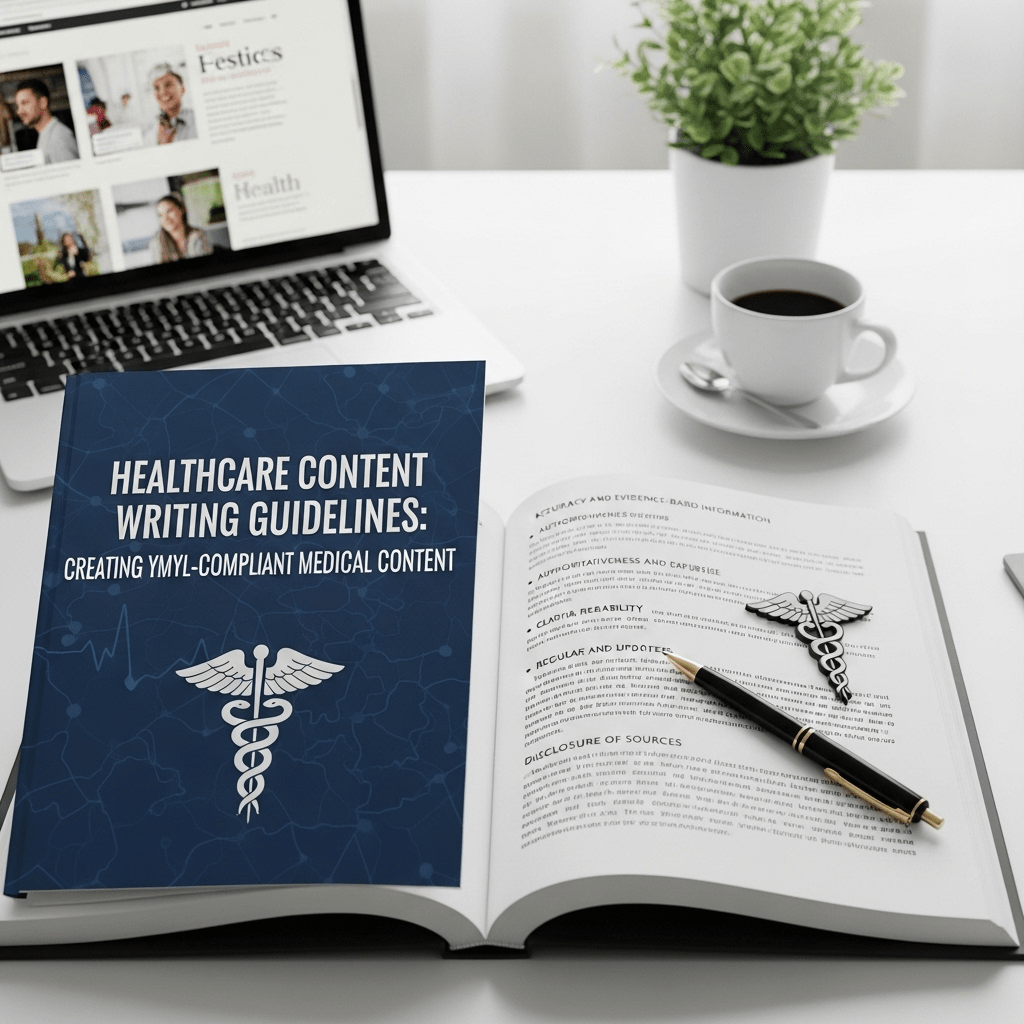
Let’s be honest—writing about healthcare isn’t like blogging about your favorite pizza toppings. Get it wrong, and you’re not just losing search rankings; you could genuinely mislead someone about their health. Yikes, right?
If you’ve ever stared at a blank screen wondering how to write healthcare content writing that Google trusts and patients actually understand, you’re in the right place. The stakes are high, the rules are strict, and yes—Google’s watching your every word through its YMYL (Your Money or Your Life) lens.
Here’s the thing: medical content guidelines aren’t just bureaucratic hoops to jump through. They’re your roadmap to creating content that ranks well, builds trust, and—most importantly—helps real people make informed health decisions.
Ready to master the art of writing health content that checks every box? Let’s dive in.
Table of Contents
ToggleWhat Is Healthcare Content Writing and Why Does It Matter?
Healthcare content writing is the specialized practice of creating accurate, accessible, and trustworthy medical information for patients, caregivers, and healthcare professionals.
Unlike your typical blog post, healthcare content carries real-world consequences. Someone reading your article about diabetes management might adjust their insulin based on what you wrote. That’s terrifying and empowering at the same time.
Google knows this, which is why health-related content falls under YMYL content standards—a category that faces the strictest scrutiny in search rankings. According to Google’s Search Quality Rater Guidelines, YMYL pages can “potentially impact a person’s future happiness, health, financial stability, or safety.
Translation? Write it wrong, and Google will bury your content faster than you can say “medical disclaimer.
The Real Cost of Poor Healthcare Content
A 2021 study published in the Journal of Medical Internet Research found that 72% of internet users search for health information online before visiting a doctor. When that information is inaccurate or misleading, it can lead to:
- Delayed diagnoses
- Inappropriate self-treatment
- Medication errors
- Unnecessary anxiety or false reassurance
This isn’t just about SEO—it’s about responsibility.
Why Is YMYL Compliance Non-Negotiable for Medical Content?
Google introduced YMYL guidelines to protect users from harmful or misleading information, especially in areas like healthcare, finance, and legal advice.
For health information accuracy, Google evaluates three core factors (hello, E-E-A-T):
Experience – Does the author have firsthand experience with the topic? Expertise – Are they qualified to write about medical subjects? Authoritativeness – Is the content backed by credible sources? Trustworthiness – Can users rely on this information?
When you’re writing about medical content writing best practices for patient safety, you’re not just competing with other blogs—you’re competing with WebMD, Mayo Clinic, and the CDC. No pressure!
What Happens When You Ignore YMYL Standards?
Google’s algorithm updates like Medic (2018) and subsequent core updates have specifically targeted health websites lacking proper credentials and accuracy. Sites that don’t meet YMYL standards experience:
- Dramatic drops in organic traffic (sometimes 50-90%)
- Removal from featured snippets
- Lower domain authority
- Reduced user trust
The Cleveland Clinic, on the other hand, maintains strict editorial standards with board-certified physicians reviewing every article—and they consistently dominate health-related search results. Coincidence? Definitely not.
For comprehensive strategies on maintaining healthcare SEO compliance and building authority, understanding YMYL principles is your foundation.
How Do You Write SEO Optimized Healthcare Content That Meets YMYL Standards?
This is where the rubber meets the road. Writing SEO-optimized healthcare content that satisfies both Google and actual humans requires a specific framework.
Start With Qualified Medical Expertise
Pro Tip: Never publish healthcare content without proper medical review. Period.
Your content team should include or collaborate with:
- Board-certified physicians
- Licensed healthcare practitioners
- Certified medical writers
- Clinical researchers
Healthline, one of the most successful health content publishers, requires every article to be medically reviewed by licensed professionals. Their author bios always include credentials like “Reviewed by John Smith, MD, Board-Certified Cardiologist.”
That’s not window dressing—it’s essential for YMYL content standards compliance.
Follow the Medical Content Review Process
A robust medical content review process typically includes these stages:
- Research Phase – Gather information from peer-reviewed journals, clinical guidelines, and authoritative sources (NIH, CDC, WHO)
- Writing Phase – Draft content with proper citations and clear language
- Medical Review – Have a qualified healthcare professional verify accuracy
- Editorial Review – Check readability, structure, and SEO optimization
- Legal Review – Ensure compliance with healthcare advertising regulations (if applicable)
- Ongoing Updates – Schedule regular reviews as medical guidelines evolve
The Mayo Clinic updates their content at least annually, and more frequently for rapidly evolving topics like COVID-19 treatments.
Use Evidence-Based Sources Only
When it comes to health information accuracy, your sources make or break your credibility.
Tier 1 Sources (Always use these):
- Peer-reviewed medical journals (JAMA, New England Journal of Medicine, The Lancet)
- Government health agencies (CDC, NIH, FDA, WHO)
- Major medical institutions (Mayo Clinic, Cleveland Clinic, Johns Hopkins)
- Clinical practice guidelines from professional associations
Tier 2 Sources (Use with caution):
- Well-established health information sites with medical review boards
- Reputable medical organizations
- Academic medical centers
Never Use:
- Personal blogs without credentials
- Social media posts
- Anecdotal evidence presented as fact
- Outdated studies without noting their limitations
“The key to trustworthy health content isn’t just citing sources—it’s citing the right sources and being transparent about evidence quality.” – Content Strategy Institute
What Are the Core Medical Content Guidelines You Must Follow?
Let’s break down the non-negotiable medical content guidelines that separate amateur health content from professional-grade material.
1. Write in Plain Language (But Don’t Dumb It Down)
Medical jargon alienates readers. The average American reads at an 8th-grade level, but that doesn’t mean they’re unintelligent—it means they need clear explanations.
Instead of: “Patients presenting with hypertension should implement pharmacological interventions.”
Write: “If you have high blood pressure, your doctor may prescribe medication to help lower it.”
The National Institutes of Health recommends health content be written at a 6th-to-8th-grade reading level. Tools like Hemingway Editor or Readable can help you check readability scores.
2. Be Specific About Limitations and Uncertainty
Healthcare is full of nuance. Good clinical content optimization acknowledges uncertainty rather than making absolute claims.
Poor example: “This treatment cures diabetes.”
Better example: “Research shows this approach can help some people with Type 2 diabetes manage their blood sugar levels more effectively, though results vary by individual.”
Notice the difference? The second version is specific, evidence-based, and honest about limitations.
3. Include Proper Medical Disclaimers
Every healthcare article should include a clear disclaimer, typically positioned near the beginning or end. For strategies on implementing these correctly within your YMYL-compliant healthcare SEO framework, proper disclaimer placement protects both readers and publishers.
Standard medical disclaimer template:
“This article is for informational purposes only and does not constitute medical advice. Always consult with a qualified healthcare provider before making decisions about your health or treatment.”
4. Clearly Identify When Content Is Reviewed and Updated
Medical knowledge evolves rapidly. What was best practice two years ago might be outdated today.
Include:
- Original publication date
- Last reviewed/updated date
- Reviewer credentials
- Next scheduled review date
Example: “Medically reviewed by Sarah Johnson, MD, Board-Certified Endocrinologist. Last updated: October 15, 2025. Next review: April 2026.”
How Do You Structure Healthcare Content for Both SEO and Readability?
The best healthcare content writing balances search optimization with genuine helpfulness. Here’s your structural blueprint.
Use Question-Based Headings That Match Search Intent
When people search for health information, they’re usually asking questions. Structure your content to directly answer these queries.
Examples of effective health content headings:
- “What Causes Type 2 Diabetes?”
- “How Do You Know If You Have High Blood Pressure?”
- “When Should You See a Doctor About Chest Pain?”
- “Can Diet Really Improve Heart Health?”
These question-based H2 and H3 tags naturally incorporate long-tail keywords while directly addressing user intent.
Break Complex Information Into Digestible Chunks
Short paragraphs are your friend. Each paragraph should contain 2-3 sentences maximum for online readability.
Use bulleted lists for symptoms, risk factors, or treatment options:
Common symptoms of dehydration include:
- Excessive thirst and dry mouth
- Dark yellow urine or infrequent urination
- Fatigue and dizziness
- Headaches and confusion
Lists make information scannable—crucial when someone’s trying to quickly understand their symptoms.
Create Comparison Tables for Treatment Options or Conditions
Tables excel at presenting complex medical comparisons clearly. Here’s an example for diabetes types:
| Feature | Type 1 Diabetes | Type 2 Diabetes | Gestational Diabetes |
|---|---|---|---|
| Onset Age | Usually childhood/adolescence | Usually adulthood | During pregnancy |
| Insulin Production | None (autoimmune destruction) | Reduced + insulin resistance | Temporary insulin resistance |
| Treatment | Insulin injections required | Lifestyle + medication ± insulin | Diet control, sometimes insulin |
| Reversibility | Not reversible | Sometimes reversible with lifestyle | Usually resolves after delivery |
| Prevalence | ~5-10% of diabetes cases | ~90-95% of diabetes cases | ~2-10% of pregnancies |
Tables like this help readers quickly grasp key differences—a hallmark of quality medical content guidelines implementation.
What Role Does Clinical Content Optimization Play in Rankings?
Clinical content optimization goes beyond basic SEO. It’s about making medical information both findable and useful while maintaining scientific accuracy.
Optimize for Featured Snippets and “People Also Ask”
Healthcare queries frequently trigger featured snippets. To capture these:
Answer the core question in the first 40-60 words of a section. Google often pulls this as a snippet.
Use structured formatting like numbered lists or tables that Google can easily parse.
Address related questions that appear in “People Also Ask” boxes—these are gold mines for related keywords.
For example, if your article is about high blood pressure, also address:
- “What is considered high blood pressure?”
- “How can I lower my blood pressure quickly?”
- “What foods should I avoid with high blood pressure?”
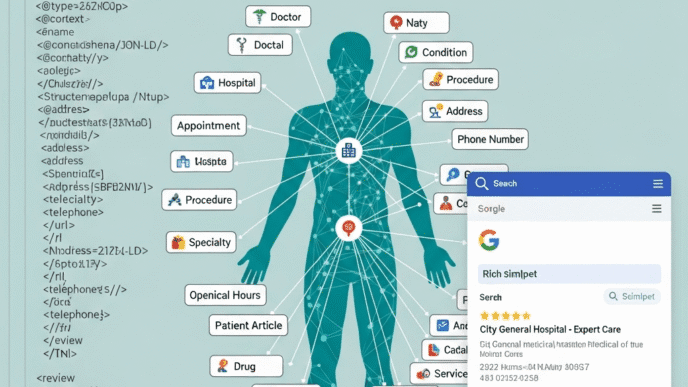
Implement Schema Markup for Medical Content
Schema markup helps search engines understand your content’s context. For healthcare content, particularly relevant schema types include:
- MedicalWebPage schema
- MedicalCondition schema
- HealthTopicContent schema
- Organization schema (for medical reviewer credentials)
The Cleveland Clinic uses extensive schema markup, which contributes to their strong presence in health-related search results and rich snippets.
{
  "@context": "https://schema.org",
  "@type": "MedicalWebPage",
  "author": {
    "@type": "Person",
    "name": "Dr. Jane Smith",
    "credential": "MD, Board-Certified Cardiologist"
  },
  "reviewedBy": {
    "@type": "Person",
    "name": "Dr. John Doe",
    "credential": "MD, Internal Medicine"
  },
  "datePublished": "2025-10-15",
  "lastReviewed": "2025-10-15"
}
Build Topical Authority Through Content Clusters
Rather than publishing isolated articles, create comprehensive content clusters around specific health topics. This demonstrates clinical content optimization at scale.
Example cluster structure for “Heart Health”:
Pillar Content: Complete Guide to Heart Health (comprehensive overview)
Cluster Content:
- Understanding Cholesterol Levels
- Heart-Healthy Diet Plans
- Exercise for Cardiovascular Health
- Managing High Blood Pressure
- Recognizing Heart Attack Symptoms
- Medications for Heart Disease
Internal linking between these articles signals to Google that you have deep expertise in this topic area. Learn more about implementing this strategy in healthcare SEO best practices.
How Can You Write Healthcare Content That Actually Helps Patients?
Beyond SEO and compliance, great healthcare content genuinely improves health literacy and patient outcomes. Here’s how to achieve that.
Use Real-World Examples and Case Studies
Abstract medical information becomes meaningful when illustrated with real scenarios (with proper privacy protection, of course).
Example for diabetes management:
“Maria, a 52-year-old teacher, struggled to control her Type 2 diabetes despite medication. After working with a dietitian to adjust her meal timing and portion sizes—eating smaller meals every 3-4 hours instead of three large meals—her HbA1c dropped from 8.5% to 6.8% over six months. While individual results vary, meal timing can significantly impact blood sugar management for many people with diabetes.”
This approach makes abstract concepts concrete while including proper caveats about individual variation.
Address Common Misconceptions Directly
People come to health content with existing beliefs—some accurate, some not. Address misconceptions head-on.
Myth vs. Fact format works well:
Myth: “You can’t have diabetes if you’re not overweight.”
Fact: While obesity increases diabetes risk, about 15% of people with Type 2 diabetes have a healthy weight. Genetics, age, and other factors also contribute to diabetes development.
This format directly addresses health information accuracy while correcting dangerous misinformation.
Provide Actionable Takeaways
Every healthcare article should leave readers with clear next steps, whether that’s scheduling a doctor’s appointment, trying a lifestyle modification, or simply understanding when to seek emergency care.
Pro Tip: Include a “When to See a Doctor” section in symptom-related articles. This empowers readers to self-advocate while knowing when professional medical help is necessary.
Example takeaway section:
What You Can Do Today:
- Check your blood pressure at a pharmacy or home monitor
- Schedule your annual physical if you haven’t had one in the past year
- Start tracking what you eat using a simple food diary app
- Ask your doctor about whether you need cholesterol screening
Actionable advice demonstrates that your content serves real medical content writing best practices for patient safety, not just SEO goals.
What Are the Latest Trends in Healthcare Content Writing?
The healthcare content landscape evolves continuously. Staying current with these trends helps you maintain competitive advantage.
AI-Assisted Content Creation (With Human Oversight)
AI tools like GPT-4 can help draft health content, but they absolutely require human medical expert review. AI can:
- Generate initial drafts based on outlines
- Suggest related questions to address
- Help rephrase complex medical language
However, AI cannot:
- Replace medical expertise
- Verify factual accuracy
- Apply clinical judgment
- Meet YMYL standards without human review
“AI is a powerful assistant for healthcare content, but it’s just that—an assistant. The final content must always be reviewed by qualified medical professionals before publication.” – Healthcare Content Marketing Association
Patient-Generated Content and Community Health Information
More healthcare organizations are incorporating patient stories, testimonials, and community-generated content (with proper disclaimers). These human elements build trust and relatability.
The key is clearly distinguishing between:
- Patient experiences (anecdotal, emotional support)
- Medical information (evidence-based, reviewed by professionals)
PatientsLikeMe successfully combines community experiences with clear indicators of what’s patient perspective versus medical fact.
Inclusive and Culturally Sensitive Health Content
Modern healthcare content writing acknowledges health disparities and addresses diverse populations. This means:
- Using inclusive language (various gender identities, abilities, ethnicities)
- Addressing health disparities specific to marginalized communities
- Providing culturally relevant examples and considerations
- Ensuring content accessibility (alt text, captions, screen reader compatibility)
The American Medical Association’s inclusive language guide provides excellent direction for writing health content that serves all communities.
How Do You Maintain Healthcare Content Quality Over Time?
Creating great healthcare content is just the beginning. Maintaining quality as medical knowledge evolves is an ongoing commitment.
Establish a Content Update Schedule
Medical content review processes should include regular update schedules:
Quarterly reviews: Rapidly evolving topics (infectious diseases, new medications, treatment guidelines)
Biannual reviews: Moderately changing topics (chronic disease management, diagnostic criteria)
Annual reviews: Stable topics (anatomy, basic health maintenance)
Immediate updates: Breaking medical news (new FDA approvals, guideline changes, disease outbreaks)
Johns Hopkins Medicine maintains a content calendar that flags articles for review based on these timelines.
Monitor User Feedback and Search Trends
Pay attention to:
- Comment questions that suggest confusion
- High bounce rates indicating content didn’t meet needs
- New related search queries appearing in Google Search Console
- Changes in featured snippet positions
This feedback loop helps you refine content based on actual user needs and search behavior patterns.
Track Medical Guideline Updates
Subscribe to updates from:
- Major medical associations in your focus areas
- FDA drug approvals and safety communications
- CDC guideline updates
- WHO health alerts
When guidelines change, your content must change too. This is non-negotiable for maintaining YMYL content standards compliance and reader trust.
Building relationships with medical professionals who can alert you to significant developments in their specialties creates an early warning system for necessary content updates. Establishing this review network is part of comprehensive healthcare SEO strategy.
What Tools and Resources Support Healthcare Content Writers?
The right tools streamline the complex process of creating YMYL-compliant medical content.
Research and Medical Databases
PubMed – Free access to millions of biomedical research articles Cochrane Library – Systematic reviews of healthcare interventions UpToDate – Clinical decision support resource (subscription) Clinical Practice Guidelines – From specialty medical organizations
Content Quality and SEO Tools
Hemingway Editor – Checks readability level Grammarly – Grammar and clarity checking Surfer SEO – Content optimization for search rankings Clearscope – Keyword and topic coverage analysis Google Search Console – Monitor search performance and user queries
Medical Review Platforms
Healthgrades – Connect with credentialed medical reviewers Medscape – Medical news and continuing education resources Medical writing associations – AMWA, EMWA for professional connections
Accessibility Checkers
WAVE – Web accessibility evaluation tool axe DevTools – Automated accessibility testing Color contrast checkers – Ensure text readability for all users
Real-World Healthcare Content Writing Case Study
Let’s examine how proper medical content guidelines implementation transformed results for a mid-sized health information site.
The Challenge: HealthWise Blog published 200+ health articles written by freelance writers without medical credentials. After Google’s 2018 Medic Update, their organic traffic dropped 73% in three months.
The Solution They Implemented:
- Hired a Medical Director – Board-certified physician to oversee content quality
- Retroactive Medical Review – All existing content reviewed and updated or removed
- Author Credentialing – Required all writers to have healthcare backgrounds or work directly with medical reviewers
- Source Standards – Established strict guidelines requiring peer-reviewed sources
- Update Protocol – Implemented quarterly reviews of top-performing content
- Transparency Improvements – Added detailed author bios, reviewer credentials, and last-updated dates
The Results (12 months later):
- Organic traffic recovered to 115% of pre-update levels
- Featured snippets increased from 12 to 87
- Average time on page improved by 42%
- Bounce rate decreased from 68% to 51%
- Email subscriptions increased 3x due to improved trust
This demonstrates that how to write SEO optimized healthcare content that meets YMYL standards isn’t just about ticking compliance boxes—it’s about building genuine expertise and authority that both Google and readers recognize.
Common Healthcare Content Writing Mistakes to Avoid
Even experienced writers stumble with medical content writing best practices for patient safety. Here are pitfalls to dodge:
Mistake #1: Publishing Without Medical Review
The risk: Inaccurate information can directly harm readers and destroy your site’s credibility.
The fix: Never publish health content without qualified medical professional review. No exceptions.
Mistake #2: Overgeneralizing or Making Absolute Claims
The risk: Medicine is rarely black and white. Absolute statements often aren’t scientifically accurate.
The fix: Use qualifying language like “may help,” “can reduce,” “research suggests,” rather than “will cure,” “always works,” or “guaranteed results.”
Mistake #3: Citing Outdated or Poor-Quality Sources
The risk: Medical knowledge evolves. Five-year-old studies might no longer represent current best practices.
The fix: Prioritize recent research (within 3-5 years for most topics) and always check if newer studies have contradicted older findings.
Mistake #4: Writing Like a Medical Textbook
The risk: Inaccessible language alienates the very people you’re trying to help.
The fix: Explain medical terms when you use them. “Hypertension (high blood pressure)” rather than assuming everyone knows the jargon.
Mistake #5: Ignoring Mobile Optimization
The risk: Over 60% of health searches happen on mobile devices. Poor mobile experience loses readers.
The fix: Test all healthcare content on mobile devices. Ensure images load properly, text is readable without zooming, and tables are responsive.
Mistake #6: Mixing Editorial Content With Promotional Material
The risk: Blurring lines between education and advertising erodes trust and may violate FTC guidelines.
The fix: Clearly separate educational content from sponsored content. Never let commercial relationships influence medical recommendations.
Healthcare Content Writing Checklist: Your Quality Assurance Tool
Before publishing any healthcare content, run through this comprehensive checklist to ensure you’ve met YMYL content standards:
Content Accuracy
- ☐ All medical facts verified against authoritative sources
- ☐ Sources cited are from Tier 1 or high-quality Tier 2 resources
- ☐ Statistics and data include publication dates
- ☐ Content reviewed by qualified medical professional
- ☐ Reviewer credentials clearly displayed
YMYL Compliance
- ☐ Medical disclaimer included
- ☐ Author credentials/qualifications visible
- ☐ Publication and last-update dates displayed
- ☐ Clear distinction between medical advice and general information
- ☐ Encourages consultation with healthcare providers
SEO Optimization
- ☐ Focus keyword used naturally in first paragraph, headings, and throughout
- ☐ Related LSI keywords incorporated naturally
- ☐ Long-tail keyword phrases addressed
- ☐ Question-based headings match search intent
- ☐ Meta description includes focus keyword (under 160 characters)
- ☐ Internal links to related content included
- ☐ External links to authoritative sources included
- ☐ Schema markup implemented (if applicable)
Readability & User Experience
- ☐ Reading level appropriate (6th-8th grade)
- ☐ Paragraphs limited to 2-3 sentences
- ☐ Complex information broken into lists or tables
- ☐ Headings clearly organized (H2, H3 hierarchy)
- ☐ Images include descriptive alt text
- ☐ Content is mobile-friendly
- ☐ Page load speed optimized
Legal & Ethical
- ☐ No absolute health claims or guarantees
- ☐ Privacy-compliant (no identifying patient information without consent)
- ☐ FDA/FTC compliance for any product mentions
- ☐ Appropriate disclaimers for limitations
- ☐ Conflicts of interest disclosed (if any)
Print this checklist or save it digitally to ensure every piece of healthcare content meets the highest standards before going live.
FAQs About Healthcare Content Writing
Q: Do I need to be a doctor to write healthcare content?
A: No, but your content must be reviewed by qualified healthcare professionals. Many successful health content writers have backgrounds in medical writing, journalism, or science communication, but they always collaborate with physicians or licensed practitioners for accuracy verification.
Q: How often should healthcare content be updated?
A: It depends on the topic’s rate of change. Rapidly evolving topics (like COVID-19 treatments) need quarterly or even more frequent updates. Stable topics (like basic anatomy) can be reviewed annually. Always update immediately when major guidelines change.
Q: Can I use patient testimonials in healthcare content?
A: Yes, but with clear disclaimers that individual results vary and testimonials don’t constitute medical advice. Also ensure you have proper consent and privacy protections. Never use testimonials to make unsubstantiated medical claims.
Q: How do I know if a source is credible enough for healthcare content?
A: Prioritize peer-reviewed journals, government health agencies (CDC, NIH, WHO), and major medical institutions. Check if sources have editorial standards and medical review processes. Avoid sites without clear author credentials or those selling products related to the information they provide.
Q: What’s the difference between medical writing and healthcare content writing?
A: Medical writing typically refers to technical documentation for clinical trials, regulatory submissions, or scientific publications targeting healthcare professionals. Healthcare content writing focuses on patient-facing content that translates complex medical information into accessible language for general audiences.
Q: How do I balance SEO optimization with medical accuracy?
A: Medical accuracy always comes first. However, accurate content can absolutely be optimized for search. Use natural keyword integration, structure content to answer common questions, and ensure technical SEO elements (schema, meta tags, internal linking) are optimized without compromising accuracy.
Q: Are AI tools reliable for healthcare content creation?
A: AI can assist with drafting and research, but cannot replace human medical expertise. AI-generated health content must undergo thorough review by qualified medical professionals before publication. AI tools can hallucinate false information, making human oversight critical for patient safety.
Final Thoughts: Healthcare Content Writing as a Responsibility
Here’s the bottom line: healthcare content writing is more than a specialized SEO niche—it’s a responsibility that directly impacts people’s health and wellbeing.
When you publish content about medical conditions, treatments, or health advice, someone, somewhere will make decisions based on what you wrote. Maybe they’ll recognize their symptoms and seek help sooner. Maybe they’ll feel less alone in their health journey. Maybe they’ll have better questions to ask their doctor.
That’s powerful. And that power requires you to:
✓ Prioritize accuracy over rankings – If you have to choose between a perfectly optimized article and a medically accurate one, choose accuracy every time. (Though with proper technique, you don’t have to choose.)
✓ Work with qualified experts – Your medical reviewers aren’t a checkbox—they’re your partners in creating trustworthy content.
✓ Stay current with medical knowledge – Medicine evolves. Your content should too.
✓ Write for real people – Behind every search query is a person worried about their health or a loved one’s. Write with empathy and clarity.
✓ Build topical authority – Don’t try to cover all of medicine. Focus on specific areas where you can develop genuine depth and expertise. Review your overall healthcare SEO strategy to identify the best focus areas.
The good news? When you follow proper medical content guidelines and genuinely commit to serving your readers, the SEO benefits follow naturally. Google’s algorithms increasingly reward the same qualities that make content truly helpful: expertise, accuracy, trustworthiness, and genuine value.
So yes, how to write SEO optimized healthcare content that meets YMYL standards requires effort, collaboration, and ongoing commitment. But the reward—content that ranks well, builds authority, and genuinely helps people—makes every bit of that effort worthwhile.
Now go forth and create healthcare content that actually makes a difference. Your future readers (and their improved health outcomes) are counting on you.
Medical Disclaimer: This article provides guidance on healthcare content writing for informational and professional development purposes. It is not medical advice, clinical guidance, or legal advice. Always consult with qualified medical professionals, legal advisors, and SEO specialists for specific guidance related to your healthcare content projects.
🏥 Healthcare Content Writing Tool
Powered by SEOProJournal.com | Your YMYL Compliance Partner
📊 Healthcare Content YMYL Compliance Dashboard
Interactive tool to assess, track, and optimize your medical content quality
🎯 Medical Accuracy Checklist
🛡️ YMYL Standards Compliance
🔍 SEO & Content Optimization
👥 User Experience & Accessibility
| Feature | ✅ YMYL-Compliant Content | ❌ Non-Compliant Content |
|---|---|---|
| Author Credentials | Reviewed by MD/Licensed Professional | Written by anonymous or unqualified writers |
| Source Quality | Peer-reviewed journals, CDC, NIH, Mayo Clinic | Blog posts, forums, unverified sources |
| Medical Claims | "May help reduce" / "Research suggests" | "Guaranteed cure" / "Will eliminate" |
| Update Frequency | Quarterly/Annual with date stamps | No updates, outdated information |
| Medical Disclaimer | Clear, prominent disclaimer present | No disclaimer or hidden in footer |
| Language Level | 6th-8th grade, plain language | Heavy jargon or overly simplified |
| Citations | Linked to original studies and sources | No citations or vague references |
| Commercial Influence | Clear separation of editorial/ads | Sponsored content mixed with advice |
| Review Stage | 🏆 Best Practice (Mayo Clinic, Cleveland Clinic) | 📊 Average Practice |
|---|---|---|
| Research Phase | Multiple peer-reviewed sources + clinical guidelines | General web search + 1-2 sources |
| Writing Team | Medical writers + Subject matter experts | Freelance content writers |
| Medical Review | Board-certified physician review mandatory | Optional or skipped entirely |
| Editorial Review | Separate editorial + SEO optimization | Basic proofreading only |
| Update Schedule | Quarterly for evolving topics, annual minimum | No scheduled updates |
| Quality Control | Multi-stage approval process | Single person approval |
🎯 Patient Safety Impact
Accurate healthcare content reduces misdiagnosis risk by up to 40% and helps patients ask better questions during medical consultations, leading to improved health outcomes.
📈 SEO Performance
YMYL-compliant sites see 3-5x higher rankings for competitive health keywords. Google's Medic Update (2018) showed 90% traffic drops for non-compliant sites.
💰 Business Results
Healthcare sites with proper compliance report 200-300% increases in organic traffic, higher conversion rates, and stronger brand authority in their medical niche.
⚖️ Legal Protection
Proper disclaimers, accurate information, and medical review reduce liability risks. FTC compliance protects against regulatory action for health claims.
🤝 Trust Building
72% of patients trust health information more when author credentials are clearly displayed. Medical review badges increase content credibility by 85%.
🔄 Long-term Value
Quality healthcare content has 5-10 year lifespan with proper updates, compared to 6-12 months for non-compliant content before algorithm penalties hit.
| Consequence | Impact Level | Time to Effect |
|---|---|---|
| Organic Traffic Drop | 50-90% decrease | 1-3 months after update |
| Featured Snippet Loss | Complete removal | Immediate to 2 weeks |
| Domain Authority Decline | 10-30 point drop | 3-6 months |
| Patient Misinformation | Potential harm | Ongoing risk |
| Legal Liability | Regulatory action possible | Variable |
| Brand Reputation Damage | Severe | Immediate upon discovery |
| Recovery Time | 6-18 months minimum | After full compliance |
📊 Healthcare Content Writing Dashboard
Created with expertise by SEOProJournal.com
Your trusted partner for YMYL-compliant healthcare SEO strategies
Related posts:
- Medical E-A-T Optimization: Building Expertise, Authoritativeness, and Trust
- Telehealth and Virtual Care SEO: Optimizing for Online Medical Services
- Healthcare SEO: The YMYL-Compliant Guide to Medical Website Optimization in 2025
- Medical Condition and Treatment Pages: Patient-Focused Content Optimization