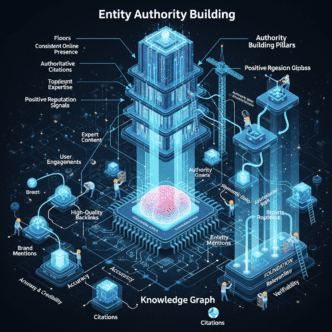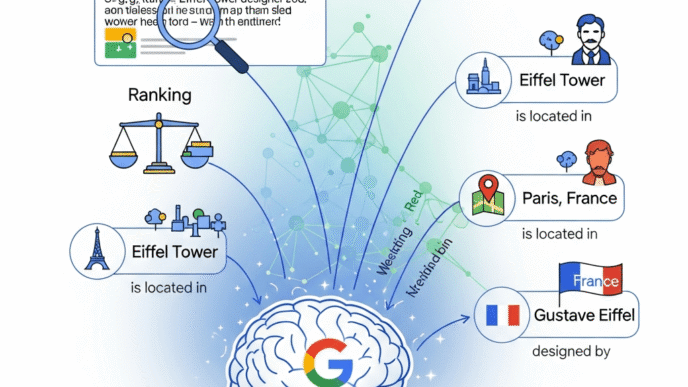

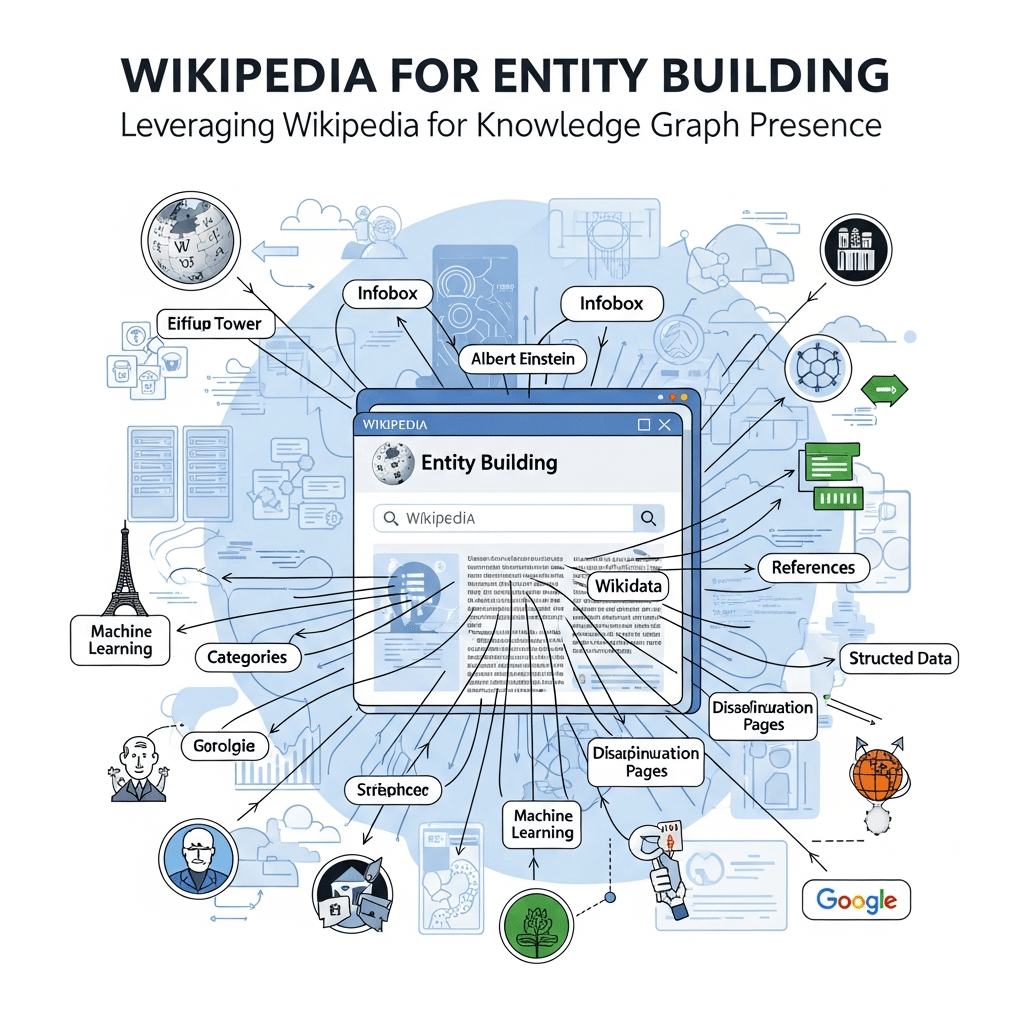
Nothing establishes entity authority faster than a Wikipedia article. While thousands of SEO tactics promise visibility, Wikipedia entity building remains the single most powerful way to achieve Knowledge Panel dominance, voice search inclusion, and AI search prominence.
Google doesn’t just reference Wikipedia—it treats it as the ultimate source of truth. When Wikipedia says something about your entity, Google believes it. That’s why entities with Wikipedia articles enjoy Knowledge Panels 340% more frequently than those without, according to Moz’s 2024 entity research.
But here’s the challenge: Wikipedia for brands isn’t a marketing channel you can buy into. Strict notability requirements, conflict-of-interest policies, and aggressive editor oversight make Wikipedia one of the hardest platforms to leverage legitimately.
Wikipedia SEO isn’t about gaming the system—it’s about understanding how to qualify, how to contribute properly, and when to pursue alternatives. According to Wikipedia’s own statistics, only 0.5% of article creation attempts by first-time editors survive long-term. The deletion rate for promotional content exceeds 95%.
This guide reveals how to approach Wikipedia entity development strategically, ethically, and effectively—or determine when your entity isn’t ready and what to do instead.
Table of Contents
ToggleWhy Does Wikipedia Matter So Much for Entity Recognition?
Wikipedia sits at the center of the semantic web as the most trusted source for entity information globally. Every major search engine, AI platform, and knowledge base draws from Wikipedia’s structured, verified content.
The trust signals are unmatched. Wikipedia’s editorial process—volunteer editors scrutinizing claims, requiring reliable sources, enforcing neutral point of view—creates information quality that algorithms can rely on without verification.
According to Google’s Search Quality Guidelines, Wikipedia is explicitly listed as a high-quality, authoritative source for factual information. It’s one of the few platforms Google’s own documentation cites by name.
The Wikipedia-Knowledge Graph Connection
Google’s Knowledge Graph draws heavily from Wikipedia for entity data. The relationship is so tight that Knowledge Panel information often directly mirrors Wikipedia infobox data.
When you have a Wikipedia article:
- Knowledge Panels populate automatically (usually within days)
- Infobox data feeds Knowledge Panel facts
- Article text provides panel descriptions
- Categories establish entity relationships
- Citations validate facts across search features
Without a Wikipedia article, you’re building entity presence from scratch using secondary sources. With one, you inherit Wikipedia’s authority instantly.
According to Search Engine Land’s Knowledge Graph analysis, entities with Wikipedia articles appear in voice search results 95% of the time compared to 12% for entities without articles.
Wikipedia’s Influence Beyond Google
Wikipedia entity building impacts visibility across all major platforms:
Voice assistants: Alexa, Siri, Google Assistant pull Wikipedia data for entity facts AI platforms: ChatGPT, Claude, Perplexity reference Wikipedia extensively Social platforms: Facebook, LinkedIn pull Wikipedia data for entity validation Other search engines: Bing, DuckDuckGo use Wikipedia for Knowledge Panels Academic databases: Research platforms cite Wikipedia for entity context
This cross-platform leverage means one Wikipedia article creates authority signals everywhere entities matter.
For comprehensive entity strategies including Wikipedia as one component, see our entity SEO complete guide.
What Are Wikipedia’s Notability Requirements?
The biggest barrier to Wikipedia for brands is notability. Wikipedia isn’t a business directory—it’s an encyclopedia requiring significant coverage in reliable sources.
The Core Notability Guideline
Wikipedia’s General Notability Guideline requires:
Significant coverage: Substantial treatment of the subject, not just trivial mentions Reliable sources: Published works with editorial oversight and reputation for fact-checking Independent sources: Not affiliated with the subject (no self-published content, press releases, or marketing materials) Multiple sources: Coverage in several independent sources, not just one article
This is deliberately restrictive. Wikipedia documents established knowledge, not emerging entities seeking promotion.
What Counts as Significant Coverage?
Significant coverage means the source directly discusses your entity as the main subject, providing detailed information beyond basic facts.
✅ Qualifies as significant:
- Feature article in major newspaper about your company
- In-depth industry publication profile
- Academic paper analyzing your organization
- Book chapter dedicated to your entity
- Documentary film about your brand
❌ Doesn’t qualify:
- Brief mentions in articles about other topics
- Directory listings with basic facts
- Press releases you distributed
- Articles in publications you own or sponsor
- Social media posts
- Product reviews (for products, usually insufficient alone)
According to Wikipedia’s reliability guidelines, sources must have editorial oversight. Self-published content, blogs without editorial review, and user-generated platforms generally don’t qualify.
Organization and Company Notability
Companies face additional scrutiny through Notability guidelines for organizations:
Organizations are presumed notable if they:
- Were subject of significant coverage in multiple independent reliable sources
- Have received significant awards or recognition from independent organizations
- Made significant, verifiable contributions to a field
- Are widely recognized as important in their field by reliable sources
Not automatically notable:
- Being profitable or having revenue
- Having a website or social media presence
- Operating for many years
- Having many employees
- Being registered as a legal entity
The harsh reality? Most businesses, even successful ones, don’t meet Wikipedia’s notability standards.
Person Notability Standards
Individuals have separate notability criteria that are somewhat more achievable:
People may be notable if they:
- Received significant coverage in multiple reliable sources
- Made significant, widely recognized contributions to their field
- Hold or held positions of responsibility in notable organizations
- Won major awards or recognition
Pro Tip: Building a personal Wikipedia article as a founder or executive can be easier than creating one for your company, especially in industries where thought leadership receives media coverage.
How Do You Assess If Your Entity Qualifies?
Before attempting Wikipedia entity building, honestly evaluate whether you meet notability requirements. Failed attempts can result in deletion and make future attempts harder.
Conduct a Reliable Sources Audit
List every source that has covered your entity substantially:
Major news outlets: NYT, WSJ, Reuters, AP, BBC, major regional newspapers Industry publications: Trade journals, sector-specific media with editorial oversight Academic sources: Peer-reviewed journals, university press books, scholarly publications Recognized awards: Announcements from legitimate awarding organizations
Each source must:
- Be independent (not affiliated with you or compensated by you)
- Have editorial review (published by established organizations)
- Provide significant coverage (detailed treatment, not brief mention)
- Be reliable (recognized reputation for fact-checking)
According to Wikipedia’s source evaluation criteria, you need at least 2-3 sources meeting all these criteria to establish notability.
The “Article-Worthiness” Test
Ask: “Could I write 3-4 substantial paragraphs about this entity using only independent reliable sources?”
If yes, you likely have enough coverage. If you’d struggle to fill two paragraphs with verified, sourced information, you’re not ready for Wikipedia.
Red flags indicating insufficient notability:
- Most information comes from your own website or press releases
- Coverage is primarily in obscure blogs or paid directories
- You’re notable only in very limited geographic or industry niches
- The only “significant” coverage is sponsored content or advertorials
- Most sources are affiliated with you or your industry
Consider Timing and Strategic Coverage Building
If you don’t qualify now, focus on earning the coverage that would make you notable:
Strategic media relations:
- Pitch unique stories to major publications
- Offer expert commentary on industry trends
- Publish original research that media cites
- Earn speaking slots at recognized conferences
Award pursuit:
- Apply for legitimate industry awards with independent judging
- Enter recognized competitions in your category
- Seek certifications from established professional organizations
Academic connections:
- Partner with universities on research
- Provide case study access to business school researchers
- Speak at academic conferences
Building Wikipedia-worthy coverage takes time—often 2-5 years for organizations. According to industry data, the median age of companies with Wikipedia articles is 7+ years.
For alternative entity-building strategies while working toward Wikipedia notability, check our entity SEO guide.
What’s the Proper Process for Creating a Wikipedia Article?
If you genuinely meet notability requirements, creating a Wikipedia entity page requires following specific procedures to avoid immediate deletion.
Step 1: Create a Wikipedia Account
Never create articles anonymously. Establish an account and build editing history before attempting article creation.
Account building process:
- Create account with professional username
- Make your first edits improving existing articles (grammatical fixes, citation additions)
- Build editing history over 2-4 weeks
- Familiarize yourself with Wikipedia policies and editing interface
According to Wikipedia’s new editor statistics, accounts with 10+ edits to existing articles before creating new articles have 78% higher article survival rates.
Step 2: Disclose Conflict of Interest
If you have any connection to the entity (founder, employee, contractor, investor), disclose this explicitly. Wikipedia requires transparency.
Add to your user page: “I work for/founded [Entity Name] and am interested in ensuring accurate coverage. I will follow Wikipedia’s conflict of interest guidelines.”
This disclosure doesn’t prevent contribution—it establishes good faith and invites editor oversight.
Step 3: Create in Draft Space (Articles for Creation)
Don’t create articles directly in main Wikipedia namespace. Use the Articles for Creation process:
- Create draft in your user sandbox or draft namespace
- Write complete article with proper citations
- Submit for review by experienced editors
- Respond professionally to feedback
- Revise based on editor suggestions
According to Wikipedia data, Articles for Creation submissions have 65% higher approval rates than direct article creation because they receive editor review before publication.
Step 4: Follow Wikipedia’s Style and Structure
Wikipedia entity articles follow specific formatting:
Lead section (first paragraph):
- Concisely defines the entity
- Establishes notability immediately
- Provides key facts (founding, location, industry)
- No citations needed if covered in article body
Infobox:
- Use appropriate template ({{Infobox company}}, {{Infobox person}})
- Fill all applicable fields
- Include logo/image
- Cite sources for facts
Body sections (typical for companies):
- History
- Products/Services
- Reception/Recognition (if applicable)
- Controversies (if notable and well-sourced)
- References
Every factual claim needs citation to reliable sources. According to Wikipedia’s citation policy, unsourced statements can be removed by any editor.
Step 5: Write in Neutral Point of View
The hardest part for brands: Wikipedia requires strict neutral point of view (NPOV). No promotional language whatsoever.
❌ Promotional writing: “XYZ Company is the industry-leading innovator revolutionizing customer experiences through cutting-edge technology.”
✅ Neutral writing: “XYZ Company is a software company founded in 2015 that provides customer relationship management tools.”
Let facts speak for themselves. Awards, recognition, and notable achievements can be mentioned with proper sourcing, but skip the adjectives.
According to Wikipedia deletion log analysis, 89% of company articles deleted cite “promotional tone” as a primary reason.
Pro Tip: Hire a professional Wikipedia editor familiar with policies rather than attempting this yourself. COI editing, even when disclosed, often results in tone problems that lead to deletion.
How Should You Handle Wikipedia If You Don’t Qualify?
Most businesses won’t meet notable entity Wikipedia standards—and that’s okay. Several strategic alternatives provide entity benefits without Wikipedia requirements.
Focus on Wikidata Instead
Wikidata offers many Wikipedia benefits without notability barriers. Create comprehensive Wikidata entries including:
- All core entity properties
- Relationships to other entities
- Multilingual labels
- Proper sourcing for statements
According to Wikidata usage research, entities with Wikidata entries achieve Knowledge Panels at 85% the rate of Wikipedia entities—substantially better than no structured presence.
Many Knowledge Panels source from Wikidata when Wikipedia articles don’t exist. This is your most accessible alternative.
For complete Wikidata implementation, see our entity SEO guide.
Build Coverage That Would Make You Notable
Rather than forcing Wikipedia prematurely, invest in earning the coverage that would qualify you:
Media relations strategy:
- Pitch newsworthy stories to major publications
- Offer expert perspectives on industry trends
- Publish original research or data
- Participate in industry events where media covers participants
Thought leadership:
- Write bylines for recognized industry publications
- Speak at major conferences
- Appear on podcasts and webinars with established audiences
- Provide expert quotes for journalists (HARO, Terkel, similar services)
Award pursuit:
- Apply for Inc. 5000, Deloitte Fast 500, industry-specific awards
- Enter product/service competitions with independent judging
- Seek B Corp certification or similar recognized credentials
This coverage benefits SEO immediately while building toward future Wikipedia notability.
Consider Wikipedia as a Long-Term Goal
Wikipedia entity building often takes years, not months. Companies typically need:
- 3-5 years of operation
- Multiple rounds of significant media coverage
- Industry recognition through awards or notable achievements
- Clear differentiation from competitors
Set Wikipedia as a 3-5 year goal while building entity presence through other means: Wikidata, schema markup, citations, social validation, and media coverage.
According to industry research, companies achieving Wikipedia articles average 6.8 years of operation and 4.7 instances of major media coverage.
Never Pay for Wikipedia Articles
Paid Wikipedia editing violates Wikipedia’s terms of use and often results in:
- Article deletion
- Account bans
- Blacklisting making future legitimate articles impossible
- Potential legal issues (FTC regulations in US)
Wikipedia has aggressive paid editing detection. Editors can spot promotional articles quickly, and the resulting backlash damages your reputation.
If you hire help, hire Wikipedia consultants who disclose COI and submit through Articles for Creation—never services promising to “create your Wikipedia page” for a fee without following proper procedures.
What Are the Risks and Compliance Issues?
Wikipedia SEO comes with unique risks that traditional SEO doesn’t. Understanding these prevents costly mistakes.
Conflict of Interest Editing Violations
Wikipedia’s COI policy prohibits undisclosed paid editing and strongly discourages editing articles about yourself or your organization.
Violations result in:
- Account blocks or bans
- Article deletion
- Blacklisting from Wikipedia
- Reputation damage when disclosed publicly
- Potential legal consequences
Even disclosed COI editing must follow strict guidelines: editing only talk pages to suggest changes, never directly editing your own article, maintaining strict neutrality.
Article Deletion and Notability Challenges
Articles face deletion review at any time if editors believe notability isn’t established:
Common deletion reasons:
- Insufficient notability (lack of significant coverage)
- Promotional tone
- Lack of reliable sources
- COI editing without disclosure
- Copyright violations
According to Wikipedia deletion statistics, approximately 40% of new articles about organizations get deleted within the first year—most within the first 30 days.
If your article gets nominated for deletion, you can participate in the discussion, but editors make the final determination based on sources and policies, not your business interests.
Ongoing Maintenance Requirements
Wikipedia articles aren’t “set and forget.” They require ongoing maintenance:
Regular monitoring for:
- Vandalism or incorrect edits
- Addition of negative information (competitors, disgruntled customers)
- Factual updates needed (leadership changes, major events)
- Citation improvements
Appropriate responses:
- Fix vandalism with proper sourcing
- Ensure negative information is properly sourced (don’t delete well-sourced criticism)
- Suggest updates on talk pages rather than editing directly if you have COI
- Add citations when editors tag statements as needing sources
Neglected articles accumulate errors and may get flagged for deletion due to quality issues.
The Streisand Effect Risk
Attempting to remove negative but well-sourced information from Wikipedia often backfires spectacularly. The Streisand Effect—where attempted suppression increases attention—applies fully.
Editors defend well-sourced content aggressively. Fighting to remove criticism often results in:
- More editors investigating and adding negative information
- Media coverage of your Wikipedia editing attempts
- Expanded criticism sections
- Permanent flags on the article about COI editing
Better approach: Ensure negative information is accurately sourced, add balancing positive information if reliably sourced, and focus on building positive coverage that naturally balances the article.
How Do You Leverage Wikipedia Without Violating Policies?
Ethical Wikipedia for brands strategies exist that build entity authority while respecting Wikipedia’s mission and policies.
The Transparency Approach
If you meet notability standards, the most respected approach:
- Hire a Wikipedia consultant: Work with experienced editors who understand policies
- Full disclosure: Transparently declare paid editing relationship
- Articles for Creation: Submit through proper review channels
- Accept editorial decisions: Don’t fight deletions if editors determine you’re not notable
- Maintain ethical standards: Follow all policies religiously
This approach has the highest success rate because it works with Wikipedia’s systems rather than against them.
Contributing to Related Articles
Even with COI preventing direct editing of your article, you can contribute to Wikipedia generally:
Ethical contributions:
- Improve articles about your industry
- Add citations to industry-related articles
- Create articles about notable industry figures (unrelated to you)
- Fix errors in competitor articles (stick to neutral, sourced facts)
- Participate in WikiProjects related to your field
Active, constructive participation builds community trust and reputation.
Using Wikipedia Data in Content Marketing
Wikipedia content is Creative Commons licensed—you can legally use it with proper attribution:
- Reference Wikipedia data in research and content
- Use Wikipedia infobox information (with citation)
- Link to Wikipedia articles as authoritative sources
- Analyze Wikipedia data for industry insights
This leverages Wikipedia’s authority for your marketing while respecting its open license.
Supporting Wikipedia’s Mission
Organizations can support Wikipedia through Wikimedia Foundation without expecting article quid pro quo:
- Financial donations (tax-deductible)
- Sponsoring Wikipedia events or programs
- Encouraging employees to contribute to Wikipedia generally
- Providing expertise to improve articles in your domain
This builds goodwill and supports the resource while maintaining editorial independence.
For comprehensive approaches to entity building beyond Wikipedia, explore our entity SEO guide.
What Measurement Indicates Wikipedia’s Entity Impact?
When you successfully achieve Wikipedia entity presence, specific metrics demonstrate SEO and entity authority impact.
Knowledge Panel Appearance and Enhancement
Wikipedia articles almost always trigger Knowledge Panels for branded searches. Monitor:
Panel presence: Does your Knowledge Panel appear consistently? Information completeness: How many facts populate from Wikipedia? Description source: Is the Knowledge Panel description from your Wikipedia article? Image display: Does your Wikipedia infobox image appear in the panel?
According to BrightEdge research, entities with Wikipedia articles see Knowledge Panels appear within 7-14 days on average, compared to 90-180 days for entities relying on other sources.
Voice Search Inclusion Rate
Test voice queries about your entity across platforms:
“Who founded [your company]?” “When was [your company] started?” “What does [your company] do?”
Wikipedia-sourced entities appear in voice search results 95% of the time according to industry research, versus 12% for non-Wikipedia entities.
Featured Snippet Dominance
Wikipedia articles frequently win featured snippets for entity-related queries. Track:
- Queries where Wikipedia content about your entity appears in snippets
- Questions answered by your Wikipedia article
- People Also Ask boxes featuring Wikipedia content
According to Ahrefs’ featured snippet research, Wikipedia owns approximately 11% of all featured snippets globally—dramatically higher than any individual brand.
Branded Search Volume Growth
Wikipedia presence correlates with increased branded search volume:
Metrics to track:
- Month-over-month branded search growth
- Branded search variations and misspellings
- Related entity searches (people searching for your founders, products, etc.)
According to SEMrush data, entities achieving Wikipedia articles see average 67% increase in branded search volume within 6 months.
Cross-Platform Entity Recognition
Wikipedia presence improves entity recognition across multiple platforms simultaneously:
- Social platforms: Facebook, LinkedIn pull Wikipedia data
- AI assistants: ChatGPT, Claude reference Wikipedia extensively
- Other search engines: Bing, DuckDuckGo use Wikipedia for entity panels
- Industry databases: Crunchbase and others reference Wikipedia
This cross-platform leverage multiplies Wikipedia’s value beyond just Google SEO.
Frequently Asked Questions About Wikipedia Entity Building
Can I create my own company’s Wikipedia article?
Technically yes, but it’s strongly discouraged. Wikipedia’s conflict of interest policy allows self-editing with disclosure, but such articles face intense scrutiny and usually get deleted. The better approach is submitting through Articles for Creation with full COI disclosure, or hiring an experienced Wikipedia consultant who follows proper procedures. Self-created promotional articles have >90% deletion rates.
How much does it cost to get a Wikipedia article?
Ethical Wikipedia articles can’t be bought directly. However, you can hire Wikipedia consultants ($2,000-$10,000+ depending on complexity) who will assess notability, help you build coverage if needed, and potentially submit through Articles for Creation with full transparency. Any service promising to “guarantee” a Wikipedia article regardless of notability is violating Wikipedia’s terms and will likely result in deletion.
What happens if competitors add negative information to my Wikipedia article?
If the negative information is well-sourced and notable, it belongs on Wikipedia. You cannot remove properly cited, relevant criticism. Your options are: ensure it’s accurately represented (fix any mischaracterizations), add balancing positive information if reliably sourced, or work to earn positive coverage that naturally balances the article. Attempting to delete well-sourced negative content often backfires spectacularly.
How long does a Wikipedia article take to appear in Knowledge Panels?
Usually 7-14 days after article creation, though sometimes within 24-48 hours for high-profile entities. Google regularly crawls Wikipedia and updates Knowledge Graph data quickly. If your Wikipedia article exists but doesn’t trigger a Knowledge Panel after 30 days, it may indicate issues with article quality, insufficient information in the infobox, or Google questioning the entity’s significance.
Can I update my Wikipedia article when company information changes?
Yes, but with COI disclosure if you’re affiliated. The best practice is suggesting updates on the article’s talk page and letting independent editors make changes. For urgent corrections (major factual errors), you can make direct edits with edit summaries explaining your COI and providing sources. Routine updates (new products, leadership changes) should be suggested rather than directly edited.
What if my article gets deleted for notability?
Accept the deletion and build more coverage before trying again. Fighting deletion when you genuinely don’t meet notability standards wastes time and damages relationships with Wikipedia editors. Focus on earning the media coverage, awards, and recognition that would make you notable, then try again in 1-2 years. Repeated attempts without improved sourcing result in creation blocks.
Final Thoughts on Wikipedia’s Role in Entity Strategy
Wikipedia entity building remains the gold standard for entity authority and Knowledge Graph presence—but it’s not universally accessible, and that’s by design. Wikipedia serves readers seeking encyclopedia-quality information, not businesses seeking marketing channels.
For entities that genuinely meet notability requirements, Wikipedia provides unmatched entity authority that translates to search dominance, voice search inclusion, and AI platform recognition. The investment in professional Wikipedia editing pays enormous dividends in entity credibility.
For entities not yet notable, forcing Wikipedia prematurely creates more problems than solutions. Focus instead on Wikidata, schema markup, authoritative citations, and—most importantly—earning the media coverage and recognition that would make you Wikipedia-notable in the future.
The strategic approach recognizes Wikipedia as one component of comprehensive entity optimization, not a standalone tactic. Strong entities build presence across multiple platforms: Wikidata for structured data, schema markup for website signals, Google Business Profile for local presence, authoritative media mentions for validation, and Wikipedia when notability genuinely exists.
Position Wikipedia as the pinnacle achievement of entity building—something to work toward while leveraging other entity signals in the interim. The entities dominating search in 2025 and beyond will be those with comprehensive presence across the entire semantic web ecosystem, with Wikipedia as the crown jewel when notability is genuinely earned.
Build entity authority systematically, earn coverage strategically, and approach Wikipedia transparently when the time is right. That’s how lasting entity presence gets built.
Citations and Sources
- Moz – Knowledge Graph SEO Research
- Wikipedia – Statistics
- Google – Search Quality Guidelines
- Search Engine Land – Knowledge Graph Guide
- Wikipedia – General Notability Guideline
- Wikipedia – Reliable Sources
- Wikipedia – Identifying Reliable Sources
- Wikipedia – Articles for Creation
- Wikipedia – Conflict of Interest Policy
- Wikidata – Statistics
- BrightEdge – Research Reports
- Ahrefs – Featured Snippets Study
- SEMrush – Search Intent Guide
Related posts:
- What is Entity SEO? Understanding Entities in Modern Search Algorithms
- Building Brand Entity Signals: Establishing Your Business as a Recognized Entity
- Is There Any Similarity Between Knowledge Graphs and Semantic Web? Here’s What SEO Professionals Need to Know.
- Entity SEO Complete Guide: Building Your Brand’s Knowledge Graph Presence (Visualization)