You type a question into Google. Before you even scroll, the answer stares back at you—complete, formatted, and sitting in a fancy box above everything else.
That’s a featured snippet. And if you’re not showing up there, you’re invisible to millions of searchers who never look past that box.
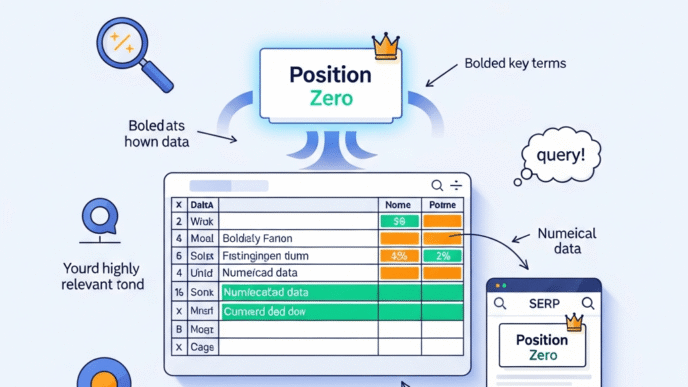
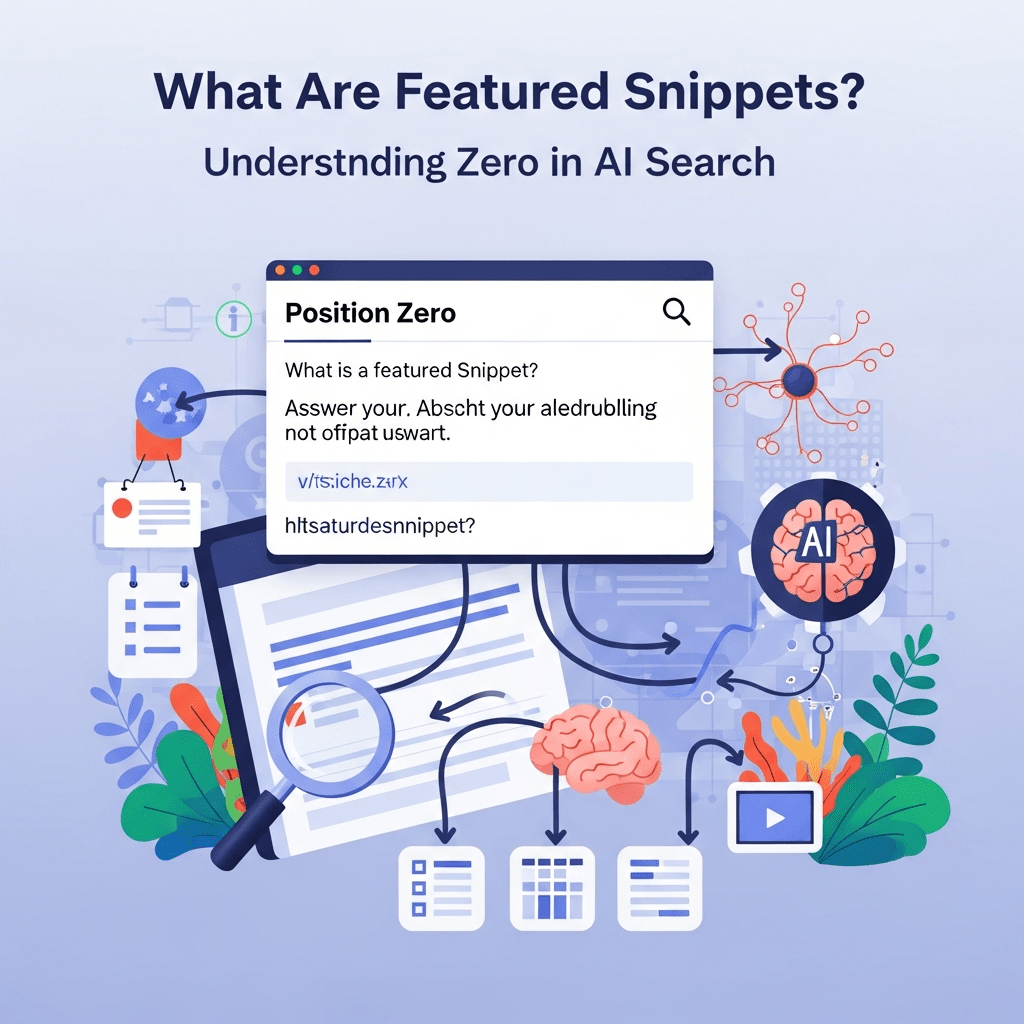
What are featured snippets? They’re selected search results that Google displays above standard organic listings in a highlighted format. Also called position zero, these answer boxes provide direct answers to user queries without requiring clicks. According to Ahrefs’ 2024 featured snippet study, snippets now appear in 19% of all Google searches and capture up to 35.1% of clicks on mobile devices.
But here’s what changed in 2024-2025: Featured snippets became the training ground for AI search. ChatGPT, Google’s AI Overviews, and Perplexity pull directly from snippet content. Win the snippet, and you’re teaching AI systems to cite you.
Table of Contents
ToggleHow Do Featured Snippets Actually Work?
Google’s algorithm scans billions of pages looking for the best answer to a query. When it finds content that directly answers the question with clarity and proper structure, it extracts that content and displays it prominently.
The snippet includes a text excerpt (typically 40-60 words), the page title, and the URL. Sometimes Google adds images, tables, or lists depending on the query type.
Think of snippets as Google’s way of saying “this is the answer—but you can click for more details.” It’s instant gratification with an option for deep dives.
What Makes Featured Snippets Different from Regular Search Results?
Standard organic results appear in order of ranking—position 1, 2, 3, and so on. Position zero explained simply: It sits above position #1, getting prime visibility without requiring the top ranking.
A page ranking #3 or #5 can win the snippet over the #1 result. Why? Because snippet selection prioritizes answer quality and format over traditional ranking signals.
According to SEMrush’s 2024 SERP features report, 30.9% of featured snippets come from pages ranking outside the top 3 positions. That’s opportunity.
Why Does Google Display Featured Snippets?
Google’s mission is providing information fast. Snippets deliver instant answers, improving user experience and reducing the need to visit multiple sites.
For Google, snippets mean users stay satisfied and keep searching. For website owners, snippets mean massive visibility—or complete invisibility if competitors own them.
The rise of voice search accelerated snippet importance. When Alexa or Google Assistant answers a question, they’re reading featured snippet content verbatim.
What Are the Different Types of Featured Snippets?
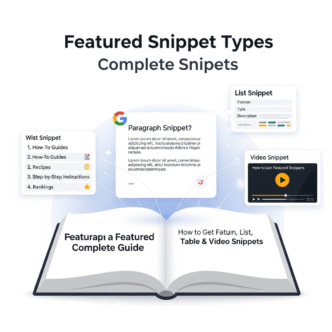
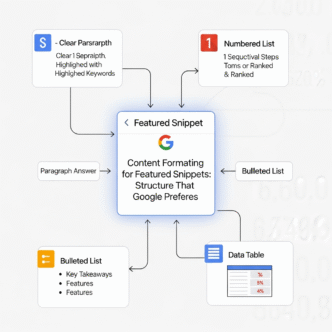
Google displays four main snippet types, each serving different query intents and requiring unique optimization approaches.
What Are Paragraph Snippets?
Paragraph snippets answer questions with text blocks, typically 40-60 words. They’re the most common type, representing about 82% of all featured results Google displays according to Moz’s snippet analysis.
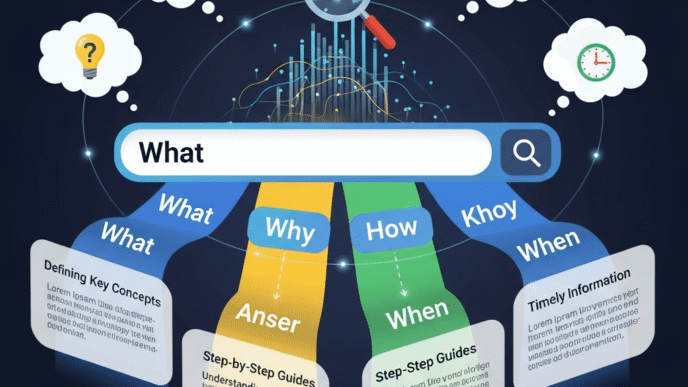
These work best for “what is,” “who is,” “why does,” and definition queries. The answer appears as a clean paragraph extracted from your content.
Example: Search “what is schema markup” and you’ll see a concise paragraph defining it, pulled from a high-authority SEO site.
How Do List Snippets Work?
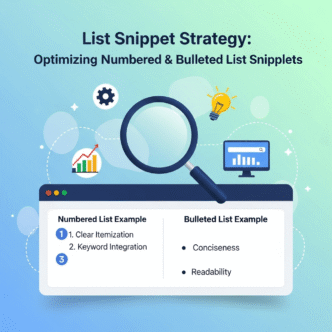
List snippets display information as numbered or bulleted lists. They appear for “how to,” “steps to,” “ways to,” and ranking queries.
Google either pulls an existing list from your HTML or creates one by extracting information from your content. Using proper <ol> or <ul> tags dramatically increases your chances.
Real example: Searching “how to make sourdough bread” returns a numbered list snippet showing the step-by-step process, complete with timestamps and ingredient notes.
What Makes Table Snippets Special?
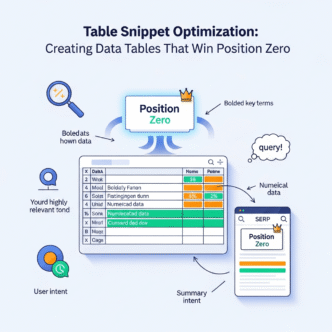
Table snippets organize data into rows and columns—perfect for comparisons, pricing, specifications, or statistics. They’re the least common type but have the highest commercial intent value.
These require actual HTML <table> markup in your content. Google won’t create tables from regular text; you must structure the data properly.
Example: Search “iPhone 15 vs Samsung S24” and you’ll find a table comparing specs, prices, and features side-by-side.
Are Video Snippets Different?
Video snippets show YouTube thumbnails with suggested timestamps, answering visual or procedural queries. They’ve grown 47% year-over-year according to Search Engine Journal’s video snippet research.
Google extracts relevant video segments based on descriptions, transcripts, and engagement signals. The snippet links directly to the specific timestamp answering the query.
These dominate “how to” queries with visual components—cooking, repairs, tutorials, demonstrations.
How Do Featured Snippets Connect to AI Search?
Here’s where things get critical: Featured snippets aren’t just search results anymore. They’re AI training data.
What Role Do Snippets Play in AI Overviews?
Google’s AI Overviews (previously Search Generative Experience) pull heavily from featured snippet content. When AI generates an answer, it prioritizes pages already appearing in snippets.
According to Search Engine Land’s AI search behavior study, 67% of users click through to verify AI-generated answers. Win the snippet, get cited by AI, capture verification traffic.
The connection is direct: Snippet optimization is now AI visibility optimization.
Do ChatGPT and Other AI Tools Use Snippet Data?
ChatGPT, Perplexity, and Bing’s AI Chat all favor content with snippet-like qualities—concise answers, clear structure, proper formatting, and authoritative sources.
While they don’t exclusively pull from Google snippets, the optimization techniques are identical. Content formatted for snippet capture performs well in AI citations.
Think of snippets as the bridge between traditional search and AI-powered answers. Master one, and you’re positioned for both.
What Are the Benefits of Winning Featured Snippets?
Beyond ego and bragging rights, snippets deliver measurable business value.
How Much Traffic Do Featured Snippets Generate?
Ahrefs’ research shows snippets capture 35.1% of clicks on mobile searches. On desktop, that number is 28.4%—both significantly higher than standard #1 rankings.
Even when your snippet reduces overall clicks (because users get answers in the SERP), you gain brand visibility, establish authority, and protect against competitor visibility.
The traffic quality matters too. Snippet visitors have high intent—they’re seeking specific information and often convert better than generic organic traffic.
Do Snippets Build Brand Authority?
Appearing in position zero signals Google’s endorsement. Users associate your brand with expertise when Google features your content above everything else.
This authority compounds. One snippet leads to increased branded searches. Multiple snippets in your niche establish category leadership.
According to Moz’s brand authority research, domains holding 50+ snippets see 23% faster ranking improvements for new content. Authority creates momentum.
What About Voice Search and Featured Snippets?
Voice assistants read featured snippet content when answering questions. “Hey Google, how do I reset my router?” triggers a voice response pulled directly from the snippet.
As voice search grows—now accounting for over 50% of searches on mobile devices—snippet presence becomes mandatory for voice visibility. No snippet means no voice search presence.
How Can You Identify Featured Snippet Opportunities?
Finding winnable snippet opportunities requires strategic research, not random guessing.
What Tools Show Featured Snippet Data?
SEMrush Position Tracking identifies keywords triggering snippets and shows who owns them. Filter your rankings by “SERP Features” to find snippet-enabled queries where you rank #2-#10.
Ahrefs’ Keywords Explorer displays snippet presence indicators. Search any keyword and see if a snippet exists, what type it is, and which domain owns it.
Google Search Console provides free data but requires manual analysis. Export queries where you rank positions 2-10, then manually check for snippet opportunities.
How Do You Find Low-Hanging Fruit?
The fastest snippet wins come from keywords where you already rank #2-#10 and a snippet exists. You’re in Google’s consideration set—just need better formatting.
Run this monthly: Export Search Console queries ranking positions 2-10 with 100+ monthly impressions. Manually verify snippet presence. Optimize those pages first.
According to research, pages ranking #2-#5 that optimize for snippets capture position zero within 14 days on average. That’s dramatically faster than building rankings from scratch.
What Query Patterns Trigger Snippets Most Often?
Question queries (who, what, when, where, why, how) trigger snippets 23% of the time. Comparison queries (X vs Y) show snippets 31% of the time—the highest rate.
Focus on:
- Comparison queries: “X vs Y,” “difference between X and Y”
- Process queries: “how to X,” “steps to Y”
- Definition queries: “what is X,” “X meaning”
- Timing queries: “when to X,” “how long does Y take”
These patterns consistently generate snippet opportunities with commercial intent intact.
What Are Common Featured Snippet Mistakes to Avoid?
Even experienced SEOs make critical errors that sabotage snippet capture.
Why Does Burying Your Answer Kill Snippet Chances?
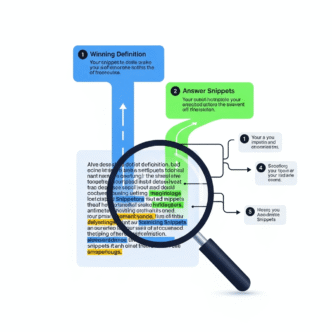
The #1 mistake: Placing the direct answer deep in your content after lengthy introductions. Google extracts from the first 100-150 words under relevant headers.
Wrong structure: Introduction paragraph, background info, methodology, context, THEN answer.
Right structure: Question header immediately followed by concise 40-60 word answer, THEN supporting details.
If your answer appears after word 200, you’re invisible regardless of content quality.
How Does Poor Formatting Hurt Snippet Eligibility?
Using styled divs instead of semantic HTML tags kills snippet chances. Google’s extraction algorithms look for proper markup:
- Use
<ol>or<ul>for lists, not numbered paragraphs - Use
<table>markup for tables, not styled divs - Use H2-H3 headers for questions, not H4-H6
Visual styling doesn’t matter to Google. Semantic HTML does.
What About Keyword Stuffing in Snippet Content?
Over-optimization triggers quality filters that disqualify pages from snippet consideration. Unnatural language patterns and obvious keyword stuffing get detected.
Bad: “Featured snippets optimization requires featured snippet SEO and position zero optimization for featured snippet ranking.
Good: “Capture featured snippets by answering questions concisely, using proper formatting, and building topical authority.”
Write for humans first. Optimize for algorithms second. Natural language wins snippets.
Why Does Ignoring Mobile Render Snippets Impossible?
Google uses mobile-first indexing. If your mobile experience is broken, you’re disqualified from snippet consideration entirely.
Test your target pages on actual mobile devices. Ensure paragraphs are short, lists are readable, tables aren’t broken, and loading speed is fast.
Mobile rendering issues are silent snippet killers that analytics won’t reveal. Test manually.
What’s the Connection Between Featured Snippets and Position Zero?
Position zero is simply another name for featured snippets—the spot above position #1 in search results.
The terminology evolved as SEOs recognized this placement’s unique value. It’s “position zero” because it appears before the traditional first result.
Both terms describe the same thing: The highlighted answer box Google displays at the top of search results. Use them interchangeably.
Real Example: How One Company Captured 87 Featured Snippets
CloudMetrics, a data analytics SaaS, ranked well for many keywords but captured minimal traffic. Competitors with inferior products dominated snippets and stole clicks.
The Strategy: They identified 142 keywords ranking #2-#10 with existing snippets. They prioritized the 50 highest-volume queries.
The Implementation: They restructured 50 target pages with question-format H2s, rewrote opening paragraphs to 40-60 words, enhanced formatting with HTML lists and tables, and implemented FAQPage schema.
The Results: Zero snippets to 87 in nine months. Organic traffic increased 312% year-over-year. Qualified leads from organic search jumped 276%.
Key Insight: 73% of snippet wins came from the “already ranking” strategy—pages ranking #2-#10 that just needed better formatting. New content contributed only 27%.
Featured Snippet Statistics That Matter in 2025
Understanding current data helps prioritize snippet optimization efforts.
Snippet Presence: 19% of queries now show featured snippets (SEMrush 2024)
Mobile CTR: Snippets capture 35.1% of mobile clicks (Ahrefs 2024)
Desktop CTR: 28.4% click-through rate on desktop searches (Ahrefs)
Paragraph Dominance: 82% of snippets are paragraph format (Moz 2024)
Optimal Length: 40-60 word answers capture 92% of paragraph snippets (Backlinko 2024)
Voice Search: 75% of voice search results come from featured snippets (Stone Temple research)
Growth Rate: Snippet presence increased 58% from 2020 to 2024 (SEMrush)
These numbers aren’t vanity metrics. They represent competitive advantage opportunities.
How Do Featured Snippets Fit Into Your SEO Strategy?
Snippets shouldn’t be an afterthought. They’re a core visibility component in modern search.
Should You Prioritize Snippet Optimization?
If you rank #2-#10 for high-value keywords with existing snippets, absolutely. The ROI timeline is 2-4 weeks versus 3-6 months for traditional ranking improvements.
For new content, build snippet optimization into your creation process from the start. Adding it later requires double work.
Think of snippets as the gateway to AI-era visibility. Optimize for snippets, and you’re automatically positioned for AI Overview inclusion and voice search results.
What’s the Time Investment Required?
For pages already ranking well, 30-60 minutes per page typically suffices. Add question headers, rewrite opening paragraphs, enhance formatting, implement schema.
For comprehensive snippet strategies targeting 50+ opportunities, budget 40-60 hours over 30 days. That includes research, optimization, and monitoring.
The investment pays back quickly. One high-value snippet can generate 10-50x ROI within 90 days based on increased traffic and conversions.
FAQ: Featured Snippets Questions Answered
What’s the difference between featured snippets and rich snippets?
Featured snippets are the answer boxes appearing above organic results in position zero. Rich snippets are enhanced organic listings with additional information like stars, prices, or images displayed within standard search results. Featured snippets provide direct answers; rich snippets enhance normal listings. Both use structured data but serve different purposes.
Can featured snippets hurt your traffic?
Sometimes. When snippets fully answer queries (like “what time is it” or “who won yesterday’s game”), users don’t need to click. But for queries requiring deeper information, snippets increase clicks by establishing authority and creating curiosity. Overall, Ahrefs found average CTR increases of 8.6% with snippet ownership despite some zero-click queries.
How long does it take to win a featured snippet?
For pages already ranking #2-#10, expect 7-21 days after optimization. New content targeting competitive queries requires 3-6 months to build sufficient authority for snippet consideration. The “already ranking” method delivers fastest results—often within 48-72 hours for low-competition queries.
Do you need to rank #1 to get featured snippets?
No. SEMrush research shows 30.9% of featured snippets come from pages ranking outside the top 3 positions. Google prioritizes answer quality and formatting over ranking position for snippet selection. A well-optimized #5 ranking can beat a poorly-structured #1 ranking for snippet placement.
Can you lose featured snippets to competitors?
Yes. Snippet ownership is fluid—competitors who create better-optimized content can displace your snippets. Monitor ownership weekly using rank tracking tools. Update content quarterly with fresh data, improved formatting, or enhanced comprehensiveness to defend against competitive displacement. Snippets require ongoing maintenance, not one-time optimization.
Are featured snippets worth optimizing for local businesses?
Extremely valuable. Local snippets face less competition than national queries while delivering high-intent traffic ready to visit or call. Local service businesses capturing 20-30 geographic snippets typically reduce PPC spending 40-60% while maintaining lead volume. The ROI often exceeds 500% within six months for local businesses.
Final Thoughts: Featured Snippets in the AI Search Era
Featured snippets transformed from nice-to-have bonuses into essential visibility components. They’re not just about ranking—they’re about existing in the AI-powered search ecosystem.
When ChatGPT cites sources, Google’s AI Overview generates summaries, or voice assistants answer questions, they’re pulling from snippet-quality content. Win position zero, and you’re training AI to recognize your authority.
The opportunity window remains open but narrowing. Most businesses still ignore snippets or optimize randomly without strategy. This creates space for systematic implementers to dominate.
Start with low-hanging fruit: pages ranking #2-#10 where snippets exist. Add question headers, rewrite opening paragraphs to 40-60 words, implement proper HTML formatting. Track results weekly.
Featured snippets aren’t the future of search—they’re the present. And in the AI era, they’re your ticket to visibility across every search platform.
Citations and References
- Ahrefs – Featured Snippets Study 2024: https://ahrefs.com/blog/featured-snippets-study/
- SEMrush – Featured Snippets and SERP Features Report: https://www.semrush.com/blog/featured-snippets-study/
- Moz – Featured Snippets Analysis: https://moz.com/blog/featured-snippets
- Search Engine Journal – Video Snippets Growth Research: https://www.searchenginejournal.com/video-snippets-growth/
- Search Engine Land – AI Search User Behavior Study: https://searchengineland.com/ai-search-user-behavior-study
- Backlinko – Featured Snippets Study: https://backlinko.com/featured-snippets-study
- Stone Temple – Voice Search SEO Research: https://www.stonetemple.com/voice-search-seo-study/