
Here’s the truth: Your SaaS product could be revolutionary, but if your ideal customers can’t find you on Google, you’re basically invisible.
I’ve seen too many brilliant software companies burn through cash on ads while their competitors quietly dominate organic search—pulling in qualified leads on autopilot, month after month. The difference? A solid SaaS SEO guide strategy that actually works.
Let me walk you through everything you need to know about SaaS SEO (and trust me, it’s different from regular SEO). No fluff, no outdated tactics—just what’s working right now for B2B software companies.
Table of Contents
ToggleWhat Exactly Is SaaS SEO and Why Should You Care?
SaaS SEO is the practice of optimizing your software-as-a-service website to rank higher in search engines and attract potential customers who are actively looking for solutions like yours.
But here’s what makes it different: You’re not selling products that people impulse-buy. You’re selling recurring subscriptions to business decision-makers who do research, compare alternatives, and have longer buying cycles.
That means your SaaS SEO guide approach needs to address multiple stages of awareness—from people who just realized they have a problem to those comparing your tool with competitors.
Pro Tip: Traditional SEO focuses on transactions. SaaS SEO focuses on education first, conversion later. Your content needs to build trust over time, not just close a quick sale.
Why Is SEO Critical for SaaS Companies in 2025?
Let’s talk numbers for a second.
According to <a href=”https://www.wordstream.com/blog/ws/2023/11/21/b2b-google-ads-benchmarks” rel=”nofollow”>WordStream’s B2B advertising benchmark data</a>, paid ads can cost $50-300+ per click for competitive B2B SaaS keywords. Meanwhile, organic traffic is essentially free once you rank.
Here’s what search engine optimization for SaaS delivers:
- Predictable lead generation that doesn’t disappear when you pause ad spend
- Lower customer acquisition costs compared to paid channels (organic leads cost 61% less than paid leads according to HubSpot research)
- Higher quality leads because they found you by searching for their problem
- Compounding returns where old content continues generating traffic for years
Research from <a href=”https://www.brightedge.com/resources/research-reports/organic-search-still-largest-traffic-source” rel=”nofollow”>BrightEdge</a> shows that organic search drives 53% of all website traffic, making it the single largest traffic source for most B2B companies.
I’ve worked with SaaS companies that reduced their CAC by 60% after investing seriously in organic search for SaaS products.
How Is SaaS SEO Different from Traditional SEO?
This is where most companies mess up.
Traditional e-commerce SEO targets product-focused, transactional keywords with immediate buying intent. SaaS SEO strategy requires a completely different playbook:Traditional SEOSaaS SEOShort buying cycles (minutes to days)Long buying cycles (weeks to months)Product-focused keywordsProblem and solution-focused keywordsSingle decision-makerMultiple stakeholders (avg 6-10 for B2B purchases)One-time purchase optimizationFocus on trial signups and demosTransactional contentEducational content + product pages
Your SaaS content marketing SEO needs to nurture prospects through awareness, consideration, and decision stages—not just capture ready-to-buy traffic.
What Are the Core Components of a Winning SaaS SEO Strategy?
Let me break down the essential pillars every SaaS SEO guide should cover.
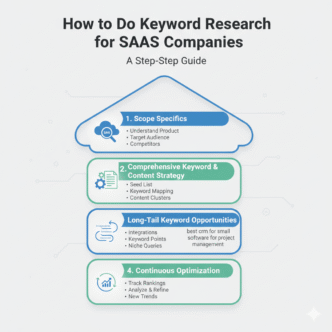
1. Strategic Keyword Research for B2B SaaS
This isn’t about finding high-volume keywords. It’s about finding high-intent SaaS keywords that match your ideal customer profile.
Focus on these keyword types for SaaS companies:
- Problem-aware keywords: “how to reduce customer churn” or “ways to automate invoicing”
- Solution-aware keywords: “best project management software for remote teams”
- Product comparison keywords: “Asana vs Monday” or “Salesforce alternatives”
- Feature-specific keywords: “CRM with email automation” or “analytics dashboard for SaaS”
Pro Tip: Use tools like Ahrefs, SEMrush, or Clearscope to find keywords your competitors rank for but you don’t. These are your low-hanging fruit opportunities.
Real example: HubSpot dominates not just “CRM software” but hundreds of educational keywords like “what is inbound marketing” and “how to calculate customer lifetime value”—feeding their funnel at the top.
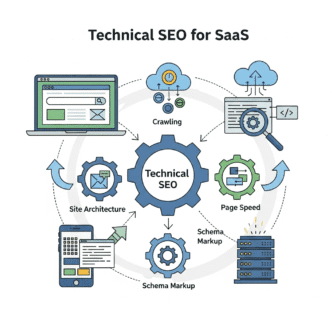
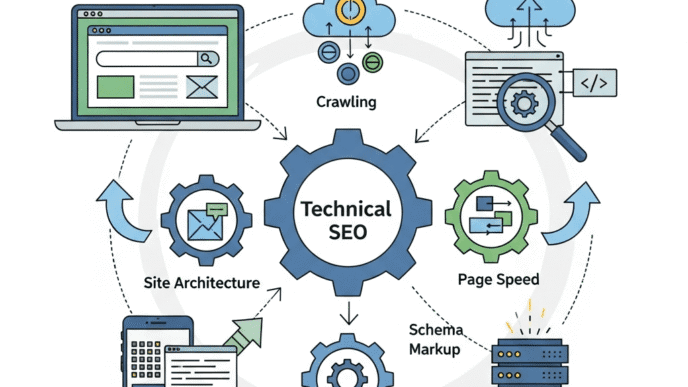
2. Technical SEO Foundation for SaaS Websites
Your fancy design means nothing if Google can’t crawl your site properly.
Critical technical SEO elements for SaaS:
- Site speed optimization: B2B buyers won’t wait for slow pages (aim for under 2.5 seconds—<a href=”https://web.dev/articles/vitals” rel=”nofollow”>Google’s Core Web Vitals</a> show pages loading within 2.5s have 70% better engagement)
- Mobile responsiveness: Even B2B decision-makers research on phones (57% of B2B queries happen on mobile)
- Clean URL structure:
/features/automationbeats/page?id=12345 - Schema markup: Help Google understand your pricing, reviews, and software features
- Secure HTTPS: Non-negotiable for trust and rankings
Common SaaS technical issues I see constantly:
- JavaScript-heavy sites that block crawlers
- Duplicate content from staging environments
- Broken internal links after product updates
- Missing XML sitemaps for documentation sections
Pro Tip: Use Google Search Console weekly. It tells you exactly what Google sees wrong with your site—for free.
3. Content Strategy That Matches the SaaS Buyer Journey
Here’s where SaaS content strategy SEO gets interesting.
Your content needs to map to three distinct stages:
Top of Funnel (Problem Awareness):
- Blog posts addressing pain points
- Industry guides and research
- “How to” educational content
- Thought leadership pieces
Example: A sales automation SaaS writing “7 Signs Your Sales Process Is Costing You Deals”
Middle of Funnel (Solution Consideration):
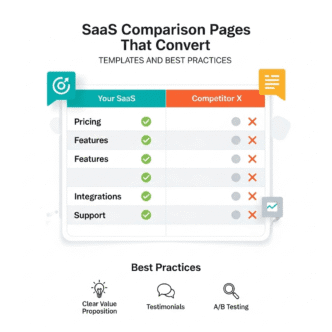
- Comparison pages (your tool vs competitors)
- Feature-focused landing pages
- Use case demonstrations
- Webinars and case studies
Example: “How [Your Tool] Helps Sales Teams Close 40% Faster”
Bottom of Funnel (Decision Stage):
- Detailed pricing pages
- Free trial landing pages
- Customer testimonials and reviews
- ROI calculators
Pro Tip: Don’t obsess over top-of-funnel traffic numbers. A piece ranking for “Salesforce alternative for startups” with 200 monthly visits might generate more revenue than a fluffy blog post with 10,000 visits.
4. Link Building for SaaS Companies
Backlinks remain one of Google’s top ranking factors, but link building for SaaS requires finesse.
High-impact link building tactics for B2B SaaS:
- Product comparisons: Reach out when someone mentions your competitor
- Industry directories: CAPTERRA, G2, Software Advice, etc.
- Partner integrations: Co-marketing with complementary tools
- Data-driven research: Publish original industry reports people want to cite
- Expert contributor content: Guest post on authoritative industry blogs
Real example: Ahrefs publishes extensive SEO research studies annually. These generate hundreds of backlinks from marketers citing their data—while establishing authority in their niche.
Avoid: Buying links, spammy guest posts on irrelevant sites, or link exchanges. Google’s smarter than that now.
5. Conversion Rate Optimization for SaaS Landing Pages
Traffic is meaningless without conversions.
Your SaaS landing pages need to optimize for:
- Clear value propositions above the fold
- Trust signals: Customer logos, review scores, security badges
- Multiple conversion options: Free trial, demo request, or just content download
- Benefit-focused copy over feature lists
- Fast loading times especially on mobile
| Element | Best Practice |
|---|---|
| Headline | Address specific pain point + solution |
| CTA Button | Action-oriented (“Start Free Trial” > “Submit”) |
| Form Length | 3-5 fields maximum for top-funnel offers |
| Social Proof | Show real logos, numbers, and testimonials |
| Page Speed | Under 3 seconds load time |
Pro Tip: Run A/B tests on your trial signup flow. Changing one word in a CTA can boost conversions by 20%+. I’ve seen it happen repeatedly.
How Do You Conduct Effective Keyword Research for SaaS?
Let’s get tactical about SaaS keyword research.
Start with Your Ideal Customer Profile
Before touching a keyword tool, answer these:
- What job titles are your buyers?
- What problems keep them up at night?
- What terms do they actually use? (Not your internal jargon)
- What alternatives do they currently consider?
Mine Your Customer Conversations
Your best keyword ideas live in:
- Sales call recordings: Note exact phrases prospects use
- Customer support tickets: Common questions = content opportunities
- Review sites: See how customers describe your tool on G2 or Capterra
- Competitor reviews: What complaints can you solve better?
Use Advanced Keyword Research Techniques
Step-by-step SaaS keyword discovery process:
- Seed keywords: Start with 5-10 broad terms related to your category
- Expand with tools: Use Ahrefs Keyword Explorer or SEMrush to find variations
- Filter by intent: Prioritize informational and commercial investigation keywords
- Analyze difficulty: Target keywords with reasonable competition (KD under 40 for newer sites)
- Check SERP features: Identify opportunities in “People Also Ask” and related searches
Pro Tip: Don’t ignore long-tail SaaS keywords. A keyword like “project management software for construction companies under 50 employees” has low volume but incredibly high intent. These convert like crazy.
Prioritize Keywords Using This Framework
| Factor | Weight | Why It Matters |
|---|---|---|
| Search Intent Match | 40% | Wrong intent = wrong traffic |
| Business Value | 30% | Some keywords drive revenue, others don’t |
| Ranking Difficulty | 20% | Can you realistically rank in 6-12 months? |
| Search Volume | 10% | Volume matters least if intent is poor |
Real example: Notion initially targeted niche keywords like “collaborative workspace for teams” instead of competing with “Microsoft Office alternatives.” They built authority in their niche first, then expanded.
What Content Types Drive the Most SaaS SEO Results?
Not all content is created equal for SaaS organic traffic growth.
Comparison Pages (High-Converting Gold)
These target bottom-funnel keywords with massive commercial intent.
Format: “[Your Tool] vs [Competitor]” or “Top 10 [Competitor] Alternatives”
Why they work: People searching these terms are actively evaluating options—they’re ready to buy.
Pro Tip: Be honest in comparisons. Acknowledge where competitors excel and where you shine. This builds trust and actually improves conversion rates.
Example: ClickUp’s comparison pages for “ClickUp vs Asana” and “ClickUp vs Monday” generate thousands of trial signups monthly.
Use Case Landing Pages
Target: “[Solution] for [Industry/Role]”
Examples:
- “Marketing automation for ecommerce brands”
- “Time tracking software for agencies”
- “CRM for real estate professionals”
These pages combine SEO with conversion optimization—targeting specific vertical SaaS keywords while addressing unique pain points.
Comprehensive Educational Guides
These are your pillar content pieces targeting high-volume educational keywords.
Format: “The Complete Guide to [Topic]” or “Everything You Need to Know About [Problem]”
Why they work: Build topical authority, earn backlinks naturally, and capture traffic at the awareness stage.
Real example: Intercom’s guide to customer engagement dominates rankings and establishes them as the authority—even for people who aren’t ready to buy yet.
Problem-Solution Blog Posts
Target: “How to [solve problem]” or “Ways to [achieve outcome]”
These capture early-stage research traffic and introduce your solution naturally within helpful content.
Structure that works:
- Acknowledge the pain point (empathy)
- Explain why it matters (stakes)
- Present 5-7 solutions (some involving your tool, some not)
- Include clear CTA to try your solution
Pro Tip: Don’t make every post a sales pitch. Genuinely help your audience, mention your tool once or twice where relevant, and let the value speak for itself.
Customer Case Studies Optimized for SEO
Target: “[Company Name] case study” or “[Industry] + [outcome achieved]”
These serve dual purposes: conversion assets for your sales team and long-tail SEO opportunities.
Format that ranks:
- Compelling headline with the outcome
- Customer background and challenge
- How your solution solved it
- Quantifiable results with metrics
- Quotes from actual users
Example: Slack’s case studies rank for company names and drive considerable traffic from people researching if Slack works for companies like theirs.
How Do You Build Authority and Backlinks for SaaS Websites?
Link building for SaaS brands requires a different approach than e-commerce or local businesses.
Create Link-Worthy Assets
The best backlinks happen naturally when you create resources people want to reference.
High-performing linkable assets:
- Original research and data: Industry surveys, benchmarking reports, trend analyses
- Free tools: Calculators, generators, assessments related to your space
- Ultimate guides: Comprehensive resources that become the go-to reference
- Visual content: Infographics, data visualizations, interactive content
Real example: Moz’s Beginner’s Guide to SEO has earned thousands of backlinks because it’s genuinely the best free resource on the topic. This establishes their authority in the exact space they sell products.
Strategic Guest Posting
Guest posting isn’t dead—it’s just evolved.
Do this: Write genuinely valuable content for authoritative publications in your industry. Focus on building relationships, not just getting links.
Don’t do this: Spray low-quality articles across random blogs just for links. Google sees through this instantly.
Target publications where your ideal customers actually read. For B2B SaaS, that might be industry-specific blogs, marketing publications, or business news sites.
Pro Tip: Before pitching, engage with the publication. Comment thoughtfully on articles, share their content, build a relationship. Cold pitches get ignored; warm intros convert.
Digital PR and Newsjacking
Position your company and founders as industry experts.
Tactics that work:
- Respond to journalist queries on HARO or similar platforms
- Comment on industry news with unique perspectives
- Publish thought leadership on LinkedIn and Medium
- Participate in podcasts relevant to your audience
Example: Buffer’s transparency around remote work and salaries earned them coverage in hundreds of publications—generating both backlinks and brand awareness.
Partner and Integration Link Building
If your SaaS integrates with other tools, leverage those relationships.
Opportunities:
- Co-branded content with integration partners
- Listings on partner integration marketplaces
- Joint webinars and case studies
- Guest posts on each other’s blogs
Pro Tip: Tools like Zapier built significant authority by becoming the integration hub. Every tool that integrates with them wants to link to their integration page—free backlinks at scale.
How AI and Machine Learning Are Changing SaaS SEO in 2025
Let’s talk about the elephant in the room: AI-powered search and what it means for your SaaS SEO strategy.
Google’s Search Generative Experience (SGE) and AI Overviews
Google’s AI-generated summaries now appear for many searches. This changes the game for B2B SaaS SEO because:
- Zero-click searches are increasing: Users get answers without clicking through
- Featured snippet optimization matters more: AI often pulls from featured snippets
- E-E-A-T signals are critical: Google prioritizes content with expertise, experience, authority, and trust
How to adapt your SaaS content strategy:
- Create content that goes deeper than AI summaries can provide
- Include first-hand experience and original data that AI can’t replicate
- Optimize for conversational, question-based queries that match voice search
- Focus on brand building so people search for you specifically
Pro Tip: Don’t just optimize for keywords—optimize for becoming the authoritative source Google’s AI references. Original research, expert insights, and unique perspectives win.
AI-Assisted Content Creation for SaaS Marketing
Many SaaS companies now use AI writing tools to scale content production. Here’s the reality:
AI tools can help with:
- Content outlines and structure
- First drafts for technical documentation
- Meta descriptions and title tag variations
- Keyword research and topic clustering
AI cannot replace:
- Deep product knowledge and industry expertise
- Original case studies and customer stories
- Strategic thinking about buyer psychology
- Authentic voice and brand personality
Pro Tip: Use AI as a research assistant and draft creator, but always add your unique insights, real examples, and strategic thinking. Google’s algorithms can detect thin, AI-generated content lacking genuine value.
Programmatic SEO for SaaS at Scale
Programmatic SEO uses templates and data to automatically generate thousands of targeted pages. This works brilliantly for:
- Integration pages: “[Your Tool] + [Integration Partner]”
- Use case variations: “[Solution] for [Industry] in [Location]”
- Comparison pages: Your tool vs hundreds of alternatives
- Feature combinations: Different product configurations
Real example: Zapier has thousands of integration pages generated programmatically, each targeting specific long-tail keywords like “connect Gmail to Slack” or “automate Trello to Google Sheets.
Critical mistake to avoid: Don’t create thin, duplicate content at scale. Each programmatically generated page must offer unique value, otherwise Google will penalize your entire site.
What Are the Most Common SaaS SEO Mistakes to Avoid?
Let me save you from expensive mistakes I’ve seen repeatedly.
1. Ignoring Technical SEO Fundamentals
The mistake: Focusing only on content while your site has major technical issues.
Why it kills your results: According to Google, 53% of mobile users abandon sites that take longer than 3 seconds to load. If your SaaS site has technical problems, even perfect content won’t rank.
The fix: Audit your site quarterly for crawl errors, page speed issues, mobile usability problems, and broken links.
Your beautiful blog post won’t rank if Google can’t properly index your site.
2. Creating Content Without Search Intent Analysis
The mistake: Writing what you want to say instead of what people are searching for.
Why it kills your results: Google matches search intent, not just keywords. If searchers want comparison pages and you publish blog posts, you’ll rank on page 5.
The fix: Before creating any content, analyze the SERP intent for your target keyword. What types of content rank? What questions do they answer? Match that intent.
If you target “project management software” but write a general blog post instead of a comparison/review page, you won’t rank—period.
3. Neglecting Bottom-Funnel Keywords
The mistake: Obsessing over high-volume awareness keywords while ignoring high-intent commercial keywords.
Why it kills your results: 1,000 visitors searching “what is CRM” might generate zero trials. 50 visitors searching “Salesforce alternative for small business” might generate 10 trials.
The fix: Balance your content across all funnel stages. Those low-volume comparison and alternative keywords often generate your best ROI.
4. Keyword Cannibalization Across Multiple Pages
The mistake: Creating multiple pages targeting the same keyword without clear differentiation.
Why it kills your results: Your pages compete against each other, confusing Google about which to rank. Neither ranks well.
The fix: Map one primary keyword per page. Use a content audit spreadsheet to track what each URL targets. If you have overlap, consolidate or differentiate clearly.
5. Ignoring User Experience Signals
The mistake: Optimizing for search engines while creating a poor user experience.
Why it kills your results: Google tracks behavioral signals like bounce rate, time on page, and pogo-sticking. Bad UX = poor rankings.
The fix: Test your content with real users. Make it scannable with subheadings, short paragraphs, visuals, and clear CTAs. Improve page speed ruthlessly.
6. Not Optimizing for Featured Snippets
The mistake: Writing content without considering featured snippet opportunities.
Why it limits results: Featured snippets appear above position #1, stealing 35.1% of clicks according to research. You’re leaving traffic on the table.
The fix: Structure content to directly answer questions. Use clear definitions, numbered lists, and tables where appropriate.
Featured snippets steal traffic from the #1 result—and they’re achievable even when you can’t beat the domain authority of your competitors.
Pro Tip: Look for question-based keywords where the current featured snippet gives a mediocre answer. You can steal that position with better, more comprehensive content.
7. Building Links Before Earning Them
The mistake: Aggressive link building before your content deserves links.
Why it kills your results: Google’s algorithms detect unnatural link patterns. Low-quality links can trigger manual penalties, devastating your rankings.
The fix: Create genuinely valuable content first. Make it so good that people naturally want to reference it. Then amplify strategically.
No amount of outreach compensates for mediocre content.
8. Forgetting to Update and Refresh Old Content
The mistake: Publishing content once and never touching it again.
Why it limits results: Search algorithms favor freshness for many queries. Competitors update their content and outrank you over time.
The fix: Quarterly, review your top-performing content. Add new data, examples, and insights. Update publication dates. Google rewards content that stays current.
9. Not Aligning SEO with Sales and Product Teams
The mistake: Operating SEO in a silo without input from sales or product teams.
Why it kills your results: You miss critical customer language, objections, and use cases that should inform your content strategy.
The fix: Monthly meetings with sales to understand common questions and objections. Product input on roadmap for future content planning. SEO should inform product positioning too.
10. Giving Up Too Early on SEO
The mistake: Expecting immediate results and abandoning the strategy after 3-6 months.
Why it kills your results: SEO is compound interest for marketing. The real ROI appears between months 12-24. Quitting early wastes your investment.
The fix: Set realistic expectations internally. Track leading indicators (rankings, indexed pages, backlinks) before traffic grows. Commit to 18+ months minimum.
How Do You Measure and Track SaaS SEO Success?
You can’t improve what you don’t measure.
Essential SaaS SEO Metrics to Monitor
| Metric | What It Tells You | Target |
|---|---|---|
| Organic Traffic | Total visitors from search | Month-over-month growth |
| Keyword Rankings | Position for target terms | Top 3 positions for priority keywords |
| Organic Conversions | Trials/demos from SEO | 2-5% of organic traffic |
| Pages Indexed | How much Google crawls | 90%+ of your site |
| Domain Authority | Relative backlink strength | Improving quarter over quarter |
| Backlink Profile | Quality and quantity of links | Steady growth from relevant sites |
| Organic Revenue | Actual revenue from SEO traffic | Track in CRM with UTM parameters |
Pro Tip: Vanity metrics like “total traffic” matter less than qualified traffic to high-intent pages. Track conversions by landing page, not just site-wide numbers.
Tools You Actually Need for SaaS SEO
Essential stack:
- Google Search Console: Free, shows exactly how Google sees your site
- Google Analytics 4: Track traffic, behavior, and conversions
- Ahrefs or SEMrush: Keyword research, competitor analysis, backlink monitoring
- Screaming Frog: Technical SEO audits
- Hotjar or Microsoft Clarity: User behavior and conversion optimization
You don’t need every tool immediately. Start with Google’s free tools and one paid SEO platform. Expand as you scale.
Create a SaaS SEO Dashboard
Track these weekly:
- New keyword rankings (especially top 10 positions)
- Organic traffic trends by landing page type
- Trial signups or demos from organic traffic
- Backlink acquisition rate
- Technical health score (from Screaming Frog or similar)
Real example: When I worked with a marketing automation SaaS, we tracked “qualified organic traffic” separately from total traffic. We defined qualified as visitors viewing pricing or requesting demos. This metric correlated directly with revenue, while total traffic didn’t.
How Long Does SaaS SEO Take to Show Results?
I’ll give you the honest answer: longer than you want, faster than you think.
Realistic timeline for SaaS SEO results:
- Months 1-3: Technical foundation, keyword research, initial content. Little visible traction yet.
- Months 4-6: Some keywords start ranking in positions 10-30. Traffic grows slowly.
- Months 6-12: Rankings climb to page one. Traffic increases meaningfully. First meaningful ROI appears.
- Months 12-24: Compound effects kick in. Older content ranks higher, new content ranks faster. SEO becomes a primary channel.
- 24+ months: SEO likely becomes your highest-ROI channel with predictable, scalable lead generation.
According to Ahrefs’ analysis of 2 million pages, only 5.7% of newly published pages reach Google’s top 10 within a year. However, pages that do rank continue generating traffic for years with minimal ongoing investment.
Pro Tip: SaaS SEO is a marathon, not a sprint. Companies that commit for 18+ months see transformative results. Those who give up at month 6 waste their investment entirely.
Quick wins do exist though:
- Low-competition long-tail keywords can rank in weeks
- Comparison pages often rank faster than educational content
- Stealing competitors’ broken backlinks gives immediate authority boost
Should You Hire In-House or Outsource Your SaaS SEO?
This depends on your stage and resources.
When to Build In-House
You should hire an internal SEO if:
- You have steady revenue ($1M+ ARR)
- SEO will be a core channel for years
- You need someone integrated with product and marketing
- You have 6-12 month patience for hiring and ramping
Role to hire first: SEO Content Manager or Growth Marketer with SEO skills
When to Outsource or Use Agencies
Work with an SEO agency if:
- You’re pre-product-market fit and testing channels
- You lack budget for full-time senior talent
- You need specialized expertise quickly
- You want to scale faster than one person allows
Pro Tip: Avoid cheap SEO agencies promising “page 1 in 30 days.” SaaS SEO requires sophistication. Look for agencies with specific B2B SaaS experience and case studies in your industry.
The Hybrid Approach
Many successful SaaS companies use a combination:
- In-house: Strategy, content calendar, stakeholder management
- Outsourced: Technical audits, link building, specialized content creation
This gives you control and consistency while accessing specialized expertise as needed.
What’s Next? Your SaaS SEO Action Plan
Alright, enough theory. Here’s your step-by-step SaaS SEO roadmap to start driving results.
Month 1: Foundation
- Audit technical SEO health (use Screaming Frog)
- Set up Google Search Console and Analytics properly
- Conduct comprehensive keyword research
- Analyze top 5 competitors’ SEO strategies
- Create content calendar for next 90 days
Months 2-3: Content Sprint
- Publish 2-4 high-quality pieces weekly
- Optimize existing high-traffic pages
- Create your first comparison pages
- Build your email list for content distribution
- Start engaging on industry forums and communities
Months 4-6: Authority Building
- Launch link-building outreach campaigns
- Publish original research or data study
- Optimize for featured snippets
- Update and improve older content
- Begin systematic internal linking
Months 7-12: Scale and Optimize
- Double down on what’s working
- Expand into new keyword territories
- Create content clusters around successful topics
- Build strategic partnerships for links
- Implement conversion rate optimization tests
Pro Tip: Start with pages that can generate revenue fastest—comparison pages, alternative pages, and use case pages. These target high-intent keywords and justify your SEO investment to stakeholders quickly.
Frequently Asked Questions About SaaS SEO
How much should a SaaS company budget for SEO?
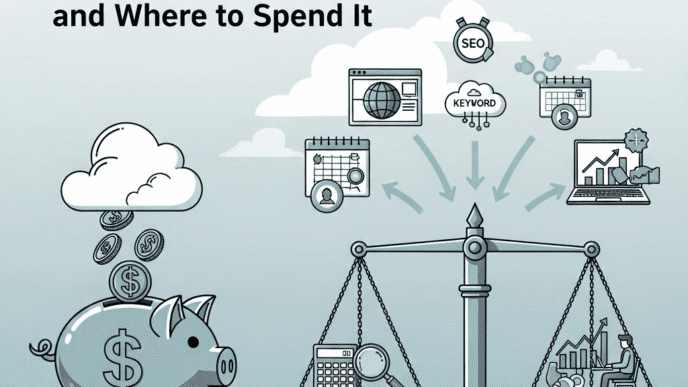
Budget 10-20% of your overall marketing spend on SEO, with a minimum of $3,000-5,000 monthly for meaningful results. This covers tools ($200-500/month), content creation ($2,000-3,000/month), and either an in-house specialist or agency support. Expect to invest consistently for 12-18 months before SEO becomes your most profitable channel.
Can SaaS companies rank without backlinks?
Technically yes, but it’s exponentially harder. Low-competition long-tail keywords might rank without backlinks, but competitive terms require domain authority built through quality links. Focus on earning links naturally through great content, then supplement with strategic outreach.
Should I target branded keywords from competitors?
Absolutely. Creating content around “[Competitor] alternatives” or “Best [Competitor] alternatives for [use case]” captures high-intent traffic from people actively evaluating options. Just be honest and fair in your comparisons—transparency builds trust and converts better than bashing competitors.
How many blog posts should I publish per week?
Quality beats quantity every time. For early-stage SaaS companies, 2-4 comprehensive posts monthly beats 15 shallow posts. As you scale and build processes, increase to 2-3 weekly. Each piece should thoroughly answer search intent and provide genuine value.
Does SEO work for niche B2B SaaS products?
Absolutely—sometimes better than broad markets. Niche SaaS benefits from lower competition and highly qualified traffic. Focus on specific use case keywords and vertical-specific terms where your product shines. Even 50-100 monthly visitors can generate significant revenue if they’re the right prospects.
How do I handle SEO when we pivot or add new features?
Update existing content first, then create new targeted pages. Use 301 redirects for any deprecated features or changed URLs. Expand your keyword research to include new use cases and pain points. Communicate product changes in blog posts to maintain topical freshness.
What’s the difference between SEO and content marketing for SaaS?
SEO is the technical practice of optimizing to rank in search engines. Content marketing is creating valuable content to attract and convert customers. For SaaS, they’re deeply interconnected—your content marketing should be SEO-informed, and your SEO strategy requires quality content.
How do I convince executives to invest in SaaS SEO?
Show the math: Calculate the lifetime value of customers from organic search versus paid channels. Demonstrate competitor rankings and the traffic they’re capturing. Start with a small pilot (3-6 months) targeting quick-win keywords to prove ROI before requesting larger budget.
Should I write content targeting keywords with zero search volume?
Sometimes, yes. Zero-volume keywords often represent emerging topics or highly specific queries that tools don’t capture. If it matches your ICP’s pain points and supports your topical authority, create the content. These often convert exceptionally well despite low traffic.
How important are user reviews and testimonials for SaaS SEO?
Extremely important. User-generated content on platforms like G2, Capterra, and TrustPilot boosts your domain authority and creates valuable backlinks. Customer testimonials on your site add trust signals that improve conversion rates. Both indirectly boost SEO performance by increasing engagement metrics.
Final Verdict: Is SaaS SEO Worth the Investment?
After working with dozens of SaaS companies across different stages and categories, here’s my definitive take:
SEO is the highest-ROI marketing channel for SaaS companies willing to commit 18+ months.
The data backs this up: According to <a href=”https://firstpagesage.com/reports/google-click-through-rates-ctrs-by-ranking-position/” rel=”nofollow”>First Page Sage research</a>, the #1 organic result gets 39.8% of all clicks, while paid ads average just 2-3% CTR even when in the top position. That difference is massive for long-term customer acquisition.
When SaaS SEO Makes Sense
You should prioritize SEO if:
- Your customer lifetime value exceeds $1,000 (justifies the long-term investment)
- You’re in it for the long haul (not looking for immediate results)
- You have product-market fit and understand your ICP deeply
- Your product solves searchable problems people actively research
- You can commit resources consistently for 18+ months
When to Deprioritize SEO (For Now)
Hold off on major SEO investment if:
- You’re still figuring out product-market fit (focus on faster feedback loops)
- Your product category is so new people don’t search for it yet
- You need leads this month or quarter (paid channels deliver faster)
- Your market has literally zero search volume (rare but happens)
That said, even pre-PMF companies should maintain SEO hygiene—proper site structure, basic optimization, and documentation that will help later.
The Compound Effect That Changes Everything
Here’s what makes SaaS SEO truly powerful: compound returns.
In month 1, you publish 10 pieces of content that generate 500 visits. In month 12, those same 10 pieces (now ranking higher) generate 5,000 visits—plus your 110 newer pieces generate another 15,000 visits. By month 24, your content library of 230 pieces generates 50,000+ monthly visits with improving conversion rates as you optimize.
Meanwhile, the day you pause paid ads, that traffic drops to zero.
Start Small, Scale Smart
You don’t need a massive budget to begin. Start with:
- Technical foundation (one-time investment of $2,000-5,000)
- Core keyword research (one-time $500-1,000 or DIY)
- Two exceptional pieces of content monthly ($2,000-4,000/month)
- Basic link building (outreach and relationship building—mostly time)
That’s $3,000-6,000 monthly to start. Track results religiously. Double down on what works.
The Bottom Line
SaaS SEO isn’t a magic bullet, and it’s definitely not instant gratification. But for companies that commit to the process, create genuinely valuable content, and think long-term, it becomes the most sustainable, profitable customer acquisition channel you’ll ever build.
The SaaS companies dominating your category today started their SEO 2-3 years ago. They’re now reaping predictable, scalable leads while burning less cash than their competitors stuck on the paid ad treadmill.
The question isn’t whether SaaS SEO works—it’s whether you’re willing to play the long game while your competitors chase short-term tactics.
Start today. Your future self will thank you.
🚀 SaaS SEO Strategy Flowchart
Your Complete Interactive Roadmap to B2B Software Growth Through Search
Should You Invest in SaaS SEO?
Does your customer LTV exceed $1,000?
Can you commit resources for 18+ months?
Do you have product-market fit?
✅ GO ALL-IN ON SEO!
Your SaaS is perfectly positioned for SEO success. Start with a $3-6K monthly budget and scale based on results.
⚠️ Consider Your ROI Carefully
With lower LTV, focus on low-competition long-tail keywords and efficient content strategies. Start small with $2-3K monthly.
⏰ Prioritize Faster Channels First
SEO requires patience. Focus on paid channels or partnerships for near-term growth, then layer in SEO for long-term sustainability.
🔄 Validate PMF First
Focus on finding product-market fit through faster feedback channels. Maintain basic SEO hygiene, then invest heavily once PMF is clear.
Phase 1: Foundation (Month 1-3)
🔍 Keyword Research
Identify high-intent SaaS keywords across all funnel stages
Focus: Problem-aware, solution-aware, and comparison keywords
⚙️ Technical SEO Audit
Fix crawl errors, improve site speed, ensure mobile responsiveness
Goal: Page load under 2.5 seconds
🎯 Competitor Analysis
Analyze top 5 competitors' SEO strategies and content gaps
Identify: Keyword opportunities and backlink sources
📊 Analytics Setup
Configure Google Search Console, GA4, and tracking dashboards
Track: Rankings, traffic, conversions by source
📝 Content Calendar
Plan 90 days of content aligned with keyword strategy
Mix: Educational, comparison, and use case content
Phase 2: Content Sprint (Month 4-6)
✍️ Publish Pillar Content
Create comprehensive guides (3,000+ words) for top keywords
Target: Educational queries with high volume
🆚 Comparison Pages
Build alternative and vs. pages targeting bottom-funnel keywords
High-intent: Ready-to-buy prospects
🎨 Use Case Pages
Create vertical-specific landing pages for different industries
Format: [Solution] for [Industry/Role]
Don't just create content—create content that earns links. Include original data, expert insights, and real case studies that people naturally want to reference.
Phase 3: Authority Building (Month 7-12)
🔗 Link Building Campaign
Strategic outreach for guest posts and partnerships
Focus: Industry-relevant, high-authority sites
📊 Original Research
Publish industry surveys and data studies
Result: Natural backlinks from journalists and bloggers
🤝 Integration Partnerships
Leverage tool integrations for co-marketing and backlinks
Benefit: Mutual traffic and authority boost
🔄 Content Updates
Refresh and optimize existing high-performing content
Add: New data, examples, and internal links
⭐ Featured Snippets
Optimize content structure for position zero opportunities
Format: Clear definitions, lists, and tables
Phase 4: Scale & Optimize (Month 12+)
📈 Double Down on Winners
Identify and expand successful content topics and formats
Analyze: Which content drives most conversions
🎯 Expand Keyword Territory
Branch into adjacent topics and industries
Strategy: Topic clusters around successful content
🤖 AI-Enhanced Optimization
Leverage AI tools for content ideation and optimization
Maintain: Human expertise and original insights
💰 Conversion Optimization
A/B test landing pages, CTAs, and signup flows
Goal: Improve organic traffic-to-trial conversion
📊 Advanced Analytics
Track organic revenue, not just traffic and rankings
Measure: CAC, LTV, and ROI by content type
⏱️ Expected Results Timeline
Foundation Phase
Technical setup complete. Initial content published. Little visible traction yet. Focus on building infrastructure.
Early Rankings
Keywords start ranking in positions 10-30. Traffic grows slowly. First backlinks acquired. 5.7% of pages reach top 10.
Acceleration Phase
Rankings climb to page one. Traffic increases meaningfully. First significant ROI appears. Organic leads cost 61% less than paid.
Compound Growth
Compound effects kick in. Older content ranks higher, new content ranks faster. SEO becomes a primary channel generating 53% of traffic.
Domination Phase
SEO is your highest-ROI channel. Predictable, scalable lead generation. Competitors struggle to catch up. Organic traffic drives 40-60% of new revenue.
Traditional SEO vs. SaaS SEO
| Factor | Traditional SEO | SaaS SEO |
|---|---|---|
| Buying Cycle | Minutes to days | Weeks to months (6-10 stakeholders) |
| Keyword Focus | Product-focused, transactional | Problem & solution-focused, educational |
| Content Type | Product descriptions, reviews | Guides, comparisons, use cases |
| Conversion Goal | Immediate purchase | Free trial, demo request, email signup |
| Average Deal Value | $50-500 | $1,000-100,000+ annually |
| Content Depth | 500-1,000 words | 2,000-5,000+ words |
| Link Building | High volume, lower quality acceptable | Strategic, high-authority sites only |
| Time to ROI | 3-6 months | 12-18 months for significant results |
🎯 SaaS Keyword Funnel Strategy
🔝 Top of Funnel
Problem-Aware Keywords
"How to reduce customer churn"
"Ways to automate invoicing"
"Signs you need a CRM"
🎯 Middle of Funnel
Solution-Aware Keywords
"Best project management software"
"CRM with email automation"
"Marketing automation tools"
💰 Bottom of Funnel
Product Comparison Keywords
"Salesforce vs HubSpot"
"Asana alternatives for startups"
"[Your Tool] pricing"
💰 Monthly SEO Budget Breakdown
SEO Tools & Software
Ahrefs/SEMrush ($200), Screaming Frog ($200), Analytics tools ($100), Other utilities ($100-500)
Content Creation
2-4 comprehensive blog posts weekly, comparison pages, use case content. Quality over quantity approach.
Link Building & Outreach
Guest posting, digital PR, partnership outreach, broken link building. Focus on relevant, high-authority domains.
Technical Optimization
Site audits, page speed improvements, schema implementation, ongoing technical maintenance.
Total Starting Budget
Realistic monthly investment for meaningful SaaS SEO results. Scale up as you see ROI in months 12-18.
❌ Critical Mistakes to Avoid
🚫 Ignoring Search Intent
Creating content without analyzing what actually ranks
Result: Pages stuck on page 5, zero traffic
🚫 Neglecting Technical SEO
Publishing content while site has speed/crawl issues
Result: 53% mobile users abandon slow sites
🚫 Giving Up Too Early
Abandoning SEO after 3-6 months without results
Result: Wasted investment, no compound returns
Ready to Dominate Organic Search?
The SaaS companies dominating Google today started 2-3 years ago. They're now generating predictable leads while competitors burn cash on ads.
The best time to start was two years ago. The second-best time is today.