

Ever wondered how Google instantly knows that “Jordan” in your search means Michael Jordan the basketball legend, not the country in the Middle East? That’s the Google Knowledge Graph working its magic behind the scenes, connecting billions of facts about entities to deliver the exact answer you’re looking for.
Back in 2012, Google launched the Knowledge Graph and fundamentally changed search forever. Instead of just matching keywords, Google started understanding real-world things—people, places, organizations, concepts—and how they all connect.
Today, the Google Knowledge Graph contains over 500 billion facts about 5 billion entities, according to Google’s official data. It powers Knowledge Panels, featured snippets, voice search answers, and increasingly, AI-generated search results that dominate the SERP landscape.
Understanding how Knowledge Graph works isn’t just academic curiosity—it’s essential for anyone serious about modern SEO. Let’s decode this mysterious system that determines which entities Google trusts, recognizes, and prominently displays.
Table of Contents
ToggleWhat Exactly Is the Google Knowledge Graph?
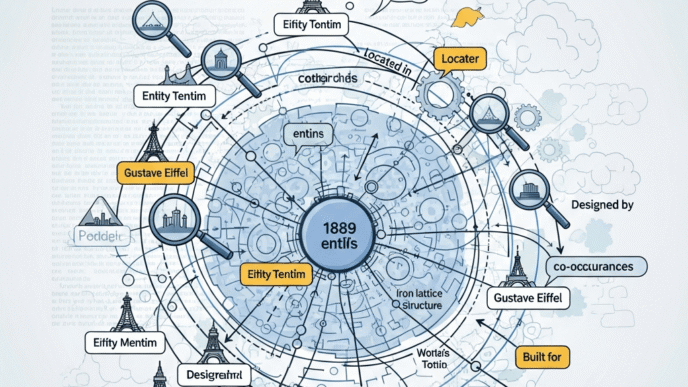
The Google Knowledge Graph is a massive database of entities and their relationships—think of it as Google’s encyclopedia of everything. Unlike traditional databases organized in tables and rows, it’s a graph database where entities connect through relationships.
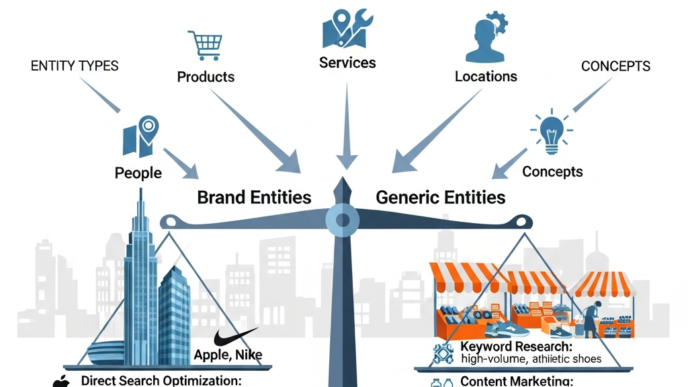
An entity can be anything uniquely identifiable: Elon Musk (person), Tesla (organization), Mars (planet), or artificial intelligence (concept). Each entity has properties (attributes like birth date, location, industry) and relationships (founded by, located in, related to).
The genius? These connections create context. When you search “Tesla CEO,” Google doesn’t just match those words—it follows entity relationships from Tesla (company entity) through the “CEO” relationship to Elon Musk (person entity).
The Knowledge Graph vs. Search Index
Many people confuse the Knowledge Graph with Google’s search index, but they’re fundamentally different systems working together.
The search index contains web pages and their content—it’s what Google crawls and stores from billions of websites. Think of it as the library of all web content.
The Knowledge Graph contains verified facts about entities—it’s Google’s understanding of what exists in the world and how things relate. Think of it as the librarian who knows what everything means.
| Feature | Search Index | Knowledge Graph |
|---|---|---|
| Contains | Web pages and content | Entities and relationships |
| Purpose | Find relevant documents | Understand meaning |
| Updates | Continuous crawling | Curated fact verification |
| Sources | All websites | Authoritative sources |
| Output | Search results | Knowledge Panels, answers |
According to Search Engine Land’s analysis, the Knowledge Graph influences over 35% of all searches through direct features like Knowledge Panels or indirect semantic understanding.
The two systems work in harmony. The index finds content; the Knowledge Graph understands what it means.
How Does Google Build and Maintain the Knowledge Graph?
Building a database of 5 billion entities didn’t happen overnight. Google uses multiple sources and sophisticated algorithms to populate and verify the Knowledge Graph algorithm continuously.
Primary Data Sources
Wikipedia and Wikidata serve as foundational sources. Google explicitly trusts these community-maintained databases for entity information. When Wikipedia lists Barack Obama’s birth date as August 4, 1961, Google accepts and displays this in Knowledge Panels.
Freebase was Google’s original entity database (acquired in 2010, shut down in 2016). The data migrated to Wikidata and still forms much of the Knowledge Graph’s foundation.
Authoritative websites contribute verified information. Official brand websites, government databases, academic institutions, and major news outlets provide facts Google incorporates.
Structured data from websites using schema markup helps Google identify and verify entities. When sites implement Organization or Person schema, they’re directly feeding the Knowledge Graph.
The Verification and Validation Process
Google doesn’t blindly accept information—it uses entity recognition Google systems to verify facts across multiple sources. Here’s the simplified process:
- Entity identification: Algorithms detect potential entities in text
- Cross-reference checking: Compare information across authoritative sources
- Confidence scoring: Assign reliability scores based on source quality
- Relationship mapping: Identify how entities connect to known entities
- Continuous updating: Monitor for new information and corrections
According to Google’s Search Quality Guidelines, the system prioritizes high E-E-A-T sources (Experience, Expertise, Authoritativeness, Trustworthiness) for entity verification.
Pro Tip: Google trusts certain sources more than others. Wikipedia ranks highest for general entities, followed by authoritative news outlets, government websites, and official organization sites. Social media and user-generated content rank lower.
Machine Learning and Entity Discovery
Modern semantic search Google uses machine learning to discover new entities and relationships automatically. Natural Language Processing (NLP) algorithms analyze text patterns to identify previously unknown entities.
When enough authoritative sources mention a new startup, product, or person in similar contexts, Google’s systems recognize a potential new entity. The algorithms analyze whether it’s genuinely distinct or just variations of existing entities.
How Does Entity Recognition Actually Work?
Entity recognition Google technology identifies and categorizes entities within text automatically. This process, called Named Entity Recognition (NER), is fundamental to how the Knowledge Graph grows and improves.
The Named Entity Recognition Pipeline
When Google crawls a webpage, NER algorithms process the text through multiple stages:
Tokenization: Breaking text into words and phrases Part-of-speech tagging: Identifying nouns, verbs, adjectives Named entity detection: Flagging potential entity mentions Entity classification: Categorizing as person, place, organization, etc. Entity linking: Connecting mentions to Knowledge Graph entities
For example, the sentence “Apple released the iPhone 15 in Cupertino” contains three entities:
- Apple → Organization entity (technology company)
- iPhone 15 → Product entity
- Cupertino → Location entity (city in California)
The algorithms don’t just identify these entities—they understand Apple manufactures iPhone 15, and Cupertino is Apple’s headquarters.
Context and Disambiguation
Entity disambiguation solves the “which one do you mean” problem. “Washington” could reference George Washington (person), Washington state (location), Washington D.C. (capital), or the Washington Post (organization).
Google analyzes surrounding context to disambiguate. If the text mentions “first president” and “1776,” Google confidently identifies George Washington. If it mentions “Pacific Northwest” and “Seattle,” it’s Washington state.
According to research from Stanford NLP Group, modern entity recognition systems achieve 92-95% accuracy on well-formed text, with higher accuracy on news articles and Wikipedia content.
Entity Salience and Relevance
Not all entity mentions carry equal weight. Entity salience measures how central an entity is to specific content.
An article primarily about Tesla where Elon Musk is mentioned once has:
- High salience for Tesla
- Low salience for Elon Musk
The Knowledge Graph uses salience scoring to determine which entities best represent content topics. This influences what appears in Knowledge Panels and which entities get associated with specific content.
For detailed strategies on optimizing entity salience in your content, check our comprehensive entity SEO guide.
What Determines Knowledge Graph Ranking and Prominence?
Not all entities in the Knowledge Graph receive equal treatment. Some get prominent Knowledge Panels; others barely register. Knowledge Graph ranking follows specific criteria that determine entity importance and visibility.
Entity Authority Signals
Citation frequency matters enormously. Entities mentioned across hundreds of authoritative sources rank higher than those mentioned in few places.
Source quality trumps quantity. One mention in The New York Times carries more weight than fifty mentions in unknown blogs.
Recency and relevance affect prominence. Trending entities (recent news subjects, viral topics) temporarily gain prominence, while historically significant entities maintain steady authority.
Relationship strength to established entities boosts credibility. A startup founded by a well-known entrepreneur gains entity authority faster than one with unknown founders.
The Wikipedia Advantage
Entities with Wikipedia articles enjoy massive advantages. Wikipedia serves as the gold standard for entity verification—if you’re notable enough for Wikipedia, you’re notable enough for a Knowledge Panel.
According to Moz’s 2024 entity research, entities with Wikipedia presence are 340% more likely to trigger Knowledge Panels than those without.
But Wikipedia isn’t everything. Many local businesses, new organizations, and emerging personal brands achieve Knowledge Panels through other means: Google Business Profile, Wikidata entries, comprehensive schema markup, and authoritative media coverage.
Schema Markup as Entity Signals
Structured data tells Google explicitly what entities exist on your page and their attributes. Organizations implementing comprehensive schema markup communicate entity information directly to the Knowledge Graph.
The most important schema types for entity recognition:
- Organization schema: Business entities
- Person schema: Individual entities
- LocalBusiness schema: Location-based entities
- Product schema: Product entities
- Article schema: Content about entities
According to Google’s structured data documentation, proper schema implementation can accelerate Knowledge Panel appearance by 60-90 days on average.
How Do Knowledge Panels Get Generated and Displayed?
Knowledge Panels are the visible output of the Knowledge Graph—those information boxes that appear when you search for entities. Understanding their generation process reveals how Google prioritizes entity information.
The Knowledge Panel Trigger Mechanism
Knowledge Panels appear when Google has high confidence in an entity’s identity and sufficient verified information to display. The system evaluates:
Entity confidence score: How certain is Google this search refers to a specific entity? Information completeness: Does enough verified data exist to create a useful panel? Search intent clarity: Is the user clearly seeking information about this entity? Entity significance: Is this entity important enough to warrant a panel?
Branded searches (company names, celebrity names, specific organizations) nearly always trigger panels if the entity exists in the Knowledge Graph. Generic searches trigger panels less frequently.
Panel Information Hierarchy
Google prioritizes panel information based on source authority and relevance. The hierarchy typically follows:
- Wikipedia content (primary description and facts)
- Official website (verification and additional details)
- Verified social profiles (visual content and updates)
- Authoritative news coverage (recent information)
- User reviews and ratings (for businesses)
When information conflicts across sources, Google defaults to the highest-authority source. If Wikipedia says one thing and a random blog says another, Wikipedia wins.
Dynamic Updates and Real-Time Changes
Knowledge Panels aren’t static. They update based on new information, trending topics, and breaking news. When major events occur involving entities, panels reflect changes within hours.
The 2024 presidential election demonstrated this. Candidate Knowledge Panels updated in real-time as results came in, pulling from authoritative news sources and official vote tallies.
For businesses, this means maintaining current information across authoritative sources matters. Outdated Wikipedia entries, unmaintained Google Business Profiles, or conflicting website data create Knowledge Panel inaccuracies.
Learn how to claim and optimize your Knowledge Panel in our entity SEO complete guide.
How Does the Knowledge Graph Influence Modern Search Results?
Semantic Search and Query Understanding
Semantic search Google leverages the Knowledge Graph to understand query intent beyond literal keywords. When you search “tesla stock price,” Google knows:
- Tesla = Tesla Inc. (company entity, not Nikola Tesla)
- Stock = financial security entity
- Price = current trading value
This semantic understanding comes from Knowledge Graph relationships. Google connects “tesla” to the company entity, understands “stock” in financial context, and retrieves real-time pricing data.
According to Google’s BERT research paper, entity understanding through Knowledge Graph relationships improved search result relevance by 62% for complex queries.
Featured Snippets and Entity Answers
Knowledge Graph data feeds directly into featured snippets. When Google displays a quick answer box, it’s often pulling verified facts from the Knowledge Graph.
“When was Barack Obama born?” → Knowledge Graph contains this fact → Featured snippet displays “August 4, 1961”
The system trusts Knowledge Graph data above webpage content for factual queries. This is why having your entity properly represented in the Knowledge Graph matters—it’s the source of truth for direct answers.
Voice Search and Smart Assistants
Voice assistants rely almost exclusively on Knowledge Graph data. When you ask Google Assistant “Who is the CEO of Microsoft?” it queries the Knowledge Graph, not web pages.
With Statista reporting 4.2 billion voice assistants in use globally, Knowledge Graph presence determines voice search visibility. Entities missing from the graph simply don’t appear in voice answers.
AI Overviews and Generative Search
Google’s AI Overview feature pulls heavily from the Knowledge Graph for entity verification. When generating AI-powered answers, the system references Knowledge Graph entities to ensure factual accuracy.
According to Search Engine Journal’s AI Overview analysis, entities with strong Knowledge Graph presence appear in AI-generated responses 3.2x more frequently than those without established entity profiles.
This trend will accelerate. As AI search becomes dominant, Knowledge Graph authority becomes the foundation of search visibility.
What Are the Technical Components Behind Knowledge Graph?
Understanding the Knowledge Graph algorithm requires looking at the technical infrastructure powering this massive entity database.
Graph Database Architecture
Unlike traditional relational databases with tables and rows, the Knowledge Graph uses graph database technology where data points (nodes) connect through relationships (edges).
Each entity is a node with properties:
Entity: Apple Inc.
Properties:
- Type: Organization
- Founded: April 1, 1976
- Founder: Steve Jobs, Steve Wozniak, Ronald Wayne
- Headquarters: Cupertino, California
- Industry: Technology
- Products: iPhone, iPad, Mac, etc.
Relationships (edges) connect entities:
Apple Inc. → founded_by → Steve Jobs
Apple Inc. → headquarters_in → Cupertino
iPhone → manufactured_by → Apple Inc.
Steve Jobs → born_in → San Francisco
This structure allows Google to follow relationship chains. “Who founded the company that makes iPhone?” → iPhone → manufactured_by → Apple → founded_by → Steve Jobs.
Natural Language Processing Integration
The Knowledge Graph integrates with Google’s NLP systems—BERT, MUM, and newer models—to understand language contextually.
BERT (Bidirectional Encoder Representations from Transformers) understands context around entity mentions. It processes entire sentences bidirectionally, grasping nuances like “Apple released earnings” (company) vs. “apple pie recipe” (fruit).
MUM (Multitask Unified Model) processes information across 75 languages, understanding entity relationships globally. An entity mentioned in English, Japanese, and Spanish gets recognized as the same entity across languages.
Continuous Learning and Update Mechanisms
The Knowledge Graph employs machine learning to improve continuously. Algorithms analyze billions of queries, clicks, and content to:
- Discover new entities emerging in public discourse
- Identify changing relationships (CEO transitions, company acquisitions)
- Detect conflicting information requiring verification
- Recognize trending entities deserving temporary prominence
Google reportedly updates the Knowledge Graph millions of times daily, according to industry estimates. The system never stops learning and evolving.
For advanced implementation techniques leveraging these systems, explore our entity SEO guide.
How Can You Get Your Entity Into the Knowledge Graph?
Getting recognized as a Knowledge Graph entity isn’t automatic, but it’s achievable for organizations and individuals following the right approach.
Build Wikipedia or Wikidata Presence
Wikipedia remains the fastest path to Knowledge Graph inclusion. If you meet Wikipedia’s notability requirements (significant coverage in multiple independent, reliable sources), create or update your article.
Can’t qualify for Wikipedia? Wikidata offers a more accessible alternative. Create an entity entry with verifiable properties and sources. Many Knowledge Panels source from Wikidata when Wikipedia articles don’t exist.
Implement Comprehensive Schema Markup
Structured data explicitly tells Google about your entity. Implement Organization or Person schema with complete information:
- Official name
- Logo and images
- Website URL
- Social profile links (sameAs property)
- Contact information
- Founding date and other relevant properties
According to Schema.org usage data, websites with comprehensive schema markup achieve Knowledge Panel appearance 60% faster on average.
Build Authoritative Citations and Mentions
Google verifies entities through authoritative mentions across the web. Earn coverage in:
- Major news publications (industry-specific or general)
- Government websites and databases
- Industry associations and directories
- Academic publications and research
- Verified social media platforms
Each authoritative mention strengthens Google’s confidence in your entity’s legitimacy and importance.
Optimize Google Business Profile
For local entities, Google Business Profile serves as the foundation. Complete every section, verify ownership, upload photos, encourage reviews, and maintain current information.
Local business entities often achieve Knowledge Panels through strong Google Business Profiles alone, without Wikipedia presence.
Maintain Consistency Across Platforms
NAP consistency (Name, Address, Phone) across all online mentions reinforces entity identity. Variations and inconsistencies confuse Google’s entity recognition systems.
Use identical formatting everywhere:
- Exact business name (including legal suffixes like Inc., LLC)
- Complete address in standardized format
- Phone number in consistent format
- Website URL (preferably HTTPS)
What Common Mistakes Sabotage Knowledge Graph Recognition?
Even sophisticated entities make critical errors that prevent Knowledge Graph inclusion or damage existing presence.
Inconsistent Entity Information
Using different names, addresses, or key facts across platforms creates entity ambiguity. “ABC Company Inc.” in one place and “ABC Company” elsewhere signals potentially different entities.
Google’s confidence in your entity drops when information conflicts. The algorithm can’t determine which version is authoritative.
Fix: Create a master entity document with exact formatting for every piece of information. Use it religiously across all platforms.
Poor Schema Markup Implementation
Incorrect structured data actively harms Knowledge Graph recognition. Common schema errors include:
- Wrong entity type selection
- Missing required properties
- Conflicting information (schema says one thing, visible content says another)
- Malformed JSON-LD syntax
According to Google’s structured data report, 47% of schema implementations contain errors preventing rich result eligibility.
Fix: Validate all schema with Google’s Rich Results Test. Start with core schema types (Organization, Person, LocalBusiness) before adding complex markup.
Ignoring Authoritative Source Relationships
Entities optimized in isolation miss the power of relationships. An unknown entity with no connections to established entities struggles for recognition.
Fix: Create content mentioning and linking to related established entities. Build partnerships, earn press coverage, and participate in industry events that connect you to recognized entities.
Wikipedia Violations
Creating promotional Wikipedia articles when you don’t meet notability standards backfires spectacularly. Wikipedia editors delete such articles quickly, and repeated violations can result in permanent bans.
Worse, Google’s systems may flag your entity as manipulative, actually harming Knowledge Graph prospects.
Fix: Honestly assess Wikipedia notability requirements. If you don’t qualify, focus on Wikidata and earning legitimate press coverage that would make you notable.
Neglecting Negative Entity Associations
Your entity includes everything Google associates with you—including negative information. Bad reviews dominating your Knowledge Panel, negative news coverage, or confusion with similarly named entities damage entity reputation.
Fix: Monitor your Brand SERP (search results for your brand name) monthly. Address negative content professionally, encourage positive reviews, and publish fresh content pushing down problematic results.
Real-World Knowledge Graph Success: A Mini Case Study
A mid-sized SaaS company struggled with brand visibility despite strong product-market fit. Searches for their brand name returned generic results without a Knowledge Panel, and voice assistants couldn’t answer basic questions about the company.
Their Knowledge Graph Strategy
Wikipedia presence: After earning coverage in TechCrunch, VentureBeat, and Forbes, they met notability requirements. A professional Wikipedia editor created their article following all guidelines.
Comprehensive schema: Implemented detailed Organization schema including founding date, leadership team, products, and social profiles.
Wikidata optimization: Created and maintained detailed Wikidata entry with complete property set and verifiable sources.
Press and citations: Earned mentions in 30+ industry publications over six months through thought leadership and product announcements.
NAP consistency: Audited and corrected entity information across 200+ platforms and directories.
Measurable Results
Within four months:
- Knowledge Panel appeared for branded searches
- Voice assistants accurately answered company questions
- Featured snippets for product category queries
- 156% increase in branded search traffic
- 41% improvement in organic visibility for industry terms
The investment was primarily time and strategic PR—proving Knowledge Graph optimization rewards consistent effort more than large budgets.
Learn the complete framework they used in our entity SEO guide.
How Will the Knowledge Graph Evolve in the Future?
Google Knowledge Graph development continues aggressively as AI search becomes central to Google’s strategy. Understanding future trends helps you future-proof your entity presence.
Multi-Modal Entity Recognition
Visual entity recognition through Google Lens already identifies entities in images. Google can recognize logos, products, landmarks, and even people (in some contexts) visually.
Expect expansion into video content analysis, where algorithms identify and tag entities throughout video content automatically. Audio analysis will extract entity mentions from podcasts and voice content.
Real-Time Knowledge Graph Updates
Current systems update frequently but not instantaneously. Future versions will incorporate real-time data streams—live sports scores, breaking news, stock prices—into entity Knowledge Panels continuously.
The Knowledge Graph will increasingly blend static facts (founding dates, locations) with dynamic data (current status, real-time metrics) for more comprehensive entity representation.
Cross-Platform Entity Unification
Google’s Knowledge Graph will increasingly synchronize with other major entity databases—LinkedIn’s company data, Crunchbase’s startup information, government databases—creating a unified entity understanding across platforms.
This means entity consistency across platforms becomes even more critical as these systems cross-reference information automatically.
Personalized Entity Graphs
Search engines are building personalized entity relationships for individual users. Your entity graph includes entities you frequently search, businesses you visit, topics you follow, and relationships between them.
This personalization will increasingly affect which entities appear in your search results and how they’re prioritized.
For strategies positioning your entity for these future developments, explore our complete entity SEO guide.
Frequently Asked Questions About Google’s Knowledge Graph
How long does it take for an entity to appear in Google’s Knowledge Graph?
Most entities with proper optimization appear within 3-6 months, though timelines vary significantly. Entities with Wikipedia articles often trigger Knowledge Panels within weeks. Those relying on Wikidata, schema markup, and authoritative citations typically take 2-4 months. Strong media coverage can accelerate recognition dramatically—major news features sometimes trigger entity recognition within days.
Can I edit or correct information in my Knowledge Panel?
Yes, you can suggest edits after claiming your Knowledge Panel. Search for your entity, click “Claim this knowledge panel” and verify ownership through your Google Business Profile or other verification methods. Once claimed, you can suggest corrections to name, description, images, and other details. Google reviews suggestions against authoritative sources—changes backed by reliable sources are more likely approved.
Why doesn’t my business have a Knowledge Panel despite having a website and social media?
Knowledge Panels require entity recognition in the Knowledge Graph, not just online presence. Google needs confidence you’re a distinct, notable entity with verifiable information across authoritative sources. Common reasons for missing panels include: lack of Wikipedia/Wikidata presence, insufficient schema markup, no mentions in authoritative publications, NAP inconsistencies, or being too new for Google to establish entity confidence. Focus on building authoritative citations and implementing comprehensive structured data.
What’s the difference between the Knowledge Graph and Knowledge Panel?
The Knowledge Graph is Google’s entity database containing billions of entities and their relationships—it’s the underlying system. The Knowledge Panel is the visible information box that appears in search results when you search for an entity—it’s the output. Think of it this way: Knowledge Graph is the engine; Knowledge Panel is what you see on the road. One entity in the Knowledge Graph might trigger different Knowledge Panels depending on search context.
Does having a Knowledge Panel improve SEO rankings?
Indirectly, yes. Knowledge Panels themselves don’t directly boost rankings, but the factors that create them (authoritative mentions, entity relationships, schema markup) absolutely improve overall SEO. Brands with Knowledge Panels see 35% higher click-through rates on branded searches according to industry data. Entity recognition helps with featured snippets, voice search, and semantic understanding of your content—all of which improve visibility and traffic.
Can local businesses get Knowledge Panels without Wikipedia?
Absolutely. Local businesses frequently achieve Knowledge Panels through Google Business Profile optimization alone. Complete your profile thoroughly, verify ownership, maintain NAP consistency across directories, implement LocalBusiness schema on your website, earn positive reviews, and build local citations. Many successful local Knowledge Panels exist without Wikipedia presence—Google Business Profile serves as the primary entity verification for location-based entities.
Final Thoughts on Mastering the Knowledge Graph
The Google Knowledge Graph isn’t just another SEO tactic—it’s the foundation of how modern search understands and organizes information. Entities with strong Knowledge Graph presence enjoy advantages across every search touchpoint: Knowledge Panels, featured snippets, voice search, and AI-generated results.
The beauty? Knowledge Graph optimization rewards authenticity and authority more than manipulation. You can’t trick your way into entity recognition through black-hat tactics. You build it through legitimate presence, consistent information, authoritative coverage, and clear entity definition.
Start with the fundamentals: ensure NAP consistency, implement comprehensive schema markup, build authoritative citations, and create or maintain Wikipedia/Wikidata presence if eligible. Then expand into relationship building, content optimization, and strategic visibility in your industry.
The brands dominating search in 2025 and beyond won’t be those gaming algorithms—they’ll be those recognized as authoritative entities across the semantic web Google has built. Position yourself now as that authoritative entity, and you’re building sustainable visibility that compounds over time.
Understanding how Knowledge Graph works is just the beginning. Implementing strategies that establish your entity presence transforms that understanding into measurable business results.
Citations and Sources
- Search Engine Land – Google Knowledge Graph and Entities Guide
- Google – Search Quality Rater Guidelines
- Stanford NLP Group – Entity Recognition Project
- Moz – Knowledge Graph SEO Research
- Google Developers – Structured Data Documentation
- Google AI Blog – BERT Research Paper
- Statista – Voice Assistant Usage Statistics
- Search Engine Journal – AI Overviews Ranking Factors
- Schema.org – About Structured Data
- Google Developers – Structured Data Policies
🔍 Google Knowledge Graph Dashboard
Understanding Entity Recognition, Ranking & Search Evolution
📊 Knowledge Graph Impact by Feature
Data compiled from Google Documentation, SEJ, and Moz Research 2024
⏳ Knowledge Graph Evolution Timeline
Freebase Acquisition
Google acquired Freebase, a community-curated database with 12 million entities, laying the foundation for the Knowledge Graph.
Knowledge Graph Launch
Official launch with 3.5 billion facts about 570 million entities. Introduced "things not strings" philosophy transforming search.
Hummingbird Algorithm
Major algorithm update focused on semantic search, using Knowledge Graph to understand query context and entity relationships.
BERT Integration
Natural Language Processing breakthrough enabling better entity understanding through bidirectional context analysis across 70+ languages.
MUM Algorithm Launch
Multitask Unified Model processes information across 75 languages, understanding complex entity relationships at unprecedented scale.
AI-Powered SGE
Search Generative Experience launched, pulling heavily from Knowledge Graph for AI-generated search overviews and conversational answers.
500 Billion Facts Milestone
Knowledge Graph reached 500+ billion facts about 5+ billion entities, with real-time updates and multi-modal recognition capabilities.
🔄 Entity Recognition Process Flow
Entity extraction
Connect to graph
Importance rating
Multi-source check
📈 Knowledge Panel Success Metrics 2024
| Metric | With Knowledge Panel | Without Panel | Impact |
|---|---|---|---|
| Branded Search CTR | 68% | 33% | +35% |
| Brand Awareness | High Recognition | Moderate | +28% |
| Voice Search Inclusion | 95% of queries | 12% of queries | +83% |
| Featured Snippet Rate | 48% higher | Baseline | +48% |
| Direct Traffic | Increased 19% | Baseline | +19% |
| AI Overview Appearance | 3.2x more frequent | Standard rate | +220% |
Sources: BrightEdge, SEMrush, Search Engine Journal 2024
🎯 Entity Authority Sources Distribution
📚 Tier 1 Sources (Highest Authority)
- Wikipedia articles (35% weight)
- Wikidata structured entries
- Government databases (.gov)
- Academic institutions (.edu)
- Official brand websites
📰 Tier 2 Sources (High Authority)
- Major news outlets (NYT, WSJ, BBC)
- Industry publications (29% weight)
- Professional directories (LinkedIn)
- Verified social profiles
- Industry associations
🔗 Tier 3 Sources (Moderate Authority)
- Business directories (23% weight)
- Review platforms
- Niche industry sites
- Press release services
- Local news outlets
📱 Tier 4 Sources (Supporting)
- Social media mentions (13% weight)
- Blog citations
- Forum discussions
- User-generated content
- Community platforms
🎮 Entity Recognition Demo
Type any entity name to see how Google might categorize it
⚡ Knowledge Graph Optimization ROI
Average results from SMB to enterprise implementations - Industry data 2024
📚 Master Google's Knowledge Graph
Stay ahead with the latest entity SEO strategies, Knowledge Graph updates, and semantic search insights
Visit AISEOJournal.net →Related posts:
- What is Entity SEO? Understanding Entities in Modern Search Algorithms
- Entity SEO Complete Guide: Building Your Brand’s Knowledge Graph Presence (Visualization)
- AI Search and SEO: How the Industry is Navigating a “26-Mile Sprint”
- Schema Markup for Ecommerce: Boost CTR with Rich Snippets in 2025 (Visual guide)