Your content ranks beautifully on Google Search, but Gemini AI completely ignores it. Sound familiar? You’re not alone — and the solution isn’t what traditional SEO taught you.
Google Gemini optimization requires understanding how Google’s most advanced AI model selects, ranks, and presents sources in its AI-powered search experiences. With Google reporting over 1 billion Gemini interactions monthly as of late 2024, ignoring this platform means surrendering massive visibility opportunities.
The game changed. Let’s master the new rules together.
Table of Contents
ToggleWhat Makes Google Gemini Optimization Different From Traditional SEO?
Gemini SEO operates at the intersection of traditional search signals and AI-native content evaluation. Unlike pure SEO or pure AI optimization, Gemini leverages Google’s decades of search expertise combined with cutting-edge language model capabilities.
This hybrid approach creates unique optimization opportunities. Your content benefits from both Google Search ranking signals and AI-specific quality assessments.
Think of it as SEO 2.0 — everything you knew about Google optimization still matters, but a new layer of AI evaluation determines which sources Gemini actually cites when generating responses.
According to Google’s Search Central documentation, the company increasingly integrates AI-generated overviews across search results, fundamentally changing how users interact with information.
How Does Gemini Select Sources for AI-Generated Responses?
Google Gemini search employs a sophisticated multi-stage process for source selection that differs from both traditional search and competing AI platforms.
Stage 1: Google Search Integration
Gemini starts with Google’s search index — the most comprehensive web index available. This gives Gemini access to billions of pages, all pre-evaluated by Google’s traditional ranking algorithms.
Your existing Google Search visibility directly impacts Gemini citation opportunities. Strong search performance creates the foundation for AI citations.
Stage 2: Relevance and Quality Filtering
Gemini applies additional AI-native filters evaluating semantic relevance, content quality, and answer completeness. Sources may rank well in traditional search but fail Gemini’s AI-specific quality bar.
This dual-filter system (traditional SEO + AI quality) creates higher barriers to entry but rewards genuinely excellent content.
Stage 3: Freshness and Authority Assessment
Gemini ranking factors heavily weight content freshness and domain authority. Recent content from established domains receives preferential treatment, especially for rapidly evolving topics.
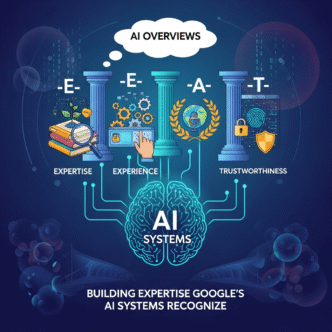
Google’s E-E-A-T (Experience, Expertise, Authoritativeness, Trustworthiness) guidelines apply with even greater emphasis in Gemini’s evaluation.
Stage 4: Multi-Source Synthesis
Unlike traditional search showing ten blue links, Gemini synthesizes information across multiple sources. Your content competes not for position #1, but for inclusion in the synthesis process.
Being one of five sources cited in a Gemini response can deliver more value than ranking #5 in traditional search results.
The Core Gemini Ranking Factors You Must Understand
Let’s dissect the critical factors determining Google Gemini optimization success. Master these elements to dramatically improve citation likelihood.
Ranking Factor 1: Traditional Google SEO Signals
Everything that mattered for traditional SEO still matters for Gemini SEO. Gemini leverages Google’s existing ranking infrastructure:
- Page authority and domain reputation
- Backlink quality and quantity
- Content relevance and keyword alignment
- Technical SEO fundamentals
- User experience signals
Don’t abandon traditional SEO best practices. They form the foundation layer Gemini builds upon.
Ranking Factor 2: E-E-A-T Amplification
Google’s Experience, Expertise, Authoritativeness, and Trustworthiness guidelines receive amplified importance in Gemini AI content optimization.
Gemini evaluates E-E-A-T signals more rigorously than traditional search algorithms. Content lacking clear expertise markers gets filtered aggressively.
Display author credentials prominently. Showcase relevant experience. Link to professional profiles. Make expertise immediately visible and verifiable.
Ranking Factor 3: Content Comprehensiveness
Gemini ranking factors strongly favor comprehensive coverage over shallow content. Thorough resources that answer multiple related questions outperform narrow, focused articles.
Create definitive guides covering topics exhaustively. Address related questions preemptively. Provide depth that generic competitors can’t match.
According to Ahrefs’ 2024 content analysis, content cited in AI responses averages 2,400+ words and covers topics 3x more comprehensively than typical ranking content.
Ranking Factor 4: Structured Data and Schema Markup
Schema markup helps Gemini parse and understand content structure more efficiently. Proper implementation significantly improves citation likelihood.
Implement Article schema with author details, FAQ schema for common questions, How-To schema for instructional content, and Review schema where applicable.
Explore advanced schema strategies in this comprehensive GEO guide.
Ranking Factor 5: Freshness and Update Frequency
Google Gemini search prioritizes recent content and regularly updated resources. Stale content faces significant disadvantages regardless of other quality signals.
Implement content refresh schedules. Update statistics annually. Add new sections addressing emerging trends. Maintain clear “last updated” dates.
Ranking Factor 6: Semantic Richness and Entity Coverage
Gemini evaluates semantic relationships and entity coverage within content. Articles properly connecting related concepts, entities, and terminology score higher.
Use Google’s Knowledge Graph entities naturally. Connect related concepts explicitly. Demonstrate topical authority through comprehensive entity coverage.
Ranking Factor 7: Multi-Format Content Integration
Gemini AI content optimization benefits from multi-format approaches. Content combining text, images, videos, and structured data performs better than text-only resources.
Integrate relevant images with descriptive alt text. Embed explanatory videos. Use tables for comparative data. Create rich, multi-format experiences.
How to Optimize Content for Google Gemini AI: Proven Strategies
Ready for actionable tactics? Here’s your step-by-step roadmap for Google Gemini optimization success.
Strategy 1: Dominate Traditional Google Search First
Gemini SEO builds on traditional search success. Focus on ranking well in standard Google Search as your foundation strategy.
Conduct thorough keyword research. Build quality backlinks. Optimize technical SEO elements. Create content targeting specific search queries with commercial intent.
Traditional search visibility feeds directly into Gemini citation opportunities. You can’t shortcut this foundation.
Strategy 2: Implement Comprehensive Schema Markup
Structured data dramatically improves how Gemini parses and understands your content. Comprehensive schema implementation is non-negotiable for Google Gemini optimization.
Essential schema types for Gemini:
- Article: Include author, publisher, publication date, and modification date
- FAQPage: Mark up all Q&A content explicitly
- HowTo: Structure step-by-step instructions formally
- Review/Rating: Show product or service evaluations
- Organization: Establish entity relationships
- BreadcrumbList: Clarify site structure
Validate schema using Google’s Rich Results Test to ensure proper implementation.
Strategy 3: Create Topical Authority Clusters
Gemini ranking factors reward demonstrated topical authority across interconnected content. Single excellent articles perform less consistently than comprehensive topic clusters.
Build hub-and-spoke content architectures. Create pillar content covering broad topics comprehensively. Develop cluster content addressing specific subtopics in depth.
Link related articles strategically. Demonstrate expertise breadth through comprehensive topic coverage spanning multiple angles and questions.
Reference this complete clustering strategy guide for advanced implementation.
Strategy 4: Optimize for Featured Snippets
Featured snippet optimization translates directly into Google Gemini search citation advantages. Content already selected for snippets receives preferential treatment in Gemini responses.
Structure content to directly answer specific questions. Use question-format headings. Provide concise answers followed by detailed explanations.
Format lists, tables, and step-by-step instructions clearly. Google’s snippet selection often predicts Gemini citation behavior.
Strategy 5: Showcase Expertise Through Author Authority
Gemini AI content optimization demands visible expertise demonstration. Anonymous or vaguely attributed content faces significant disadvantages.
Create detailed author bio pages with credentials, experience, and professional background. Link author profiles to LinkedIn, professional websites, and published work.
Include author bylines prominently. Showcase relevant certifications, degrees, or industry recognition. Make expertise immediately apparent.
Strategy 6: Maintain Aggressive Content Freshness
Update cornerstone content quarterly minimum. Refresh statistics annually. Add new sections addressing emerging developments and trends.
Gemini ranking factors heavily penalize outdated content. A comprehensive 2023 guide loses to a current 2025 article, even if the older content demonstrates superior depth.
Display “last updated” dates prominently. Document significant updates in change logs. Signal ongoing maintenance and currency.
Strategy 7: Build Multi-Format Content Experiences
Expand beyond text-only content. Integrate videos, infographics, data visualizations, and interactive elements where appropriate.
Optimize images with descriptive filenames and comprehensive alt text. Embed relevant YouTube videos. Create custom graphics explaining complex concepts.
Multi-format content signals higher production value and comprehensive coverage — both favored by Google Gemini optimization algorithms.
Gemini vs. ChatGPT vs. Claude: Source Selection Differences
Understanding what ranking factors does Gemini use for source selection requires comparing it against competing platforms.
| Factor | Google Gemini | ChatGPT | Claude (Anthropic) |
|---|---|---|---|
| Search Integration | Deep Google Search integration | Bing search partnership | Brave Search integration |
| Traditional SEO Weight | Very high (builds on Google) | Moderate | Low to moderate |
| Domain Authority | Critical factor | Important but secondary | Moderate importance |
| Content Freshness | High priority | Moderate priority | Very high priority |
| Backlink Influence | Strong indirect impact | Minimal impact | Minimal impact |
| E-E-A-T Emphasis | Extremely high | High | Very high |
| Featured Snippet Advantage | Significant boost | No direct benefit | No direct benefit |
| Schema Markup Impact | High impact | Moderate impact | Low impact |
The key differentiator? Google Gemini optimization uniquely benefits from traditional SEO success. Your existing Google Search investments directly support Gemini citation opportunities.
Common Mistakes Killing Your Gemini Optimization Efforts
Even experienced SEO professionals stumble when adapting to Gemini SEO requirements. Avoid these critical errors.
Mistake #1: Ignoring Traditional SEO Fundamentals
Some marketers abandon traditional SEO thinking AI optimization replaces it. Wrong. Google Gemini search builds directly on traditional ranking signals.
Continue investing in backlinks, technical SEO, and traditional optimization. These fundamentals feed Gemini’s source selection process.
Mistake #2: Thin Content Optimized for Keywords Only
Keyword-stuffed shallow content that once worked for low-competition queries fails spectacularly in Gemini ranking factors evaluation.
Create genuinely comprehensive resources. Prioritize depth and value over keyword density. Let semantic relevance emerge from thorough coverage.
Mistake #3: Anonymous or Poorly-Attributed Content
Gemini AI content optimization demands clear authorship with visible credentials. Generic bylines or absent author information dramatically reduce citation likelihood.
Invest in author authority building. Create comprehensive author profiles. Display credentials prominently. Make expertise verification trivially easy.
Mistake #4: Neglecting Schema Markup Implementation
Many sites still lack comprehensive schema implementation. This represents low-hanging fruit for Google Gemini optimization.
Implement Article, FAQ, HowTo, and other relevant schema types. Validate implementation regularly. Monitor rich results in Google Search Console.
Mistake #5: Static Content Without Updates
Publishing excellent content then abandoning it guarantees declining Gemini SEO performance. Gemini heavily penalizes stale resources.
Implement content maintenance schedules. Refresh top-performing content quarterly. Update examples, statistics, and recommendations regularly.
Mistake #6: Ignoring Google Search Console Insights
Google Search Console provides critical data about how Google evaluates your content. Many marketers never examine these insights.
Monitor Core Web Vitals, mobile usability, and rich results status. Address technical issues immediately. Use GSC data to guide optimization priorities.
Real-World Examples: What Content Gets Gemini Citations?
Let’s examine actual Google Gemini search citation patterns across different content categories.
Example 1: Product Comparison Queries
Ask Gemini “best CRM software for small businesses,” and you’ll typically see citations from:
- Established software review sites (G2, Capterra, Software Advice)
- Industry publications (TechCrunch, VentureBeat)
- Vendor websites with comprehensive product pages
- Recent comparison articles from business publications
Notice the pattern? Recent content from authoritative domains demonstrating comprehensive product knowledge dominates citations.
Example 2: How-To and Instructional Content
For instructional queries like “how to file LLC taxes,” Gemini consistently cites:
- Government resources (IRS, SBA, state websites)
- Established financial publishers (Investopedia, NerdWallet)
- Professional service firms (accounting firms, legal services)
- Educational institutions offering business programs
Authority and expertise trump all other factors for instructional content requiring accuracy.
Example 3: Medical and Health Information
Health queries receive the strictest source filtering in Gemini ranking factors. Citations almost exclusively come from:
- Medical institutions (Mayo Clinic, Cleveland Clinic)
- Government health agencies (CDC, NIH)
- Peer-reviewed medical journals
- Board-certified medical professionals
Generic health blogs never compete here regardless of optimization quality.
Example 4: Technical and Programming Queries
For technical questions like “implement JWT authentication in Node.js,” Gemini favors:
- Official documentation (Node.js docs, JWT.io)
- Developer platforms (Stack Overflow, GitHub)
- Established technical publishers (DigitalOcean, LogRocket)
- Technical blogs from recognized developers
Practical implementation focus with working code examples dominates citations.
Industry-Specific Best Practices for Gemini Optimization
Google Gemini optimization strategies vary significantly across industries and content verticals.
E-Commerce and Product Content
Product pages optimized for Gemini SEO require comprehensive information architecture:
- Detailed product specifications with structured data markup
- Customer reviews and ratings with Review schema
- High-quality product images with descriptive alt text
- Comparison tables showing products alongside alternatives
- Usage guides and FAQs addressing common questions
E-commerce sites benefit enormously from Product schema, Offer schema, and AggregateRating markup.
Professional Services and B2B
B2B content competing for Google Gemini search citations needs:
- Case studies demonstrating proven results
- Original research providing unique industry insights
- Expert author profiles showcasing credentials
- Comprehensive service descriptions with clear value propositions
- Client testimonials with structured Review schema
Authority building through thought leadership and original research creates citation advantages.
News and Journalism
News organizations optimizing for Gemini AI content optimization should prioritize:
- Original reporting rather than aggregated content
- Timely publication capturing breaking developments
- Author bylines with journalist credentials
- Proper source attribution within articles
- NewsArticle schema with comprehensive metadata
Original, timely reporting from credentialed journalists dominates news citations.
Healthcare and Wellness
Medical content faces the highest barriers in Gemini ranking factors:
- Medical professional authorship with credentials prominently displayed
- Peer-reviewed source citations throughout content
- Institutional backing from recognized medical organizations
- Medical Review schema showing expert verification
- Current medical guidelines reflecting latest standards
Without legitimate medical credentials, competing for health content citations proves nearly impossible.
Advanced Technical Optimization for Gemini
Google Gemini optimization benefits from sophisticated technical implementations beyond basic SEO.
Core Web Vitals Optimization
Page experience signals influence traditional Google rankings, which feed into Gemini’s source pool. Prioritize:
- Largest Contentful Paint (LCP): Target under 2.5 seconds
- First Input Delay (FID): Target under 100 milliseconds
- Cumulative Layout Shift (CLS): Target under 0.1
Use Google’s PageSpeed Insights to identify and fix Core Web Vitals issues.
Mobile-First Optimization
With Google’s mobile-first indexing, mobile experience directly impacts Gemini SEO performance:
- Responsive design across all devices
- Touch-friendly interface elements
- Readable font sizes without zooming
- Adequate spacing between clickable elements
- Fast mobile page loads
Test mobile experience thoroughly using Google’s Mobile-Friendly Test tool.
Structured Internal Linking
Strategic internal linking signals topical authority and content relationships Gemini evaluates:
- Link related content within topic clusters
- Use descriptive anchor text indicating link destination
- Create logical information hierarchies
- Implement breadcrumb navigation with schema
- Ensure all important pages receive internal links
Reference this internal linking strategy guide for advanced techniques.
International and Multi-Language Optimization
For global content targeting Google Gemini search across regions:
- Implement hreflang tags correctly
- Create genuinely localized content (not just translated)
- Use region-specific schema markup
- Build local backlinks from regional domains
- Consider cultural context in content creation
Measuring Gemini Optimization Success
Unlike traditional rankings, Gemini AI content optimization requires innovative measurement approaches.
Google Search Console Monitoring
Track position changes in Google Search as leading indicators for Gemini ranking factors performance:
- Monitor featured snippet acquisitions
- Track rich results appearances
- Analyze query impressions for AI-relevant terms
- Review page experience metrics
Improvements in traditional search often precede Gemini citation increases.
AI Overview Tracking
Google increasingly displays AI-generated overviews at the top of search results. Monitor your content’s inclusion in these AI overviews:
- Search for your target keywords manually
- Document which queries trigger AI overviews
- Track whether your content gets cited in overviews
- Note changes in citation patterns over time
AI overview citations strongly correlate with broader Google Gemini optimization success.
Brand Search Volume Trends
Gemini citations increase brand awareness even without direct traffic. Monitor branded search volume:
- Track branded keyword search volume increases
- Analyze branded vs. non-branded search ratios
- Survey customers about discovery methods
- Monitor social mentions referencing Gemini discoveries
According to SEMrush’s 2024 brand awareness study, companies gaining consistent AI citations see 27% average increases in branded search volume within 90 days.
Direct Traffic Analysis
Some users navigate directly to cited domains after seeing them in Gemini responses. Monitor direct traffic patterns:
- Track direct traffic increases following optimization efforts
- Analyze direct traffic behavior metrics
- Survey direct visitors about discovery sources
- Correlate direct traffic spikes with testing periods
Third-Party Gemini Tracking Tools
Emerging tools specifically monitor Google Gemini search citation patterns:
- AI citation monitoring platforms
- Generative engine analytics tools
- Competitive AI visibility analysis services
While still nascent, these tools provide increasing visibility into Gemini citation performance.
The Business Impact of Google Gemini Optimization
Understanding ROI justifies Gemini SEO investment. Here’s what businesses actually gain from Gemini citations.
Authority and Trust Building
Consistent Gemini citations position brands as authoritative sources, even when users don’t click through. This brand equity compounds over time.
Companies cited regularly in AI responses experience enhanced market positioning and increased customer trust.
Zero-Click Visibility Value
While Gemini citations sometimes provide information without driving clicks, brand mentions create awareness and recall that influences later purchasing decisions.
Users remember brands Gemini cites as authoritative, creating top-of-mind awareness when purchase intent develops.
Competitive Differentiation
Early Google Gemini optimization adopters gain significant competitive advantages. While competitors focus exclusively on traditional SEO, optimized brands capture emerging AI-driven visibility.
First-mover advantages in Gemini optimization create moats difficult for late adopters to overcome.
Future-Proofing Digital Strategy
With AI-powered search rapidly growing, Gemini AI content optimization represents future-proofing rather than experimental investment.
Gartner research projects 25% decline in traditional search volume by 2026 due to AI adoption. Optimizing now positions brands for this inevitable shift.
Expert Strategies: What Top Performers Do Differently
Brands consistently winning Gemini ranking factors competition share common approaches.
Industry Insight: According to Moz’s 2024 AI SEO research, top-performing sites in Gemini citations invest 40% more in content depth, update content 3x more frequently, and implement schema markup 2.5x more comprehensively than average performers.
Strategy 1: Comprehensive Topic Domination
Winners create exhaustive content libraries covering topics from every conceivable angle. They don’t publish one article on a topic — they publish ten, addressing different aspects, questions, and use cases.
Strategy 2: Original Research Investment
Top performers conduct proprietary research, publish original data, and create unique insights unavailable elsewhere. Original contributions create citation necessity.
Strategy 3: Multi-Platform Authority Building
Successful brands build authority across platforms — Google Search, YouTube, social media, and industry publications. Cross-platform authority signals compound in Gemini’s evaluation.
Strategy 4: Aggressive Content Maintenance
Leaders implement systematic content refresh protocols. Quarterly updates ensure content remains current. Automated monitoring flags outdated statistics or examples requiring updates.
Explore comprehensive implementation frameworks in this GEO playbook.
Gemini Optimization for Different Content Formats
Google Gemini optimization extends beyond traditional blog posts. Different formats require specialized approaches.
Video Content Optimization
YouTube integration with Google creates unique Gemini SEO opportunities:
- Create comprehensive video transcripts
- Implement Video schema markup
- Optimize video titles and descriptions for search
- Include chapter markers for easy navigation
- Embed videos within comprehensive text content
Video content demonstrating processes or explaining concepts performs exceptionally well in Gemini citations.
Podcast and Audio Content
Audio content optimization requires making content searchable and parseable:
- Provide detailed episode transcripts
- Create show notes with key takeaways
- Implement Podcast schema markup
- Extract quotes and insights into text format
- Build companion blog posts expanding audio discussions
Data Visualizations and Infographics
Visual data presentations benefit Gemini AI content optimization when properly implemented:
- Provide detailed image alt text
- Include data tables alongside visualizations
- Explain methodology and data sources
- Implement ImageObject schema
- Create text summaries of visual insights
Interactive Tools and Calculators
Interactive content provides unique value Gemini can reference:
- Create comprehensive usage instructions
- Document methodology and assumptions
- Provide example use cases
- Implement HowTo schema for instructions
- Explain outputs and interpretations
The Ethics of Gemini Optimization
As we optimize for Google Gemini search, ethical considerations demand attention.
Accuracy Over Optimization
Never sacrifice factual accuracy for optimization gains. Misleading content creates reputational damage far exceeding any visibility benefits.
Gemini ranking factors increasingly detect and penalize misinformation. Long-term success requires genuine accuracy.
Transparency in Expertise Claims
Clearly distinguish credentials from aspirations. Don’t claim expertise you don’t possess. Authentic authority building takes time.
Gemini evaluates expertise signals rigorously. False claims get detected and penalized.
User Value Above All
Optimize by creating genuinely valuable content, not by gaming systems. Google Gemini optimization rewards authentic value delivery.
Ask constantly: “Does this content deserve citation?” If the answer isn’t clearly yes, improve the content rather than the optimization tricks.
Frequently Asked Questions About Google Gemini Optimization
How long does it take to see results from Gemini optimization?
Google Gemini optimization typically shows initial results within 2-3 months, with significant impact emerging after 6 months of consistent effort. Traditional SEO improvements often appear first, followed by increased Gemini citations as authority builds. Patience and persistence matter more than quick tactics.
Can I optimize for Gemini without strong Google Search rankings?
Difficult but possible. Gemini SEO heavily leverages Google Search signals, so strong traditional rankings provide significant advantages. However, exceptional content quality, comprehensive schema markup, and demonstrated expertise can sometimes overcome moderate search rankings. Focus on building both simultaneously.
What schema types matter most for Gemini optimization?
Article schema with detailed author information, FAQ schema for Q&A content, HowTo schema for instructional content, and Review schema for evaluations consistently demonstrate the strongest impact on Gemini ranking factors. Organization and BreadcrumbList schemas provide supporting value.
How does Gemini handle outdated content?
Google Gemini search heavily penalizes stale content, especially for topics where information changes frequently. Update cornerstone content quarterly minimum. Display “last updated” dates prominently. Add new sections addressing emerging developments to maintain freshness signals.
Should I optimize differently for mobile vs desktop Gemini?
No significant differences exist between mobile and desktop Gemini AI content optimization. However, since Google uses mobile-first indexing, mobile experience quality indirectly impacts Gemini citation chances. Ensure excellent mobile performance for both traditional SEO and Gemini success.
What’s the ROI of investing in Gemini optimization?
ROI varies by industry and competition level. Early adopters generally see stronger returns as competition remains limited. B2B and professional services typically see higher value from authority building through citations. Track branded search increases, direct traffic growth, and market positioning improvements as ROI indicators.
Final Thoughts: Winning the Gemini Optimization Game
Google Gemini optimization represents the evolution of SEO, not its replacement. Everything you built for traditional search creates the foundation for AI citation success.
The competitive landscape remains wide open. Most businesses still focus exclusively on traditional SEO while ignoring Gemini SEO entirely. This creates extraordinary opportunities for early adopters willing to adapt.
Start by auditing your existing content through a Gemini lens. Ask: “Does this demonstrate clear expertise? Is it comprehensive? Is it current?” Address weaknesses systematically.
Implement comprehensive schema markup across your entire site. This single investment dramatically improves how Gemini understands and evaluates your content.
Build topical authority through interconnected content clusters. Don’t publish isolated articles — create comprehensive topic libraries demonstrating expertise breadth and depth.
The brands dominating Google Gemini search citations five years from now are the ones implementing these strategies today. While competitors debate whether AI optimization matters, you can build unassailable advantages through consistent execution.
Gemini ranking factors reward the same qualities that make content genuinely valuable: expertise, comprehensiveness, currency, and trustworthiness. Optimize for these principles and success follows naturally across both traditional search and AI platforms.
The future of search visibility runs through AI. Understanding Google Gemini optimization positions you to capture that future rather than scramble to adapt when everyone else finally catches on.
Start optimizing today. Dominate Gemini citations tomorrow. Build sustainable competitive advantages forever.
The opportunity window remains open. Time to walk through it.
Related posts:
- What is Generative Engine Optimization (GEO)? Definition, Importance & Future
- Google AI Overviews Optimization: Complete 2025 Strategy Guide
- Complete Guide to Generative Engine Optimization: Ranking in ChatGPT, Claude & Gemini
- Claude AI Citations Explained: How Anthropic’s Claude Ranks and Attributes Sources