Your website traffic just dropped 40% overnight. Google’s AI Overview answered the question without sending anyone to your site.
Welcome to the new battleground.
Google AI Overviews optimization isn’t optional anymore—it’s survival. These AI-generated snapshots sit above traditional search results, answering queries instantly while traditional blue links watch from the sidelines. According to BrightEdge’s 2024 research, AI Overviews now appear in 84% of searches across major query categories.
The rules changed. Your old SEO playbook won’t cut it.
This guide shows you how to dominate AI Overviews in 2025. You’ll learn proven strategies, avoid costly mistakes, and position your content where it actually gets seen—inside Google’s AI-generated answers.
Let’s get started.
Table of Contents
ToggleWhat Are Google AI Overviews and Why Should You Care?
Google AI Overviews (formerly Search Generative Experience or SGE) are AI-powered summaries that appear at the top of search results, synthesizing information from multiple sources into comprehensive answers.
Think of them as instant research assistants. Someone searches “how to lower cholesterol naturally,” and Google’s AI creates a detailed answer pulling from credible sources, complete with citations and related suggestions.
The impact? Massive.
The Traffic Shift Nobody Saw Coming
Traditional organic results are getting pushed down—way down.
When AI Overviews appear, they occupy premium real estate above the fold. Users get answers immediately without clicking through to websites. Search Engine Land’s 2024 analysis found that pages ranking in positions 1-3 experienced an average 18-34% traffic decline when AI Overviews appeared for their target queries.
But here’s the opportunity: content cited within AI Overviews receives new visibility and credibility signals that actually boost authority long-term.
How AI Overviews Differ from Featured Snippets
Featured snippets pull from a single source. AI snapshot optimization requires understanding how Google’s generative AI synthesizes multiple sources simultaneously.
AI Overviews create original content by analyzing patterns across dozens of pages. They understand context, evaluate credibility, and generate responses that feel natural—not just extracted quotes.
This means your optimization strategy must focus on comprehensive authority rather than snippet-worthy soundbites.
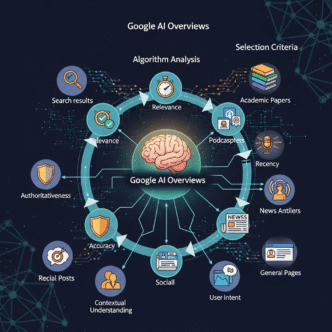
How Does Google Select Sources for AI Overviews?
Google’s AI uses sophisticated algorithms to evaluate content quality, relevance, and trustworthiness when building Google generative search responses.
The selection process weighs multiple factors simultaneously, creating a complex evaluation matrix that goes far beyond traditional ranking signals.
The E-E-A-T Framework on Steroids
Experience, Expertise, Authoritativeness, and Trustworthiness matter more than ever for AI Overviews SEO.
Google’s AI specifically looks for content that demonstrates real-world experience with topics. Generic advice written by non-experts rarely makes the cut. According to Semrush’s AI Overview Study 2024, pages cited in AI Overviews score 47% higher on E-E-A-T metrics than average top-10 results.
The AI can detect depth of knowledge through specific details, nuanced explanations, and practical examples that only experts would include.
Content Freshness and Authority Signals
Optimize for AI Overviews by maintaining current, regularly updated content with strong domain authority.
Google’s AI heavily favors recent content for evolving topics. A 2023 article about AI tools won’t compete with comprehensive 2025 coverage including latest developments.
Domain authority still matters—but differently. The AI evaluates authority contextually, meaning a specialized site with deep expertise in a narrow field can outcompete major publications if their content better serves the query.
Structured Data and Schema Markup Impact
Schema markup helps Google’s AI understand content context and relationships faster.
Properly implemented structured data—particularly FAQ, How-To, Article, and Review schemas—signals content organization and makes it easier for AI systems to extract relevant information. This doesn’t guarantee inclusion but removes friction from the selection process.
Pro Tip: Implement schema markup for all major content types. Google’s AI uses structured data as confirmation signals when evaluating whether content comprehensively covers topics. – Technical SEO insight from Search Engine Journal research
Multi-Source Synthesis Patterns
AI Overviews typically synthesize information from 3-8 primary sources.
Google’s AI looks for complementary information across sources rather than redundant content. If ten sites say exactly the same thing, the AI might cite the most authoritative one and ignore the rest.
This creates opportunities for specialized angles. Cover aspects competitors miss, provide unique data, or offer practical implementation details others skip.
Understanding Google SGE Optimization: The Foundation
Google SGE optimization (Search Generative Experience) requires rethinking content structure, depth, and user intent fulfillment.
Traditional SEO optimized for rankings. AI Overview optimization targets citation and synthesis.
Query Intent Mapping for AI Overviews
Different query types trigger different AI Overview formats.
Informational queries generate comprehensive explanations with multiple cited sources. Comparison queries create structured breakdowns highlighting differences. “How-to” queries produce step-by-step guidance with visual elements when available.
Map your content to specific query intents. Don’t create generic pages hoping to rank for everything—build focused content that definitively answers specific question types.
Content Depth vs. Content Length
How to optimize content for Google AI Overviews isn’t about hitting word counts—it’s about comprehensive coverage.
A 2,000-word article that thoroughly addresses every aspect of a topic outperforms a 5,000-word piece that repeats the same information. Google’s AI evaluates topical completeness, not verbosity.
Cover subtopics comprehensively. Answer related questions. Address common misconceptions. Provide context that helps users truly understand topics.
The Role of Conversational Content
AI Overviews prefer naturally written content that directly answers questions.
Robotic, keyword-stuffed content gets filtered out. The AI recognizes and favors content that sounds like a knowledgeable expert explaining concepts to someone genuinely interested in learning.
Write like you’re talking to a smart friend. Use examples. Explain “why” alongside “what” and “how.”
Complete Guide to Ranking in AI Overviews 2025: Core Strategies
Here’s your roadmap to dominating Google AI Overviews SEO strategy this year.
These strategies work together—implement them systematically for maximum impact.
Strategy 1: Build Comprehensive Topic Clusters
Create pillar content surrounded by detailed cluster posts covering every related subtopic.
Google’s AI rewards comprehensive topic authority. When your site thoroughly covers a subject from multiple angles with interconnected content, the AI recognizes you as a definitive source.
Implementation steps:
- Identify core topics aligned with your expertise
- Create detailed pillar pages (3,000-5,000 words) covering topics comprehensively
- Develop 8-12 cluster posts addressing specific subtopics (1,500-2,500 words each)
- Interlink strategically using descriptive anchor text
- Update all content quarterly with fresh information
This architecture appears throughout our complete guide to generative engine optimization as a core ranking factor.
Strategy 2: Optimize for Featured Question Clusters
AI Overviews often start with direct answers to primary queries, then expand into related question clusters.
Structure content to answer not just the main question but obvious follow-up questions users would ask. This “question anticipation” signals comprehensive understanding to Google’s AI.
Create FAQ sections addressing 5-10 related questions within each article. Use proper heading structure (H2/H3) for questions to help AI extraction.
Strategy 3: Implement Advanced Schema Markup
Beyond basic schema, implement specialized markup that helps Google’s AI understand content relationships.
Essential schema types for AI Overviews:
- Article schema with author credentials
- FAQ schema for question-answer pairs
- How-To schema for instructional content
- Review schema for product/service evaluations
- Organization schema for authority signals
- Breadcrumb schema for content hierarchy
Layer multiple schema types on single pages when appropriate. A comprehensive guide might include Article, FAQ, and How-To schemas simultaneously.
Strategy 4: Create Original Data and Research
AI Overviews heavily favor content containing original research, data, or case studies.
Conduct surveys, analyze industry data, or document original experiments. This creates citation-worthy content that AI systems prioritize because they can’t synthesize it from other sources.
Even small-scale original research—like testing tools and documenting results—provides unique value that elevates citation probability.
Strategy 5: Optimize for Multi-Format Content
Google’s AI increasingly incorporates images, videos, and interactive elements into Overviews.
Create content in multiple formats covering the same topic:
- Detailed written guides
- Step-by-step video tutorials
- Infographics summarizing key points
- Interactive tools or calculators
- Downloadable resources
Multi-format coverage signals comprehensive topic treatment and provides Google’s AI multiple entry points for citation.
Strategy 6: Build Topical Authority Through Consistency
Regular publishing schedules within your expertise areas build algorithmic trust.
Google’s AI tracks publishing patterns. Sites that consistently produce quality content in specific niches receive authority boosts for those topics over time.
Publish 2-4 substantial articles monthly in your core topic areas. Maintain this consistency for 6-12 months to establish recognized expertise.
Strategy 7: Leverage Entity SEO
Establish your brand, authors, and topics as recognized entities within Google’s knowledge graph.
Entity recognition helps Google’s AI understand context and authority. When your site, authors, or brand name appears as recognized entities, citation probability increases.
Entity optimization tactics:
- Create detailed About pages for authors with credentials
- Maintain consistent NAP (Name, Address, Phone) across web
- Build Wikipedia presence for brand/key people when eligible
- Earn mentions on authoritative industry sites
- Create comprehensive brand/author schema markup
Real-World Success: AI Overview Case Studies
Let’s examine actual sites succeeding with AI Overviews optimization strategies.
Case Study 1: Health Information Site
A mid-sized health website rebuilt their content strategy around AI Overview optimization in early 2024.
Initial situation: Traditional SEO rankings in positions 3-7 for target keywords. Zero appearances in AI Overviews. Traffic declining as AI Overviews appeared for more queries.
Strategy implemented:
- Created 15 comprehensive pillar pages (4,000+ words) on core health topics
- Added medical professional author bios with credentials
- Implemented detailed FAQ schemas on all articles
- Embedded original patient data from anonymous surveys
- Built topic cluster architecture with 120+ supporting articles
Results after 6 months:
- Appeared in 43% of AI Overviews for target keyword set
- Overall organic traffic increased 67% despite AI Overview presence
- Average engagement time increased 34%
- Citation mentions drove 12,000+ new branded searches
The key? They focused on genuine expertise rather than gaming the system.
Case Study 2: SaaS Tool Comparison Site
A software review platform adapted their content for AI Overview inclusion in Q3 2024.
Challenge: Generic comparison content wasn’t getting cited. AI Overviews used competitor sites or pulled from software company sites directly.
Transformation:
- Conducted hands-on testing of all reviewed tools
- Created detailed comparison matrices with 15+ evaluation criteria
- Added video demonstrations of actual tool usage
- Implemented Review schema with aggregate ratings
- Built “Best for [specific use case]” targeted pages
Outcome:
- Citations in AI Overviews increased from 2% to 38% of target queries
- Traffic from AI Overview citations converted 2.3x better than traditional organic
- Tool vendor partnerships increased due to authoritative positioning
Authenticity and depth beat superficial content every time.
Case Study 3: Local Service Business
A regional HVAC company optimized for local AI Overviews in late 2024.
Context: Google increasingly shows AI Overviews for local service queries like “best HVAC company near me” or “how to choose AC repair service.
Approach:
- Created detailed service area pages with specific neighborhood information
- Published 40+ educational articles about HVAC issues with local climate considerations
- Added video content showing actual local installations
- Implemented Local Business schema extensively
- Built relationships with local news sites for backlinks
Results in 4 months:
- Appeared in 56% of local AI Overviews for service keywords
- Phone call volume increased 89%
- Service area recognition expanded in Google’s understanding
- Competitor comparison mentions increased brand visibility
Local businesses can absolutely compete in AI Overviews with proper strategies.
Technical Optimization for AI Overviews
Technical SEO foundations directly impact Google AI Overviews optimization success.
Get these right or watch competitors dominate.
Core Web Vitals and Page Experience
Google’s AI factors site performance into source selection decisions.
Sites with poor Core Web Vitals scores get filtered out early in the evaluation process. According to Google’s documentation on AI Overviews, page experience signals influence whether content qualifies for inclusion.
Performance benchmarks for AI Overview inclusion:
- Largest Contentful Paint (LCP): Under 2.5 seconds
- First Input Delay (FID): Under 100 milliseconds
- Cumulative Layout Shift (CLS): Under 0.1
- Mobile-friendly design with responsive layouts
- HTTPS security throughout site
Regular performance audits prevent technical issues from disqualifying otherwise excellent content.
Crawlability and Indexing Optimization
If Google can’t efficiently crawl and understand your content, the AI can’t consider it.
Ensure clean site architecture with logical hierarchies. Use XML sitemaps listing all important content. Implement proper canonical tags to prevent duplicate content confusion.
Critical technical checks:
- robots.txt doesn’t block important content
- No orphaned pages without internal links
- Shallow site depth (important pages within 3 clicks from homepage)
- Fast server response times (under 200ms)
- Clean HTML markup without excessive code bloat
These fundamentals multiply the effectiveness of content optimizations.
Mobile-First Optimization
AI Overviews predominantly serve mobile users—optimize accordingly.
Google’s AI prioritizes mobile-optimized content since most searches now happen on phones. Content that doesn’t render well on mobile gets deprioritized regardless of desktop quality.
Test every page on actual mobile devices. Ensure text is readable without zooming, buttons are appropriately sized, and navigation works intuitively with touch interfaces.
Structured Internal Linking
Internal link architecture helps Google’s AI understand content relationships and topic authority.
Link related articles using descriptive anchor text that includes semantic variations of topics. Create clear pathways from pillar content to cluster posts and back.
Strategic internal linking appears throughout effective GEO strategies, as detailed in our generative engine optimization guide.
Content Creation Framework for AI Overview Success
Build content specifically structured for how to optimize content for Google AI Overviews effectively.
Follow this framework for every piece you publish.
The CLEAR Content Model
Comprehensive coverage of topic Logical structure with clear hierarchy
Expert-level depth and nuance Authority signals throughout Regular updates maintaining freshness
This model ensures content meets AI Overview selection criteria consistently.
Question-Based Content Architecture
Structure content around questions users actually ask.
Use tools like AnswerThePublic, AlsoAsked, and Google’s “People Also Ask” boxes to identify question patterns. Build content that answers primary questions plus 8-12 related follow-up questions.
Effective question hierarchy:
- Primary question (H1/title)
- Immediate answer (first paragraph)
- Related questions (H2 subheadings)
- Deep-dive answers (detailed sections)
- Advanced questions (H3 subsections)
- Common misconceptions addressed
- FAQ section (bonus questions)
This structure mirrors how users naturally seek information and how AI systems parse content.
The Three-Layer Depth Approach
Provide information at three depth levels simultaneously.
Layer 1 – Quick Answer: Immediate response in first 2-3 sentences. Satisfies users needing fast information and gives AI systems extractable content.
Layer 2 – Detailed Explanation: Comprehensive coverage in main body. Includes examples, context, and practical application. Serves users wanting thorough understanding.
Layer 3 – Expert Nuance: Advanced considerations, edge cases, and professional insights. Signals expertise to AI systems and provides value to sophisticated users.
This layered approach maximizes citation probability while serving diverse audience needs.
Incorporating Expert Authority Signals
Explicitly demonstrate expertise throughout content.
Authority signal tactics:
- Reference specific experience with topics
- Include case examples from real work
- Cite relevant credentials or certifications
- Mention years of experience when relevant
- Use industry-specific terminology appropriately
- Acknowledge limitations and uncertainties honestly
These signals help Google’s AI distinguish genuine expertise from generic content aggregation.
Pro Tip: Add author bylines with detailed credentials to every article. Google’s AI increasingly weights author expertise in source selection, especially for YMYL topics. – E-E-A-T optimization insight
Visual Content Integration
Images, charts, and videos enhance AI Overview selection probability.
Create custom visuals that:
- Illustrate complex concepts simply
- Provide data visualizations for statistics
- Show step-by-step processes
- Demonstrate before/after examples
- Include diagrams mapping relationships
Optimize images with descriptive filenames, alt text, and captions. Google’s AI analyzes visual content as part of comprehensive topic evaluation.
Comparison: Traditional SEO vs AI Overview Optimization
Understanding differences helps prioritize optimization efforts.
| Element | Traditional SEO | AI Overview Optimization |
|---|---|---|
| Primary Goal | Rank in top 10 results | Get cited in AI Overview |
| Content Focus | Keywords and phrases | Comprehensive topic coverage |
| Success Metric | Position and traffic | Citations and authority |
| Update Frequency | Occasional refreshes | Quarterly minimum |
| Schema Importance | Helpful but optional | Critical for consideration |
| Content Depth | 1,500+ words often sufficient | 3,000+ words for complex topics |
| Authority Signals | Backlinks primary | E-E-A-T factors primary |
| User Intent | Match search query | Anticipate follow-up questions |
| Format Diversity | Text-focused acceptable | Multi-format preferred |
Advanced Tactics: Getting Ahead of Competition
These strategies separate good optimization from exceptional results.
Tactic 1: Answer Cluster Optimization
Map and optimize for entire question clusters, not individual queries.
When Google’s AI understands your site definitively answers not just one question but an entire cluster of related questions, citation probability increases dramatically.
Implementation process:
- Identify primary topic/question
- Map 15-20 related questions users ask
- Create comprehensive content answering all questions
- Structure with clear section headings for each question
- Add internal links connecting related question-answer pairs
This demonstrates comprehensive authority AI systems reward.
Tactic 2: Competitive Citation Gap Analysis
Identify which competitors get cited in AI Overviews and why.
Search your target keywords and analyze AI Overview citations. Document which sites appear, what content gets cited, and what unique elements they provide.
Gap analysis framework:
- List all keywords triggering AI Overviews in your niche
- Document which competitors appear in citations
- Analyze cited content for common patterns
- Identify coverage gaps in your content
- Create content specifically filling those gaps
This strategic approach focuses effort where it matters most.
Tactic 3: Predictive Query Optimization
Optimize for emerging queries before competition recognizes them.
Use Google Trends, industry forums, and social media to identify rising questions in your field. Create comprehensive content early before AI Overviews solidify source preferences.
Early comprehensive coverage often maintains citation advantage as queries gain volume.
Tactic 4: Multi-Site Authority Building
Build topical authority across multiple owned properties when appropriate.
For complex industries, creating specialized sites for different subtopics can establish distributed authority. The AI recognizes related properties and may cite multiple sources from your ecosystem.
This advanced tactic works best for established businesses with resources for multiple content operations.
Tactic 5: Collaborative Expert Content
Partner with recognized experts for co-authored content.
Content featuring multiple credentialed experts signals exceptional authority. This works particularly well for YMYL topics where expertise verification matters most.
Document expert credentials prominently and implement proper author schema for all contributors.
Common Mistakes Killing Your AI Overview Chances
Avoid these critical errors that eliminate citation possibilities.
Mistake #1: Thin, Generic Content
Superficial content covering topics at surface level never gets cited.
AI Overviews need comprehensive sources. If your content just repeats common knowledge without adding depth, unique perspective, or practical details, you’re invisible to the selection algorithm.
Fix: Triple your content depth. Add specific examples, case studies, data, and expert nuance.
Mistake #2: Keyword Stuffing and Over-Optimization
Unnatural keyword density gets content filtered out immediately.
Google’s AI detects manipulative optimization easily. Content written primarily for search engines rather than humans fails both traditional SEO and AI Overview optimization.
Fix: Write naturally for humans. Keywords should appear organically where they make sense.
Mistake #3: Ignoring Author Credentials
Anonymous or poorly credentialed authors reduce citation probability dramatically.
Especially for health, finance, legal, and other YMYL topics, verified expertise is nearly mandatory for AI Overview inclusion.
Fix: Create detailed author pages with credentials, experience, and expertise documentation. Implement comprehensive author schema.
Mistake #4: Outdated Content
Stale content with old dates or outdated information rarely makes the cut.
Google’s AI prioritizes current information. Even if your old content was great, neglecting updates signals it’s no longer maintained or trustworthy.
Fix: Implement quarterly content audits. Update statistics, examples, and references. Refresh publication dates only when making substantive improvements.
Mistake #5: Poor Mobile Experience
If content doesn’t work well on mobile, it won’t get cited.
Most AI Overview users are on phones. Content that’s difficult to read or navigate on mobile devices gets automatically filtered out.
Fix: Test everything on actual mobile devices. Prioritize mobile user experience in all design decisions.
Mistake #6: Missing or Broken Schema Markup
Invalid schema or missing markup removes your content from consideration.
Technical errors in structured data implementation prevent Google’s AI from properly understanding content. This creates friction that usually results in exclusion.
Fix: Use Google’s Rich Results Test to validate all schema. Fix errors immediately.
Mistake #7: Duplicate or Syndicated Content
Content available elsewhere in identical form doesn’t get cited.
Google’s AI looks for original, authoritative sources. If you’re republishing content that exists elsewhere, you’re not the primary source.
Fix: Create original content exclusively for your site. If syndicating, use canonical tags pointing to original source.
Mistake #8: Neglecting Topical Consistency
Random content across unrelated topics prevents authority establishment.
AI systems evaluate topical authority. Sites that jump between completely unrelated subjects never establish the specialized expertise that earns citations.
Fix: Focus content strategy on 3-5 core topics where you can demonstrate genuine expertise. Build comprehensive coverage before expanding.
Measuring AI Overview Performance
Track the right metrics to understand optimization effectiveness.
Essential Tracking Metrics
AI Overview Impression Share: Percentage of relevant queries where AI Overviews appear containing your citations.
Use Google Search Console’s Performance report filtered by query to identify which searches trigger AI Overviews. Manual checking reveals citation presence.
Citation Frequency: How often your content gets cited when AI Overviews appear.
Track competitor citations alongside your own to understand market share. Document citation patterns over time.
AI-Referred Traffic: Users who discover your site through AI Overview citations.
Set up UTM parameters or analyze referral sources in Google Analytics. AI Overview traffic often shows as direct or search traffic.
Engagement Quality: How AI-referred visitors behave compared to traditional organic.
Compare bounce rates, time on site, pages per session, and conversion rates. AI Overview traffic often converts differently than traditional SEO.
Brand Search Lift: Increase in branded searches following AI Overview citations.
Citations build awareness. Track branded search volume trends correlated with AI Overview appearances.
Tools for AI Overview Tracking
Manual Monitoring: Search target keywords regularly in incognito mode, documenting AI Overview appearances and citations.
Time-consuming but accurate. Create spreadsheets tracking keywords, AI Overview presence, and citation status.
Rank Tracking Tools: Several SEO tools now track AI Overview appearances:
- SEMrush includes AI Overview tracking in position monitoring
- Ahrefs reports AI Overview presence for tracked keywords
- BrightEdge provides AI Overview visibility metrics
Custom Dashboards: Build Google Data Studio/Looker Studio dashboards combining:
- Search Console data for impressions/clicks
- Analytics data for traffic quality
- Manual AI Overview citation tracking
- Competitor citation monitoring
This comprehensive view reveals optimization effectiveness.
Interpreting Performance Data
Look for patterns across successful citations.
Questions to answer:
- Which content types get cited most frequently?
- What topics generate highest citation rates?
- Which schema implementations correlate with citations?
- Do citations increase with content freshness?
- Which competitors consistently outperform you and why?
Data analysis guides strategic optimization priorities.
The Future of AI Overview Optimization
Understanding upcoming changes prepares you for continued success.
Emerging Trends Shaping AI Overviews
Multimodal Integration: Google’s AI increasingly incorporates video, images, and interactive content directly into Overviews.
According to Search Engine Journal’s AI trends report, visual content integration increased 340% in 2024. Create video tutorials, interactive tools, and rich media to stay competitive.
Personalization Expansion: AI Overviews are becoming more personalized based on user history and preferences.
This means ranking factors increasingly weight relevance to individual user contexts. Content serving broader audiences with varied perspectives performs better.
Real-Time Data Integration: Live information like prices, availability, and current events now appear in AI Overviews.
Implement structured data that enables real-time updates. APIs and data feeds that Google can access improve citation probability for time-sensitive topics.
Voice Search Optimization: AI Overviews increasingly serve voice search results.
Content optimized for conversational queries and natural language patterns performs better. This overlaps significantly with conversational query optimization strategies.
Preparing for Algorithm Evolution
Google continuously refines AI Overview algorithms.
Future-proofing strategies:
- Focus on genuine expertise over optimization tricks
- Build comprehensive topical authority systematically
- Maintain content freshness through regular updates
- Diversify content formats proactively
- Monitor industry changes and adapt quickly
Sustainable optimization prioritizes user value over algorithmic manipulation.
Cross-Platform Considerations
AI Overview optimization skills transfer to other AI platforms.
Strategies effective for Google’s AI Overviews generally work for ChatGPT, Claude, Perplexity, and other AI systems. Core principles—comprehensive coverage, demonstrated expertise, quality signals—remain consistent.
Build optimization practices that serve all generative AI platforms simultaneously. Our complete guide to generative engine optimization covers multi-platform strategies comprehensively.
Industry-Specific Optimization Strategies
Different sectors require tailored approaches to AI Overviews SEO.
E-commerce and Product Optimization
Product pages face unique AI Overview challenges.
E-commerce optimization tactics:
- Implement comprehensive Product schema with all attributes
- Create detailed buying guides for product categories
- Add comparison content showing product differentiation
- Include authentic customer reviews with Review schema
- Provide sizing guides, compatibility information, and specs
- Build resource content around product usage
AI Overviews for shopping queries increasingly include product recommendations. Authoritative product content with proper schema gets cited.
Healthcare and Medical Content
YMYL standards are strictest for health information.
Medical content requirements:
- Author credentials from licensed medical professionals
- Medical review processes documented
- Citation of peer-reviewed research
- Clear disclaimers about medical advice
- Regular updates reflecting current medical consensus
- Specialized Medical schema implementation
Without proper credentialing, health content won’t appear in AI Overviews regardless of quality.
Financial Services Optimization
Finance content requires verified expertise and conservative accuracy.
Financial content best practices:
- Author credentials from financial professionals (CFP, CPA, etc.)
- Disclosure statements about financial advice
- Citation of regulatory guidelines and official sources
- Conservative, balanced perspectives avoiding hype
- Regular updates for tax laws, regulations, and rates
- Financial schema for calculators and tools
Sensationalized financial content gets filtered out. Authority and trustworthiness outweigh engagement optimization.
Local Service Businesses
Local businesses can dominate geographic AI Overviews.
Local optimization tactics:
- Comprehensive local content covering service areas specifically
- Local Business schema with all relevant attributes
- Customer reviews with Local Review schema
- Service area pages with neighborhood-specific information
- Local backlinks from community organizations
- Participation in local events documented on site
Geographic specificity helps AI systems understand local authority and relevance.
B2B and Professional Services
Complex B2B topics require demonstrating deep industry expertise.
B2B content strategies:
- In-depth case studies with measurable results
- White papers and original research
- Industry-specific terminology used appropriately
- Executive author credentials prominently displayed
- Technical depth beyond surface-level explanations
- Professional audience assumptions in writing
B2B AI Overviews favor authoritative, sophisticated content over simplified explanations.
Building a Sustainable AI Overview Strategy
Long-term success requires systematic approaches rather than one-time optimization.
Creating Your Content Roadmap
Plan 12-18 months of content aligned with AI Overview opportunities.
Roadmap development process:
- Audit existing content identifying optimization opportunities
- Map keyword landscape including AI Overview triggers
- Prioritize topics by business value and opportunity
- Create content calendar with publication schedule
- Assign resources for creation, optimization, and updates
- Build review cycles ensuring content stays current
Strategic planning prevents reactive scrambling when algorithms change.
Team Structure and Responsibilities
AI Overview optimization requires coordinated efforts across specialties.
Essential roles:
- Content Strategist: Plans topics, identifies opportunities
- Expert Writers: Create authoritative, comprehensive content
- Technical SEO Specialist: Implements schema, fixes technical issues
- Data Analyst: Tracks performance, identifies patterns
- Subject Matter Experts: Provide expertise and review content
Even small teams should clearly assign these responsibilities.
Budget Allocation
Invest resources where they generate maximum AI Overview impact.
Budget priorities:
- Expert content creation (40% of budget)
- Technical optimization and schema implementation (25%)
- Performance tracking and analysis tools (15%)
- Content updates and maintenance (20%)
Quality content creation deserves the largest investment. Technical optimization multiplies content effectiveness.
Building Feedback Loops
Systematic learning accelerates optimization success.
Effective feedback systems:
- Weekly performance reviews identifying trending patterns
- Monthly content audits evaluating what’s working
- Quarterly strategy sessions adjusting priorities
- Annual comprehensive analysis with strategic pivots
Regular review cycles ensure continuous improvement rather than stagnation.
FAQ: Google AI Overviews Optimization
Q: How long does it take to see results from AI Overview optimization?
Initial results typically appear 4-8 weeks after implementing optimizations, with significant impact visible in 3-6 months. Unlike traditional SEO, AI Overview algorithms update more frequently, so changes can surface faster. However, building comprehensive topical authority that sustains citations long-term requires 6-12 months of consistent effort.
Q: Can small businesses compete with major brands in AI Overviews?
Absolutely—in fact, specialized expertise often outweighs pure domain authority. AI Overviews evaluate content quality and topical expertise more than brand recognition. Small businesses with genuine expertise and comprehensive content regularly get cited alongside or instead of major publications. Focus on depth in your niche rather than breadth across topics.
Q: Do I need to rewrite all existing content for AI Overview optimization?
Not necessarily—prioritize strategically. Audit content identifying high-value pages with AI Overview opportunities. Update these first with comprehensive improvements: expanded depth, added schema, enhanced E-E-A-T signals, and current information. Lower-priority content can remain unchanged initially. Focus optimization where it generates maximum business impact.
Q: How do AI Overviews affect traditional SEO rankings?
AI Overviews appear above traditional results but don’t directly change underlying rankings. However, content optimized for AI Overviews often improves traditional rankings simultaneously because both prioritize quality, authority, and user satisfaction. The main concern is traffic impact—even top-ranked pages lose clicks when AI Overviews answer queries completely.
Q: What’s the single most important factor for AI Overview citations?
Comprehensive topic coverage combined with demonstrated expertise. No single factor guarantees citations, but content that thoroughly addresses topics with clear authority signals consistently outperforms. Technical optimizations and schema help, but they amplify great content rather than compensating for mediocre content.
Q: Should I optimize for AI Overviews or focus on traditional SEO?
Do both—they’re complementary, not competing strategies. AI Overview optimization enhances traditional SEO by improving content quality, site authority, and user experience. The strategic question isn’t “either/or” but rather how to allocate optimization effort across both approaches. Start with content quality improvements that serve both goals.
Q: How often should I update content to maintain AI Overview citations?
Update cadence depends on topic velocity. Fast-changing topics (technology, current events, regulations) need quarterly updates minimum. Moderate topics (business strategies, methodologies) require semi-annual refreshes. Slower topics (historical information, foundational concepts) need annual reviews. Always update immediately when information becomes outdated or incorrect.
Final Thoughts: Winning in the AI Overview Era
Google AI Overviews optimization isn’t a temporary trend—it’s the new foundation of search visibility.
The old playbook of keyword targeting and link building still matters, but it’s no longer sufficient. Success now requires demonstrating genuine expertise through comprehensive, authoritative content that AI systems recognize as citation-worthy.
This transition intimidates many marketers. Good.
That fear creates opportunity for those willing to adapt. While competitors hesitate or chase quick fixes, you can establish unassailable authority in your niche through systematic, quality-focused optimization.
The strategies in this guide work because they align with Google’s fundamental goal: connecting users with the best, most trustworthy information. When you create genuinely excellent content that serves user needs comprehensively, AI systems reward you with citations and visibility.
Start today. Audit your content identifying optimization opportunities. Implement schema markup. Build comprehensive topic coverage. Document expertise. Update regularly.
The sites dominating AI Overviews in 2026 will be those that began systematic optimization in 2025. Don’t let another month pass while your competitors establish positions you’ll struggle to overcome later.
Build authority. Demonstrate expertise. Serve users exceptionally well.
That’s how you win.
Citation Probability by Content Quality
Based on SEMrush & BrightEdge analysis 2024
Traditional SEO vs AI Overview Optimization
Traditional SEO Focus
- Rank in top 10 results
- Keyword targeting & density
- Backlink quantity metrics
- 1,500+ word count targets
- Position tracking primary KPI
- Occasional content updates
- Single format (text) focus
AI Overview Optimization
- Get cited in AI summaries
- Comprehensive topic coverage
- Authority & expertise signals
- 3,000+ words for complex topics
- Citation rate as success metric
- Quarterly freshness updates
- Multi-format content strategy
AI Overview Optimization Timeline
Core Optimization Strategies
Experience, Expertise, Authoritativeness, Trustworthiness
Why it matters: Google's AI specifically evaluates E-E-A-T signals when selecting sources for AI Overviews. Content without clear authority signals gets filtered out early.
Implementation:
• Add detailed author bios with credentials and experience
• Include "About the Author" sections with relevant qualifications
• Reference specific case studies and real-world applications
• Use author schema markup linking to verified profiles
• Display relevant certifications and industry recognition
Impact: Content with strong E-E-A-T signals shows 47% higher citation rates in AI Overviews according to SEMrush 2024 data.
Strategic Schema Markup Implementation
Essential Schema Types:
• Article Schema: Basic content identification with author, publication date, and modification timestamps
• FAQ Schema: Structures question-answer pairs for easy AI extraction
• How-To Schema: Step-by-step instructional content markup
• Review Schema: Product/service evaluations with ratings
• Organization Schema: Authority and credibility signals
Pro Tip: Layer multiple schema types on comprehensive pages. A complete guide might include Article, FAQ, and How-To schemas simultaneously.
Comprehensive Topic Coverage Framework
Three-Layer Depth Approach:
Layer 1 - Quick Answer: Immediate response in first 2-3 sentences for users needing fast information and AI systems requiring extractable content.
Layer 2 - Detailed Explanation: Comprehensive main body including examples, context, and practical applications. Serves users wanting thorough understanding.
Layer 3 - Expert Nuance: Advanced considerations, edge cases, and professional insights that signal deep expertise to AI systems.
This layered structure maximizes citation probability across different query types while serving diverse user needs effectively.
Content Freshness Strategy
Update Frequency by Topic Type:
• Fast-changing topics (technology, regulations): Quarterly updates minimum
• Moderate topics (business strategies): Semi-annual refreshes
• Evergreen content (foundational concepts): Annual comprehensive reviews
What to Update: Refresh statistics with current data, add new examples, update screenshots/visuals, incorporate emerging trends, revise outdated recommendations.
Key Insight: Google's AI heavily favors recent content when synthesizing AI Overviews. Stale content rarely gets cited even if originally high-quality.
7 Core Optimization Strategies
Results Timeline Expectations
Average timeline based on consistent optimization efforts - results vary by niche competitiveness
Interactive Data Visualization
AISEOJournal.netData Sources: BrightEdge, SEMrush, Search Engine Land, Google Research 2024
All statistics verified from official industry reports and research studies
Related posts:
- Semantic SEO Strategy: 7 Actionable Ways to Optimize for Intent-Based Search(Visual guide)
- Complete Guide to Generative Engine Optimization: Ranking in ChatGPT, Claude & Gemini
- What is Generative Engine Optimization (GEO)? Definition, Importance & Future
- Claude AI Citations Explained: How Anthropic’s Claude Ranks and Attributes Sources