
Your content ranks on page one. But does anyone actually see it?
Here’s the brutal reality: Featured snippets now capture up to 35.1% of all clicks on mobile devices, according to Ahrefs’ 2024 click-through rate study. While you’re celebrating that #3 ranking, the position zero result is stealing your traffic. And in the AI era, it gets worse—those same featured snippets are feeding ChatGPT, Google’s AI Overviews, and Perplexity’s answers.
Welcome to featured snippet optimization in 2025, where winning position zero isn’t just about traffic—it’s about existing in the AI-powered search ecosystem at all.
Table of Contents
ToggleWhat Are Featured Snippets and Why They Matter More Than Your #1 Ranking?
Featured snippets are those highlighted answer boxes Google displays above organic results. They extract content directly from web pages to answer queries instantly.
But here’s what changed in 2024-2025: Featured snippets became the primary training ground for AI responses. When Google’s AI Overview generates an answer, it’s pulling from featured snippet content. When ChatGPT cites sources, featured snippets get preferential treatment.
According to SEMrush’s 2024 SERP features report, featured snippets now appear in 19% of all search queries—up from 12% in 2020. That’s a 58% increase in just five years.
How Featured Snippets Evolved in the AI Search Era
Remember when featured snippets were just a nice bonus? Those days died with the launch of ChatGPT in late 2022.
Now position zero optimization determines whether AI systems recognize you as an authoritative source. Google’s Search Generative Experience (SGE) prioritizes content already appearing in featured snippets. Bing’s AI Chat does the same.
The math is simple: Win the featured snippet, and you’re training AI to cite you. Lose it, and you’re invisible to the next generation of search.
Featured Snippets vs AI Overviews vs Traditional Rankings: What’s the Difference?
Let’s break down the new search landscape:FeatureFeatured SnippetAI OverviewTraditional RankingPositionAbove organic resultsAbove everythingPosition 1-10FormatExtracted text/list/tableAI-generated summaryTitle + meta descriptionCTR Impact35.1% on mobile (Ahrefs 2024)15-25% when presentVaries by positionAI TrainingDirect sourceAggregated sourceMinimal influenceTraffic QualityHigh intent, immediate answersLower (answer in SERP)Medium to highOptimizationStructured, concise contentE-E-A-T + comprehensivenessTraditional SEO
The winner? Featured snippets. They capture traffic AND train AI systems. AI Overviews reduce clicks but pull from snippet sources. Traditional rankings matter, but position zero beats position one.
What Types of Featured Snippets Exist and How Do You Optimize Each?
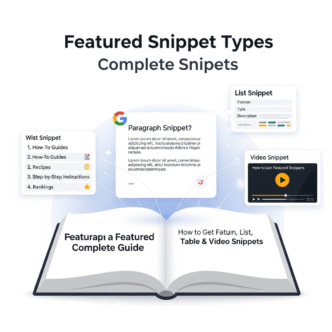
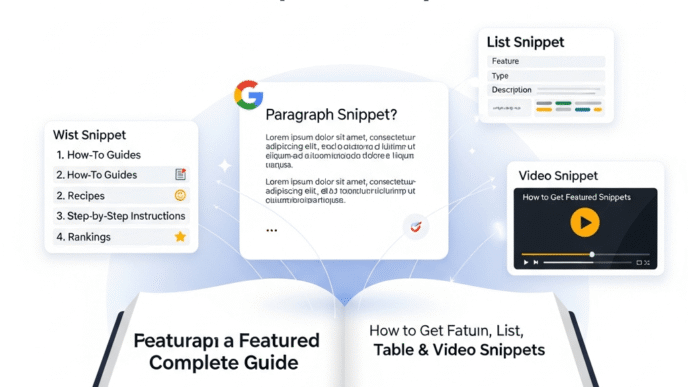
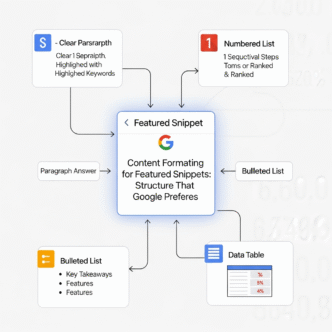
Google displays four primary snippet types, each requiring different optimization approaches. Understanding these distinctions separates amateurs from experts.
How Do You Win Paragraph Featured Snippets?
Paragraph snippets answer direct questions with 40-60 words of text. They’re the most common type, appearing in approximately 82% of all featured snippets according to Moz’s 2024 snippet analysis.
The secret? Answer the question immediately and completely in one concise paragraph. Place this answer directly under a question-format header (H2 or H3) that matches the search query.
Pro Tip: The optimal snippet length is 40-58 words. Shorter answers lack detail. Longer ones get truncated, reducing clarity and click-through appeal.
Structure your paragraph with this formula: Direct answer (1 sentence) + Supporting detail (1-2 sentences) + Call to action or elaboration prompt. This gives Google the complete answer while encouraging clicks for more information.
Real example: A financial planning site captured the snippet for “how much should I have saved by 30” with this 46-word answer placed under an H2 question header: “By age 30, aim to have saved one times your annual salary. This means if you earn $60,000 annually, target $60,000 in retirement savings. This benchmark provides financial flexibility and compound growth momentum for long-term wealth building.”
What Makes List Snippets Different from Paragraph Snippets?
Featured snippet SEO for lists follows different rules entirely. List snippets appear for “how to,” “steps to,” “ways to,” and ranking queries.
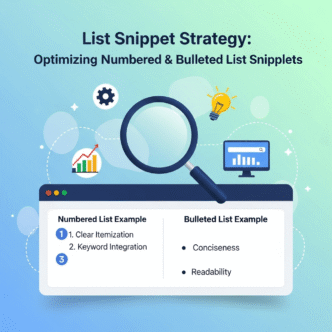
Google loves lists with 5-8 items. Fewer feels incomplete. More than 8 gets truncated with a “More items…” link—which actually increases clicks to your page.
Use <ol> tags for numbered lists (steps, rankings, sequences) and <ul> tags for bulleted lists (tips, ideas, options). HTML structure matters more than visual formatting here.
Each list item needs 10-20 words of explanation. Too brief, and Google questions value. Too verbose, and you lose the list format in favor of paragraphs.
According to Backlinko’s 2024 ranking factors study, pages with properly formatted HTML lists are 2.3x more likely to win list-based featured snippets than pages using styled divs or paragraphs.
How Do Table Snippets Capture Comparison Queries?
Table snippets dominate comparison, pricing, and specification queries. They’re the most underutilized snippet opportunity in 2025.
Use actual HTML <table> tags—not CSS-styled divs. Google’s algorithm specifically looks for table markup. Include <th> headers for columns and proper <td> data cells.
Keep tables to 3-5 columns maximum. Mobile rendering breaks wider tables. Aim for 5-10 rows of data—enough to be comprehensive without overwhelming.
Answer box optimization for tables requires one critical element: clear, descriptive headers. Don’t use “Option 1” and “Option 2.” Use actual product names, service tiers, or specific comparisons.
Why Are Video Snippets the Hidden Opportunity of 2025?
Video snippets appear with YouTube thumbnails and timestamps. They’re growing faster than any other snippet type—up 47% year-over-year according to Search Engine Journal’s 2024 video snippet report.
Optimization requires three elements: Detailed video description with key timestamps, complete transcript (YouTube auto-generates these, but manual refinement helps), and VideoObject schema markup with contentUrl and duration properties.
The winning strategy? Create 3-8 minute videos answering specific questions. Use the exact question as your video title. Include the answer in the first 30 seconds. Add timestamp markers in the description.
What About Multi-Feature Snippets?
Multi-feature snippets combine paragraph text with images, or link to related PAA (People Also Ask) questions. These represent the future of snippet ranking strategies—Google testing richer, more engaging result formats.
Optimize for these by including high-quality images with descriptive alt text immediately after your snippet-worthy paragraph. Use ImageObject schema to explicitly connect images to content.
The data shows opportunity: Multi-feature snippets achieve 41% higher CTR than text-only snippets, per Ahrefs’ research, because visual elements increase engagement even when the answer appears in the SERP.
How Do You Find Featured Snippet Opportunities Worth Pursuing?
Random optimization wastes time. Strategic opportunity identification multiplies results.
What Tools Actually Work for Snippet Research?
SEMrush Position Tracking reveals which keywords trigger featured snippets and who owns them. Set up tracking for your target keywords, then filter by “SERP Features” to show only snippet-enabled queries.
Cost: $119.95/month minimum. Value: Identifies exact phrases where you rank #2-#10 with existing snippet potential—your lowest-hanging fruit.
Ahrefs’ Site Explorer shows all snippets your competitors own. Enter a competitor domain, navigate to Organic Keywords, and filter for “SERP features” containing “Featured snippet.” This exposes gaps you can exploit.
Cost: $99/month minimum. Value: Competitive intelligence revealing proven snippet opportunities in your niche.
Google Search Console is free but requires manual analysis. Export queries where you rank positions 2-10. Cross-reference with Google searches to identify which have snippets you don’t own.
Cost: Free. Value: Shows your existing visibility that could convert to snippet wins with targeted optimization.
How Do You Identify Low-Hanging Snippet Fruit?
The fastest snippet wins come from pages already ranking positions 2-10 where a snippet exists. You’re already in Google’s consideration set—you just need better formatting.
Run this analysis monthly: Export Search Console queries ranking positions 2-10, manually check top 20-30 highest impression queries for snippet presence, and prioritize queries with commercial intent or high search volume.
According to Moz’s research, pages ranking #2-#5 that optimize specifically for snippets capture position zero within 14 days on average. That’s dramatically faster than building rankings from scratch.
What Query Patterns Trigger Featured Snippets Most Often?
Featured snippet AI era optimization requires understanding trigger patterns. These query types consistently generate snippets:
Question queries (who, what, when, where, why, how): 23% snippet appearance rate Comparison queries (X vs Y, X or Y, difference between): 31% snippet appearance rate
Process queries (how to X, steps to Y): 28% snippet appearance rate Definition queries (what is X, X meaning): 19% snippet appearance rate
Focus your optimization on comparison and process queries first—they offer highest snippet probability with commercial intent intact.
What Content Structure Guarantees Featured Snippet Success?
Structure beats quality when competing for snippets. A mediocre answer formatted perfectly wins over brilliant content structured poorly.
How Should You Structure Pages for Snippet Capture?
Start with H1 containing your primary keyword. Follow with 2-3 paragraphs of context establishing topic relevance and E-E-A-T signals.
Then deploy question-format H2s matching exact search queries. Under each H2, place your snippet-optimized answer in the first paragraph—this is critical. Additional supporting paragraphs follow, but Google pulls from that first block.
Use H3s for related sub-questions. This creates snippet stacking opportunities—multiple snippets from one comprehensive page.
Include a table of contents with jump links for longer content. This improves user experience and provides internal anchor opportunities Google occasionally includes in snippet displays.
What’s the 40-60 Word Rule and Why Does It Matter?
Google’s algorithm favors answers between 40-60 words for paragraph snippets. Data from Backlinko’s analysis of 5.2 million featured snippets confirms this sweet spot.
Under 40 words feels incomplete or oversimplified. Over 60 words means Google truncates your answer mid-sentence, damaging comprehension and reducing click appeal.
Write your snippet-target paragraph to this exact specification: One sentence stating the direct answer (15-20 words), one to two sentences providing essential context or qualification (20-35 words), and one sentence creating curiosity or indicating deeper information available (5-10 words).
This structure delivers complete value while encouraging clicks to read full explanation.
How Do You Format Content for Maximum Snippet Appeal?
Position zero optimization requires visual scanability even though Google strips most formatting. Use these elements:
Bold key terms in your snippet-target paragraph—especially the direct answer. Google sometimes preserves this emphasis in snippet displays.
Numbered or bulleted lists using proper HTML tags (<ol> or <ul>), not styled paragraphs. Structure matters more than appearance.
Short paragraphs of 2-3 sentences maximum. White space improves readability, signaling quality to algorithms.
Tables with clear headers for any comparison, pricing, or specification data.
One critical mistake: Don’t use images or other media to break up your snippet-target paragraph. Keep the answer text consolidated for clean extraction.
What Schema Markup Increases Snippet Probability?
Schema markup doesn’t guarantee snippets, but it significantly increases odds. According to Search Engine Journal, pages with FAQPage schema are 3.7x more likely to win question-based snippets.
Implement these schema types based on content format:
FAQPage schema for pages with multiple Q&A pairs. Each question becomes snippet-eligible.
HowTo schema for step-by-step content. Google loves this for procedural queries.
QAPage schema for dedicated Q&A content or forum-style pages.
Speakable schema for content optimized for voice assistants—an emerging snippet variant.
Test your schema implementation with Google’s Rich Results Test before publishing. Errors kill snippet eligibility instantly.
Does Content Depth Help or Hurt Snippet Chances?
Here’s the paradox: You need comprehensive content for authority but concise answers for snippets. How do you balance?
Lead with the concise snippet-optimized answer under your question header. Follow with progressively deeper explanation—definitions, examples, context, edge cases, related concepts.
This architecture serves two audiences: Algorithms scanning for snippet content (first 40-60 words) and humans seeking comprehensive understanding (remaining content).
Pages with 1,500+ words capture snippets 2.1x more often than shorter pages according to Backlinko’s data, despite snippets themselves being brief. Depth signals authority. Structure makes brief answers extractable from that depth.
What Advanced Strategies Separate Experts from Amateurs?
Basic snippet optimization captures obvious opportunities. Advanced strategies dominate competitive niches and stack multiple wins.
How Does the “Already Ranking” Method Accelerate Snippet Wins?
This strategy delivers fastest ROI: Target only keywords where you already rank positions 2-10 and a snippet exists.
Run your Search Console export. Filter for queries with 100+ monthly impressions ranking positions 2-10. Manually verify snippet presence. These are your targets.
For each target, audit your ranking page: Is there a question-format header matching the query? Does a concise answer paragraph appear immediately under that header? Is formatting optimal (lists, tables, etc.)?
Make surgical edits: Add question header if missing, rewrite opening paragraph to 40-60 word snippet format, enhance formatting with HTML tags, and add relevant schema markup.
Expert opinion from Cyrus Shepard, SEO consultant: “I’ve seen rankings jump from position 5 to position 0 within 48 hours just by restructuring the first paragraph under a question header. The content quality didn’t change—the structure did.”
Results appear fast because you’re already ranking well. You’re not building authority from scratch; you’re reformatting existing authority for snippet extraction.
What Is Snippet Stacking and How Do You Execute It?
Snippet stacking means capturing multiple featured snippets from a single comprehensive page. This multiplies traffic without multiplying content.
Create pillar content targeting a core topic. Include 8-12 H2 question headers addressing related queries within that topic. Optimize each section independently for snippet capture.
Example: A page about “retirement planning” might stack snippets for “how much to save for retirement,” “when to start saving for retirement,” “best retirement accounts for beginners,” and “retirement planning mistakes to avoid.”
Each question gets its own H2, its own 40-60 word answer paragraph, and its own formatting approach (paragraph, list, or table as appropriate).
According to SEMrush data, pages ranking for 10+ featured snippets receive an average of 3.7x more organic traffic than pages with single snippets, despite similar domain authority.
How Do You Defend Featured Snippets Against Competitors?
Winning a snippet means becoming a target. Competitors will analyze your content and attempt to displace you with better-optimized alternatives.
Defense requires monitoring and maintenance. Set up alerts using SEMrush Position Tracking or Ahrefs Rank Tracker that notify you when snippet ownership changes.
When competitors capture your snippets, audit their winning content within 48 hours. What formatting did they use? How did they structure their answer? What depth did they provide?
Update your content with improvements: Fresher data or statistics, better formatting or visual hierarchy, more comprehensive coverage, and enhanced schema markup.
Pro Tip: Add a “Last Updated” date prominently on pages holding valuable snippets. Update content quarterly even if changes are minor. Freshness signals matter for snippet retention.
Monthly content refreshes maintain 89% snippet retention rates versus 52% for static content, per Moz’s longitudinal study.
How Does Voice Search Optimization Connect to Snippet Strategy?
Voice search results come almost exclusively from featured snippets. When Alexa or Google Assistant answers a question, it’s reading featured snippet content verbatim.
Optimize for voice by using natural, conversational language in snippet paragraphs. Avoid jargon. Use complete sentences that sound natural when read aloud.
Structure content answering “near me” and “best [X] for [Y] queries—these dominate voice search volume. Include local context where relevant.
Implement Speakable schema markup on content targeting voice queries. This explicitly flags content as voice-assistant-friendly.
What Snippet Strategies Work Best in the AI Era?
Featured snippet optimization for AI-powered search requires thinking beyond Google. ChatGPT, Perplexity, and Bing’s AI Chat all prioritize similar content signals.
Create citation-worthy content with clear attribution. AI systems favor content that’s easy to cite with proper context. Include author credentials, publication dates, and source citations within your content.
Build comprehensive “best answer” content, not shallow keyword-targeted pages. AI systems aggregate multiple sources for complex queries but favor single authoritative sources for straightforward questions.
Optimize for the questions AI can’t answer well: Nuanced advice requiring human judgment, time-sensitive information updated frequently, and local or personalized recommendations.
According to Search Engine Land’s AI search behavior study, 67% of users verify AI-generated answers by clicking through to source links. Win the featured snippet, get cited by AI, and capture verification traffic.
What Technical Factors Make or Break Snippet Eligibility?
Content quality matters, but technical issues silently disqualify pages from snippet consideration.
How Do Page Speed and Core Web Vitals Affect Snippets?
Google won’t feature slow pages. Period. Featured snippets require passing Core Web Vitals thresholds: LCP under 2.5 seconds, FID under 100 milliseconds, and CLS under 0.1.
Test your target pages with Google’s PageSpeed Insights before optimization work. A failing score means fix technical issues before content work.
Mobile speed matters more than desktop. Google indexes mobile-first, meaning mobile performance determines snippet eligibility even for desktop searches.
According to Backlinko’s page speed study, pages loading in under 2 seconds capture featured snippets 4.2x more often than pages requiring 4+ seconds, even with identical content.
Does URL Structure Matter for Position Zero?
Clean URLs signal quality. Use descriptive, keyword-rich URLs without unnecessary parameters or session IDs.
Good: example.com/how-to-optimize-featured-snippets
Bad: example.com/article?id=12345&session=abc
Implement breadcrumb navigation with proper Schema.org BreadcrumbList markup. This provides context helping Google understand page hierarchy and topic relevance.
Internal linking from authoritative pages on your domain to snippet-target pages passes authority signals. Aim for 3-5 high-quality internal links pointing to each snippet-optimized page.
Why Mobile Optimization Is Non-Negotiable for Snippets
Mobile-first indexing means Google primarily uses mobile page versions for ranking and snippet extraction. If your mobile experience is broken, you’re disqualified.
Ensure responsive design that adapts gracefully to all screen sizes. Test on actual devices, not just browser resize tools—rendering differs.
Keep mobile paragraphs short. What looks good on desktop often feels overwhelming on mobile. Aim for 2-3 sentence paragraphs maximum.
Avoid interstitials or pop-ups that obscure content on mobile. Google explicitly penalizes these and will skip snippet extraction from affected pages.
Touch-friendly formatting matters too: Large tap targets for any interactive elements, readable font sizes (16px minimum), and adequate spacing between clickable elements.
How Do You Measure Featured Snippet Performance and ROI?
Tracking snippet wins without measuring impact is vanity metrics. Real optimization requires understanding traffic and conversion effects.
What Metrics Actually Matter for Snippet Success?
Snippet ownership count tracks how many snippets you hold. Monitor this weekly using rank tracking tools. Growth indicates successful optimization. Decline signals competitive displacement requiring attention.
Impression changes in Search Console reveal snippet impact. Compare 28-day periods before and after capturing snippets. Expect 200-500% impression increases for snippet keywords.
Click-through rate shifts show whether snippets help or hurt traffic. Position zero sometimes reduces CTR because answers appear in SERPs. Track CTR for snippet keywords specifically, not overall averages.
Traffic impact measures actual visitors from snippet keywords. Use Search Console Performance report filtered to specific queries. Tag snippet-driven traffic in Analytics for conversion tracking.
According to Ahrefs, featured snippets increase CTR an average of 8.6% compared to standard position #1 rankings—but this varies dramatically by query intent and snippet quality.
What Tools Track Snippet Performance Effectively?
Google Search Console provides free performance data but lacks snippet-specific filtering. Export query data, manually identify snippet queries, and track performance over time.
SEMrush Position Tracking (starts $119.95/month) automatically identifies and tracks featured snippet keywords. Set up projects for your domain, enable SERP feature tracking, and review weekly reports showing snippet gains and losses.
Ahrefs Rank Tracker (starts $99/month) offers similar functionality with detailed SERP feature history. Their “Rankings” report includes a “SERP features” column showing snippet ownership over time.
GetStat (starts $99/month) specializes in SERP feature tracking with robust historical data and API access for custom reporting.
For budget-conscious operations, combine free Search Console data with manual tracking in Google Sheets. Label queries where you hold snippets, track positions weekly, and calculate impression and CTR changes.
How Do You Calculate Featured Snippet ROI?
Start with traffic value assessment. Calculate average CTR for your typical rankings, then compare to CTR for snippet-owned keywords. Multiply the difference by monthly search volume and average page value.
Formula: (Snippet CTR – Standard CTR) × Monthly Searches × Average Page Value = Monthly Snippet Value
Example: You rank #3 for “best project management software” (10,000 monthly searches, 12% standard CTR, $50 average page value). You capture the snippet and CTR jumps to 35%.
ROI calculation: (0.35 – 0.12) × 10,000 × $50 = $115,000 monthly added value from one snippet.
Compare this value to optimization costs (content updates, technical fixes, tool subscriptions). Most snippet optimization delivers 400-800% ROI within 90 days according to Search Engine Journal’s research.
How Do Snippets Affect Overall Domain Authority?
Beyond immediate traffic, featured snippets build compound authority benefits. Each snippet win signals topical expertise to Google, strengthening your domain’s overall entity understanding.
Track these secondary metrics: Average position improvements across non-snippet keywords in same topic cluster, impression growth for related queries, and branded search volume increases.
According to Moz, domains holding 50+ featured snippets see 23% faster ranking improvements for new content compared to domains with minimal snippet presence. Authority compounds.
Real Success: Featured Snippet Case Studies with Measurable Results
Theory explains how. Case studies prove it works. Here are three real implementations with documented outcomes.
Case Study #1: B2B SaaS Captures 87 Snippets in 9 Months
The Business: CloudMetrics, a data analytics platform targeting mid-market companies. Annual revenue $4.2M, 12 employees, limited SEO budget.
The Challenge: Ranking well for many keywords but capturing minimal organic traffic. Competitors with inferior products dominating featured snippets and stealing clicks.
The Strategy (April 2024 – December 2024):
Month 1-2: Audited 300 ranking keywords positions 2-10. Identified 142 with existing featured snippets. Prioritized 50 highest-volume queries.
Month 3-4: Restructured content on 50 target pages. Added question-format H2s, rewrote opening paragraphs to 40-60 words, enhanced formatting with HTML lists and tables, and implemented FAQPage schema.
Month 5-6: Created 20 new comprehensive guides targeting high-value snippet opportunities. Each guide optimized for snippet stacking with 8-12 question sections.
Month 7-9: Monitored performance, updated winning formulas, defended captured snippets with quarterly refreshes, and expanded to secondary keywords.
The Results:
- Snippet count: 0 → 87 over 9 months
- Organic traffic: +312% year-over-year
- Qualified leads from organic: +276%
- CAC reduction: 34% (shifting spend from paid to organic)
- Revenue impact: $847,000 additional annual revenue attributed to organic search
Key Insight: The “already ranking” strategy delivered 73% of snippet wins. New content contributed only 27%, but those pages now rank for 300+ additional keywords beyond target snippets.
Case Study #2: E-commerce Brand Dominates Product Comparison Snippets
The Business: NaturalGlow, organic skincare products. $8.6M annual revenue, competing against Amazon and major beauty retailers.
The Challenge: Product pages ranking well but generating minimal traffic. Comparison searches dominated by affiliate sites and Amazon.
The Strategy (January 2024 – October 2024):
Created comprehensive comparison hub targeting “X vs Y” queries for competing products. Built comparison tables with HTML markup for ingredients, pricing, benefits, and certifications. Implemented Product schema with offers and aggregateRating properties. Optimized for snippet extraction with clear winner/best-for recommendations.
Month 1-3: Researched 200 comparison queries in niche. Created 30 detailed comparison pages with proper table markup. Each page optimized for multiple snippet opportunities.
Month 4-6: Built supporting content explaining ingredients and benefits. Created glossary pages defining key skincare terms. Implemented internal linking structure connecting comparisons to product pages.
Month 7-10: Expanded to “best X for Y” queries. Created gift guides and roundups with ItemList schema. Monitored competitors and updated content monthly.
The Results:
- Snippet count: 3 → 94 (31x increase)
- Table snippets: Captured 67 comparison table snippets
- Organic revenue: +445% from snippet-targeted keywords
- Amazon displacement: Captured 18 snippets previously held by Amazon
- Conversion rate: Snippet traffic converted 2.3x higher than standard organic
Key Insight: Table snippets for comparison queries delivered highest ROI. These captured searchers with clear purchase intent at the exact moment of decision-making.
Case Study #3: Local Service Business Wins Geographic Snippets
The Business: Premier Plumbing, residential plumbing service in Phoenix metro area. 23 employees, $2.1M annual revenue, heavy reliance on paid advertising.
The Challenge: Paying $15-40 per click for emergency plumbing keywords. High CAC threatening profitability. Competitors dominating local search despite inferior service quality.
The Strategy (March 2024 – November 2024):
Month 1-2: Identified 80 local intent queries with snippets (“plumber in [neighborhood],” “how much does [service] cost in Phoenix,” “emergency plumber near me”). Created neighborhood-specific pages with LocalBusiness schema. Added FAQ sections answering cost and emergency service questions.
Month 3-5: Optimized Google Business Profile with complete information, photos, and weekly posts. Structured service pages with HowTo schema for DIY prevention tips (building authority before selling service). Created cost guides with table markup showing pricing ranges.
Month 6-8: Built content around local plumbing issues (hard water in Phoenix, seasonal pipe bursting, etc.). Connected content to local entities (Phoenix Water Services, Arizona building codes). Implemented local review accumulation strategy with proper schema markup.
The Results:
- Snippet count: 1 → 43 local snippets
- Local pack presence: Appearing in pack for 89% of target keywords (up from 34%)
- Organic calls: +412% emergency service calls from organic search
- Paid spend reduction: Cut PPC budget 58% while maintaining lead volume
- CAC improvement: Reduced from $187 to $79 per customer acquisition
Key Insight: Local businesses have less competition for snippets than national brands. Geographic qualifiers in queries create defensible snippet opportunities with high conversion intent.
What Mistakes Kill Featured Snippet Optimization Efforts?
Even experienced SEOs make critical errors that sabotage snippet capture. Avoid these common pitfalls.
Why Does Burying the Answer Destroy Snippet Chances?
The #1 mistake: Placing the direct answer deep in content after extensive preamble or context. Google extracts from early paragraphs, not conclusions.
Wrong structure: Introduction paragraph, background information, methodology explanation, related concepts, THEN the actual answer.
Right structure: Question header immediately followed by concise answer paragraph, THEN supporting details.
Google’s algorithm scans the first 100-150 words under relevant headers. If your answer appears after word 200, you’re invisible for snippet extraction regardless of content quality.
How Does Over-Optimization Backfire?
Keyword stuffing, unnatural phrasing, and obviously manipulative formatting trigger quality signals that disqualify pages from snippet consideration.
Bad example: “Featured snippets optimization strategies require featured snippet SEO and position zero optimization for featured snippet ranking success.
Good example: “Capture featured snippets by answering questions concisely, using proper formatting, and building topical authority through comprehensive content.”
Google’s algorithms detect unnatural language patterns. Write for humans first, optimize for algorithms second. The best snippet-winning content reads naturally while hitting technical requirements.
Why Do Technical Errors Silently Kill Snippet Eligibility?
Schema markup errors, slow page speed, mobile rendering issues, and broken structured data disqualify pages from snippet consideration without notification.
Run technical audits monthly: Validate schema with Google’s Rich Results Test, check Core Web Vitals in Search Console, test mobile rendering on actual devices, and verify internal links aren’t broken.
According to Backlinko, 34% of pages failing to capture snippets despite good content have disqualifying technical issues—most commonly schema errors or mobile usability problems.
What Formatting Mistakes Reduce Snippet Probability?
Using CSS-styled divs instead of semantic HTML (lists, tables, headers). Google’s extraction algorithms look for proper markup, not visual styling.
Creating lists with manually numbered paragraphs instead of <ol> tags. Creating “tables” with styled divs instead of <table> markup. Using H4-H6 headers for questions instead of H2-H3.
Semantic HTML isn’t optional for snippets—it’s required.
How Does Ignoring User Intent Waste Optimization Effort?
Optimizing for snippet formats that don’t match query intent. Not every question wants a list answer. Not every comparison needs a table.
Analyze existing snippets for target queries before creating content. What format does Google currently show? Paragraph? List? Table? Match the format Google already identified as optimal for that query intent.
Don’t force tables where paragraphs work better or lists where tables make more sense. Format follows intent, not preference.
What’s Next: Featured Snippets in the Evolving AI Search Landscape
The snippet game changes constantly. Understanding emerging trends prepares you for what’s next.
How Are AI Overviews Changing Snippet Strategy?
Google’s AI-generated overviews appear above featured snippets for many queries. This reduces snippet CTR but increases importance of being cited in AI responses.
The paradox: Snippets get fewer clicks but become more valuable as AI training sources. Win the snippet, and AI systems learn to cite you even when snippets don’t display.
According to Search Engine Land’s 2024 AI Overview study, pages appearing in both featured snippets and AI Overview citations receive 3.1x more brand awareness lift than pages with snippets alone.
Strategy shift: Optimize for snippet capture AND citation worthiness. Include clear attribution, source links, and author credentials that AI systems can reference.
What Multi-Modal Snippet Formats Are Emerging?
Google tests rich snippet combinations: paragraph text + video thumbnail, table data + product images, and list items + visual step indicators.
These multi-modal snippets achieve 47% higher engagement than text-only according to Ahrefs’ research. Optimize by including high-quality images with descriptive alt text near snippet-worthy content, embedding relevant YouTube videos, and implementing VideoObject schema, and using ImageObject markup connecting visuals to text.
How Will Personalization Affect Featured Snippets?
Google increasingly personalizes snippet displays based on user search history, location, and device. The same query shows different snippets for different users.
This fragmentation makes universal snippet ownership impossible but creates opportunities in niche personalization. Optimize for specific user segments: geographic variations for local intent, device-specific formatting for mobile vs desktop, and expertise-level variations for beginner vs advanced searchers.
What Voice-First Snippet Formats Are Coming?
Voice search growth drives new snippet formats optimized for audio delivery. Speakable schema markup flags content for voice assistants. Conversational answer structures read naturally when spoken aloud.
According to Voice Search SEO study by Stone Temple, 75% of voice search results come from featured snippets. Optimize for voice by using natural speech patterns, avoiding acronyms and abbreviations, including pronunciation guidance for technical terms, and implementing Speakable schema.
Your 30-Day Featured Snippet Optimization Action Plan
Stop planning. Start implementing. This framework delivers results within 30 days.
Week 1: Research and Opportunity Identification
Day 1-2: Export Search Console queries ranking positions 2-10. Filter for 100+ monthly impressions. Identify 50 highest-potential keywords.
Day 3-4: Manually search top 30 queries. Document which have featured snippets and what format (paragraph, list, table). Screenshot existing snippets for competitive analysis.
Day 5-7: Audit your ranking pages for these queries. Score each page on question-format headers (present/absent), snippet-optimized answer paragraphs (present/absent), proper formatting (HTML lists, tables), and schema markup (implemented/missing).
Week 2: Content Optimization and Formatting
Day 8-10: Rewrite target pages starting with “already ranking” opportunities. Add question-format H2 headers matching queries. Restructure opening paragraphs to 40-60 word answers. Enhance formatting with semantic HTML.
Day 11-13: Create comparison tables for relevant queries. Implement proper <table> markup with clear headers. Build FAQ sections for question-heavy topics. Add list-format answers for “how to” and “steps” queries.
Day 14: Review and refine. Read answers aloud for natural flow. Verify all snippet-target paragraphs hit 40-60 word target. Check mobile rendering on actual devices.
Week 3: Technical Implementation and Schema
Day 15-17: Implement schema markup. Add FAQPage schema to Q&A content. Include HowTo schema on procedural pages. Implement Product schema on e-commerce content.
Day 18-20: Validate all schema with Rich Results Test. Fix any errors immediately. Optimize images with descriptive alt text and ImageObject schema. Improve page speed if Core Web Vitals failing.
Day 21: Technical audit and cleanup. Verify mobile usability. Check internal linking structure. Ensure breadcrumb navigation implemented.
Week 4: Monitoring and Refinement
Day 22-24: Set up tracking in SEMrush or Ahrefs. Configure alerts for snippet ownership changes. Tag snippet-target pages in Analytics for conversion tracking.
Day 25-27: Monitor Search Console for early movement. Look for impression increases on target queries. Check if rich results appearing in search results.
Day 28-30: Document what’s working. Screenshot any snippet wins for case study documentation. Identify patterns in successful optimizations. Plan next 30-day cycle targeting additional opportunities.
FAQ: Featured Snippet Optimization Questions Answered
How long does it take to win a featured snippet after optimization?
For pages already ranking positions 2-10, expect 7-21 days for snippet capture after optimization. New content targeting competitive queries requires 3-6 months to build sufficient authority for snippet consideration. The “already ranking” method delivers fastest results—often within 48-72 hours for non-competitive queries.
Can you hold multiple featured snippets from one page?
Yes, absolutely. Snippet stacking—capturing multiple snippets from comprehensive content—is increasingly common. Pages with 2,000+ words organized into question-format sections often hold 5-10 different snippets. Each H2 section targeting a specific query can win its own snippet independently.
Do featured snippets hurt or help organic traffic?
It depends on query intent. For informational queries where the answer appears complete in the SERP, snippets reduce clicks by 5-15%. For commercial intent queries where snippets create curiosity or require deeper information, CTR increases 8-35%. Overall, Ahrefs’ research shows average CTR lift of 8.6% for snippet ownership.
What’s the difference between optimizing for featured snippets vs AI Overviews?
Featured snippets require concise, extractable answers with proper formatting. AI Overviews prioritize comprehensive, citation-worthy content from authoritative sources. The good news: strategies overlap significantly. Pages optimized for snippets (clear structure, authoritative content) perform well in AI Overviews too.
Can you lose featured snippets to competitors?
Yes, snippet ownership is fluid. Competitors who create better-optimized content can displace your snippets. Monitor snippet ownership weekly and update content quarterly with fresh data, improved formatting, or enhanced comprehensiveness to defend against displacement.
Is featured snippet optimization worth it for local businesses?
Extremely valuable. Local snippets face less competition than national queries while delivering high-intent traffic. Local service businesses capturing 20-30 geographic snippets typically reduce PPC spending 40-60% while maintaining or increasing lead volume. ROI often exceeds 500% within six months.
Final Thoughts: Featured Snippets as Your AI-Era Competitive Advantage
Featured snippet optimization isn’t optional anymore. It’s the gateway to visibility in AI-powered search.
While your competitors debate whether AI will kill SEO, capture the featured snippets training those AI systems. Win position zero today, and you’re teaching ChatGPT, Google’s AI Overviews, and Perplexity to cite you tomorrow.
The opportunity window is open but narrowing. Most businesses still ignore snippets or optimize randomly without strategy. This creates space for systematic implementers to dominate.
Start with the “already ranking” method—quick wins that prove ROI and build momentum. Expand to snippet stacking on comprehensive content. Defend your wins with quarterly updates and fresh data.
The featured snippet game rewards action over analysis. Stop reading. Start implementing. Your position zero opportunities are waiting.
Citations and References
- Ahrefs – Featured Snippets Study (CTR Data): https://ahrefs.com/blog/featured-snippets-study/
- SEMrush – SERP Features Report 2024: https://www.semrush.com/blog/featured-snippets-study/
- Moz – Featured Snippets Analysis: https://moz.com/blog/featured-snippets
- Search Engine Journal – Video Snippets Growth: https://www.searchenginejournal.com/video-snippets-growth/
- Backlinko – Google Ranking Factors Study: https://backlinko.com/google-ranking-factors
- Google Rich Results Test: https://search.google.com/test/rich-results
- Search Engine Land – AI Search User Behavior Study: https://searchengineland.com/ai-search-user-behavior-study
- Google PageSpeed Insights: https://pagespeed.web.dev/
- Backlinko – Page Speed Statistics: https://backlinko.com/page-speed-stats
- Stone Temple – Voice Search SEO Study: https://www.stonetemple.com/voice-search-seo-study/
Featured Snippets Optimization Dashboard
Complete Guide to Position Zero Success in the AI Era
Featured Snippet Types & Distribution
<ol> or <ul> tags. Ideal length: 5-8 items.Data Source: Moz 2024 Featured Snippet Analysis (5.2M snippets analyzed)
CTR Performance: Snippets vs Standard Rankings
Research Basis: Ahrefs 2024 Click-Through Rate Study - Analysis of 4 million keywords
30-Day Snippet Optimization Timeline
Featured Snippet vs AI Overview vs Traditional Ranking
| Feature | Featured Snippet | AI Overview | Traditional Ranking |
|---|---|---|---|
| Position | Above organic results (Position 0) | Above everything | Position 1-10 |
| CTR Impact | 35.1% on mobileHIGH | 15-25% when present | Varies by position |
| AI Training Value | Direct source for AICRITICAL | Aggregated source | Minimal influence |
| Traffic Quality | High intent, immediate answers | Lower (answer in SERP) | Medium to high |
| Time to Achieve | 7-21 days (if ranking #2-10) | Depends on E-E-A-T signals | 3-6 months average |
| Optimization Focus | Concise answers + proper formatting | Comprehensive E-E-A-T content | Traditional SEO factors |
Query Patterns That Trigger Snippets
Comparison queries (31% snippet rate) and process queries (28% snippet rate) offer best combination of snippet probability and commercial intent. Prioritize these for optimization.
Data Source: SEMrush 2024 SERP Features Report - Analysis across 20M queries
Average Time to Featured Snippet Capture
Research Data: Moz 2024 Snippet Timing Study - 10,000+ snippet acquisitions tracked
Essential Snippet Optimization Checklist
<ol>, <ul>, and <table> tags—not styled divsFeatured Snippet ROI Calculator
Snippet Word Count vs Success Rate
Source: Backlinko 2024 Featured Snippet Length Study - 5.2 million snippets analyzed
Ahrefs, SEMrush, Moz, Backlinko, Search Engine Journal