You’re probably wondering why your perfectly good content isn’t showing up when people ask ChatGPT or Claude for recommendations. Welcome to the wild world of generative engine optimization (GEO), where the rules have changed and nobody sent you the memo.
Here’s the thing: traditional SEO won’t cut it anymore. According to a recent Gartner prediction, search engine volume will drop 25% by 2026 because of AI chatbots and virtual agents. That’s not a typo—one quarter of traditional search traffic could vanish.
But here’s the good news: you’re not too late. This guide will show you exactly how to optimize your content for AI search engines, get cited by generative AI models, and position your brand as an authoritative source that AI systems trust.
Table of Contents
ToggleWhat Is Generative Engine Optimization and Why Should You Care?
Generative engine optimization is the practice of optimizing your content to be discovered, referenced, and cited by AI-powered search engines like ChatGPT, Claude, Gemini, and Perplexity.
Think of it as SEO’s cooler, smarter cousin who actually reads your content instead of just counting keywords. These AI language models don’t just crawl and index—they understand, synthesize, and recommend based on semantic understanding and contextual relevance.
The shift is massive. BrightEdge research shows that organic search still drives 53% of all website traffic, but AI-driven search is eating into that number fast.
The Core Difference: Traditional SEO vs GEO
Traditional SEO optimizes for ranking positions and SERP placement. GEO optimizes for citations, recommendations, and source attribution in AI responses.
With SEO, you want to be in the top 10 results. With GEO, you want to be the preferred source the AI quotes when answering user queries.
It’s like the difference between being on a list of restaurants and being the one your foodie friend enthusiastically recommends. One gets you seen; the other gets you trusted and recommended.
How Generative Engines Actually Select Sources
Ever wonder how ChatGPT decides which sources to cite? It’s not magic, and it’s definitely not random.
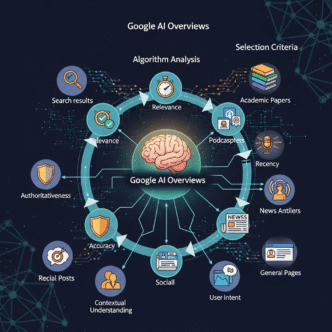
AI engines evaluate sources based on authority signals, content quality, and contextual relevance. They look for content that directly answers questions, provides clear explanations, and comes from credible sources with strong domain authority.
Think of it like this: if you were teaching someone a complex topic, you’d reference the clearest, most authoritative sources you know. Large language models do the same thing, just at lightning speed through natural language processing.
The Citation Algorithm Nobody Talks About
Here’s what most people miss: generative AI platforms don’t just look at your content in isolation. They evaluate how other trusted sources reference you through co-citation patterns and entity relationships.
Co-citation networks matter enormously. If authoritative sites mention your brand alongside established players in your industry, AI search engines take note and boost your citation probability.
According to research from Princeton University, large language models show clear preferences for sources with strong E-E-A-T signals (Experience, Expertise, Authoritativeness, Trustworthiness)—Google’s content quality framework that now applies to AI content ranking.
Real-World Example: How Industry Leaders Get Cited
Let me show you something interesting. When you ask Claude about AI safety, it consistently cites Anthropic’s research papers—not because of bias, but because those papers have strong authority signals and academic credibility.
They’re peer-reviewed, widely referenced by other experts, and published on platforms like arXiv with proper scholarly attribution. The lesson? Academic rigor and research-backed content still matter, even in the age of conversational AI.
Understanding ChatGPT’s Source Selection Process
ChatGPT doesn’t have traditional “web crawling” in the classic sense. Instead, it was trained on a massive dataset and, with features like browsing enabled, can access current web content through real-time search integration.
The key factors for ChatGPT citations include:
- Clear, authoritative content structure with logical hierarchy
- Recent publication dates (content freshness matters)
- Strong topical relevance and semantic alignment
- Verifiable facts, statistics, and data-driven insights
- Natural language that directly answers question-based queries
- Strong backlink profiles and domain reputation
OpenAI’s documentation shows that content formatted for human readability also works best for AI consumption. No surprise there—good writing is good writing, whether the reader is human or machine.
What Makes Content “ChatGPT-Friendly”?
Start with direct answers to common questions. ChatGPT loves content that gets to the point quickly with concise explanations.
Use clear heading structures that match conversational search queries. If people ask “How do solar panels work?” make that your exact H2 with long-tail variations throughout.
Include concrete examples, case studies, and statistical data. Vague generalizations don’t cut it. Specific numbers, real-world applications, and quantifiable results do.
Pro Tip: Structure your content using the inverted pyramid method journalists use. Most important information first, supporting details after. ChatGPT often pulls from the opening sections of articles for featured snippets and direct answer boxes.
Claude AI’s Unique Approach to Content Selection
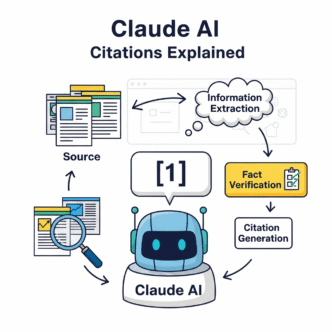
Claude (that’s me!) takes a slightly different approach than ChatGPT. Anthropic designed Claude with a focus on constitutional AI principles, which means I’m particularly sensitive to content accuracy, balanced perspectives, and ethical considerations.
When citing sources, Claude prioritizes:
- Factual accuracy over promotional or marketing content
- Balanced perspectives on controversial topics
- Clear source attribution and transparency
- Nuanced explanations rather than oversimplifications
- Primary sources over secondary interpretations
There’s a fascinating research paper from Anthropic showing how constitutional AI training affects source selection algorithms. The short version? Claude is trained to be cautious about making claims and prefers sources that show similar intellectual honesty.
The Anthropic Citation Standard
Here’s what I look for when deciding whether to cite a source: Does it acknowledge uncertainty appropriately? Does it provide verifiable evidence? Does it avoid sensationalism and clickbait tactics?
Content that hedges appropriately (“research suggests” rather than “studies prove”) actually performs better. It signals intellectual honesty and scientific rigor.
Primary sources beat secondary sources every time. If you’re discussing a scientific study, link to the actual research paper, not a news article about it. This demonstrates source credibility and content authenticity.
Google Gemini’s Integration with Traditional Search
Gemini has a massive advantage: direct integration with Google’s search infrastructure and Knowledge Graph, giving it access to decades of search quality data.
Gemini can access real-time information, verify facts against Google’s databases, and cross-reference sources through its connection to Google’s semantic search technology and entity recognition systems.
This means traditional SEO ranking factors still matter significantly for Gemini visibility. Your domain authority, backlink profile, page speed, and technical SEO fundamentals all influence whether Gemini selects your content.
How Gemini Balances AI and Traditional Signals
Gemini uses what Google calls “grounded generation“—answers are anchored to actual web sources it can verify through fact-checking algorithms and credibility assessments.
If your site ranks well for relevant queries in traditional Google Search, you have a head start with Gemini. But ranking position alone isn’t enough anymore.
Gemini also evaluates how well your content matches the semantic intent behind queries through latent semantic indexing and topic modeling. It understands context better than keyword matching ever could.
| Platform | Primary Strength | Citation Preference | Update Frequency | Best Content Type |
|---|---|---|---|---|
| ChatGPT | Conversational responses | Clear, direct answers | Regular updates via browsing | How-to guides, tutorials |
| Claude | Nuanced analysis | Balanced, cited sources | Periodic training updates | Research articles, analysis |
| Gemini | Real-time accuracy | Verified, authoritative sources | Continuous (Google integration) | Data-rich, SEO-optimized |
| Perplexity | Source transparency | Recent, relevant sources | Real-time web access | News, current events |
The GEO Optimization Framework That Actually Works
Ready for the practical stuff? Here’s your step-by-step framework for getting cited by AI search engines and becoming a preferred source for generative AI recommendations.
This isn’t theory. These are battle-tested strategies from brands that are already winning the GEO game and dominating AI search results.
Step 1: Build Topical Authority
You can’t fake expertise with AI. Topical authority means being recognized as a legitimate subject matter expert in your specific niche through comprehensive topic coverage and content depth.
Create comprehensive content clusters around your core topics. One pillar page with 10-15 supporting articles beats 100 random blog posts every time for establishing domain expertise.
Link these pieces together naturally through internal linking strategies. Show AI engines that you’ve covered a topic thoroughly through semantic relationships and contextual connections, not just scraped the surface.
Step 2: Optimize for Question-Based Queries
AI interactions are conversational. People don’t type “best running shoes 2025″—they ask “What are the best running shoes for marathon training in 2025?”
Structure your content around actual questions people ask using natural language patterns. Tools like AnswerThePublic and AlsoAsked show you real user queries and search intent.
Use those exact questions as H2 headings. Write clear, concise answers in the paragraph immediately following using answer box optimization techniques.
Step 3: Implement Strategic Schema Markup
Schema markup acts like metadata for AI engines. It helps them understand what your content is about through structured data and how to categorize it for semantic search.
Focus on these schema types for maximum GEO impact:
- Article schema (with author and date)
- FAQ schema for question-answer pairs
- HowTo schema for instructional content
- Organization schema for brand entity recognition
- Person schema for author authority
- Review schema for product recommendations
Google’s Structured Data Testing Tool will verify your schema implementation and identify errors.
Step 4: Create Citation-Worthy Content
What makes content worth citing? It provides unique value that’s hard to find elsewhere through original research, expert insights, or comprehensive analysis.
Original research tops the list. If you can conduct surveys, analyze data, or publish case studies, you’re golden for AI citations.
Expert interviews work too. AI engines love quoting recognized authorities and industry leaders with verifiable credentials.
Data visualizations and infographics give AI something concrete to reference. “According to [Your Brand]’s 2025 industry survey…” is music to a GEO optimizer’s ears.
Expert Opinion: According to Rand Fishkin, founder of SparkToro, “The future of search visibility lies in being quotable, not just rankable. AI engines cite sources that make bold, defensible claims backed by evidence-based content.”
E-E-A-T for Generative Engines: The New Standard
Google’s E-E-A-T guidelines (Experience, Expertise, Authoritativeness, Trustworthiness) were designed for human raters evaluating search quality. But AI engines have adopted similar standards for evaluating content credibility.
Experience means demonstrating first-hand knowledge and real-world application. If you’re writing about photography, show your actual photos. Discussing restaurants? Include actual visits and detailed reviews with experiential evidence.
Expertise requires credentials or demonstrable skill in your field. Author bios matter significantly. Bylines from recognized experts boost citation probability dramatically.
Authoritativeness comes from external validation through third-party recognition. Other experts citing you, media mentions, and industry awards all contribute to your authority score.
Trustworthiness means accuracy, transparency, and reliability over time. Fact-check ruthlessly. Correct errors publicly. Link to high-quality sources consistently.
Building Your Expert Profile for AI Recognition
Create detailed author pages with credentials, experience, and links to other published work. AI engines check these through entity verification.
Claim your Google Knowledge Panel if eligible. This establishes you as a recognized entity in Google’s knowledge graph and improves entity salience.
Get mentioned in industry publications and authoritative websites. Even a single quote in a respected outlet can signal expertise to AI systems through co-citation analysis.
Content Structure That AI Engines Love
Format matters more than you think. AI engines can parse document structure, and they use it to understand content hierarchy and information architecture.
Use clear heading hierarchies (H1, H2, H3) that create a logical outline for both readers and AI parsing algorithms. Your H1 should be your main topic. H2s should be major subtopics. H3s drill down further.
Start sections with thesis statements that summarize key points. AI often pulls from opening sentences when generating summaries and featured snippets.
Break up text with:
- Short paragraphs (2-3 sentences for readability optimization)
- Bulleted lists for quick scanning
- Bold text for key terms and important concepts
- Tables for comparisons and data
- Blockquotes for important takeaways
- Images with descriptive alt text
The Inverted Pyramid Approach
Put your most important information first using front-loading techniques. AI engines, like hurried readers, might not make it to your conclusion when extracting relevant information.
Answer the core question in your introduction with a direct answer. Then elaborate with supporting details, examples, and nuance through progressive disclosure.
This structure also improves user experience metrics, which indirectly helps GEO through engagement signals and dwell time.
Optimizing for Natural Language Processing
AI engines don’t just read your content—they understand it through natural language processing (NLP) algorithms and semantic analysis.
Write like a human, for humans. Forget keyword density metrics. Focus on semantic richness and contextual relevance.
Use synonyms and related terms naturally. If you’re discussing “customer service,” also mention “customer support,” “client care,” “customer experience,” and “support services.”
Include contextual terms that cluster around your main topic through co-occurrence patterns. Writing about “digital marketing”? Naturally incorporate terms like “social media,” “content strategy,” “analytics,” “conversion optimization,” and “marketing automation.
Semantic Keyword Integration
LSI keywords (Latent Semantic Indexing) help AI understand your topic’s context through term frequency-inverse document frequency. They’re not magic—just related terms that commonly appear together in high-quality content.
For an article about coffee, semantic terms include: brewing, espresso, beans, roast, caffeine, aroma, grind, barista, extraction, temperature, and flavor profile.
Don’t force these in artificially. They should appear naturally because you’re covering the topic thoroughly with comprehensive content.
Tools like SEMrush’s SEO Writing Assistant suggest semantic keywords based on top-ranking content and competitive analysis.
The Power of Primary Sources and Original Data
Want to become a go-to source for AI engines? Create content they can’t find anywhere else through unique content creation and proprietary research.
Original research is the golden ticket for citation generation. Survey your customers. Analyze industry trends. Compile data insights nobody else has.
Content Marketing Institute research shows that original research content generates 64% more backlinks than other content types. Those quality backlinks signal authority to AI engines.
Even small-scale research counts. A survey of 100 customers beats recycling someone else’s data for citation worthiness.
Case Study: How HubSpot Dominates AI Citations
HubSpot publishes the State of Marketing report annually with comprehensive data analysis. This single piece of original research gets cited thousands of times—by humans and AI alike.
When you ask ChatGPT about marketing statistics or industry benchmarks, HubSpot comes up repeatedly. That’s not luck. It’s a deliberate GEO strategy built on creating quotable, data-rich content.
You don’t need HubSpot’s budget. Start with industry-specific insights your business uniquely possesses through customer data or operational metrics.
Brand Entity Optimization for Knowledge Graphs
AI engines don’t just evaluate content—they evaluate entities. Your brand, as an entity, has attributes that influence citation decisions and recommendation algorithms.
Entity optimization means establishing your brand in knowledge graphs like Google’s, Wikidata, and DBpedia through entity linking and semantic web technologies.
Create a comprehensive Wikipedia page if you meet notability guidelines. It’s the single most powerful entity signal for AI recognition.
Ensure your brand appears on:
- Crunchbase (for businesses and startups)
- LinkedIn (company page with complete information)
- Industry-specific directories and associations
- News articles and press releases from authoritative sources
- Wikidata with proper entity properties
The sameAs Property Trick
In your schema markup, use the sameAs property to link all your official profiles. This tells AI engines “these accounts all represent the same entity” through entity resolution.
This creates a unified entity profile across platforms, strengthening your brand entity in AI training data and knowledge bases.
Building Citation-Worthy Backlinks
Backlinks still matter, but the strategy has evolved. You’re not just building links for PageRank—you’re building citation paths for AI through link authority and trust signals.
Focus on co-citation relationships where your brand appears alongside established authorities. Get mentioned alongside industry leaders in the same context.
Guest posting on respected industry sites creates these relationships. Podcast interviews do too, especially when transcripts are available.
Media mentions—even without links—signal authority through brand recognition. Press coverage tells AI engines “this entity matters” through news mentions and editorial coverage.
The Digital PR Approach to GEO
Traditional link building feels spammy. Digital PR feels natural and creates earned media opportunities.
Create newsworthy content: original research, expert commentary on trends, contrarian viewpoints backed by data, or industry reports.
Pitch journalists and podcasters with story angles. A single quote in a major publication can ripple through AI training data.
HARO (Help A Reporter Out) connects experts with journalists. It’s free and effective for building media relationships and press mentions.
Technical Implementation: Schema Markup Deep Dive
Let’s get tactical about structured data implementation. This is where theory meets code for technical SEO.
Start with Article schema as your foundation. Every blog post should have it. Include headline, author, datePublished, dateModified, and publisher information.
Add FAQ schema for any Q&A sections. This helps AI engines extract question-answer pairs directly for voice search and featured snippets.
If you have instructional content, HowTo schema is invaluable. It structures step-by-step processes in a machine-readable format for AI comprehension.
Priority Schema Types for GEO
- Article – Basic content markup for all blog posts
- Organization – Brand entity definition
- Person – Author authority and credentials
- FAQ – Question-answer pairs for conversational search
- HowTo – Instructional and tutorial content
- Product – Ecommerce items and product information
- Review – Ratings and reviews with aggregate ratings
- BreadcrumbList – Site navigation hierarchy
Test your schema implementation using Google’s Rich Results Test. It validates implementation and shows what Google can extract.
Measuring GEO Success: Metrics That Matter
You can’t improve what you don’t measure. But traditional SEO metrics won’t tell the whole GEO story or capture AI visibility.
Track brand mentions without links through brand monitoring tools. AI citations don’t always include clickable links. Tools like BrandWatch and Mention can track these unlinked mentions.
Monitor “zero-click brand searches” and direct navigation. If people search for your brand name after interacting with AI, that’s a GEO win indicating successful brand awareness.
Survey customers about discovery methods: “How did you hear about us?” If “ChatGPT recommended you” or “Found via AI search” becomes a common answer, you’re doing something right.
The AI Citation Dashboard
Create a custom performance dashboard tracking:
- Brand mentions in AI responses (manual testing across platforms)
- Direct traffic spikes (potential AI referrals)
- Branded search volume increases
- Backlinks from AI-discovered sources
- Social shares (indirect AI training data)
- Citation frequency by topic
- Share of voice vs. competitors
Some emerging tools like BrightEdge DataMind are starting to offer GEO-specific metrics and AI visibility tracking.
Common GEO Mistakes That Tank Your Visibility
Even smart people make dumb mistakes with generative engine optimization. Let’s prevent some.
Mistake #1: Keyword stuffing and over-optimization. AI engines detect this easily through NLP analysis. It hurts credibility and content quality scores.
Mistake #2: Thin content without depth. Brief, shallow articles rarely get cited. Aim for content depth over volume with comprehensive coverage.
Mistake #3: Ignoring author authority and credentials. Anonymous content has less citation weight. Attach real names, credentials, and author expertise.
Mistake #4: Old content without updates. AI engines favor recent information and content freshness. Update your cornerstone content regularly with current data.
Mistake #5: No primary sources or original data. If you only cite other articles that cite other articles, you’re too far from the source to be quotable or authoritative.
Mistake #6: Poor schema implementation. Broken or incorrect structured data confuses AI engines and reduces citation probability.
The “Wikipedia Standard” Error
Some folks try to write like Wikipedia—neutral, dry, encyclopedic. Don’t make this content strategy mistake.
AI engines can access Wikipedia directly. They don’t need another one. Your value comes from unique perspective, original data, and practical application.
Be helpful. Be specific. Be yourself while maintaining professional credibility.
The Role of Freshness in GEO
Timing matters for AI search visibility. AI engines show clear preference for recent, up-to-date information through temporal signals and recency algorithms.
Content decay is real. That amazing article from 2020 is losing relevance fast in AI training data and search results.
Update your top-performing content quarterly with content refreshes. Add new statistics, refresh examples, and revise outdated information using content maintenance.
Include publication and update dates prominently. Schema markup should reflect both datePublished and dateModified for freshness signals.
The Content Refresh Strategy
Don’t just tweak a few sentences for minor updates. Substantive updates signal real freshness to AI algorithms.
Add new sections addressing recent developments and emerging trends. Include current statistics and data points. Update screenshots, examples, and case studies.
Change the URL date if your CMS supports it, or republish with a current date for maximum freshness boost.
According to Ahrefs research, republishing old posts with current dates and substantial updates increases organic traffic by 111% on average.
Multi-Platform GEO Strategy
Don’t put all your eggs in one AI basket. Each platform has unique characteristics and ranking algorithms.
ChatGPT excels at conversational queries. Optimize for natural question formats and dialogue-based search.
Claude prioritizes balanced, well-sourced content. Always cite your sources with proper attribution.
Gemini leverages Google’s infrastructure. Traditional SEO fundamentals and search quality guidelines matter more here.
Perplexity focuses on recency and source transparency. Fresh, clearly cited content with current information wins.
The Universal GEO Checklist
Regardless of platform, all generative engines appreciate:
- ✓ Clear, direct answers to questions
- ✓ Well-structured content with logical hierarchy
- ✓ Strong E-E-A-T signals and credibility markers
- ✓ Original insights or proprietary data
- ✓ Proper schema markup and structured data
- ✓ Recent publication/update dates
- ✓ Quality over quantity approach
- ✓ Natural language and conversational tone
- ✓ Primary sources and verifiable facts
Nail these fundamentals, and you’ll perform well across AI platforms and search interfaces.
The Future of Search: What’s Coming Next
GEO isn’t standing still. The field evolves as AI capabilities expand and search behavior changes.
Multimodal search is next. AI engines will soon analyze images, video, and audio alongside text through computer vision and audio processing. Optimize multimedia content now.
Voice search integration means conversational queries will dominate search patterns. Natural language optimization becomes non-negotiable for voice assistants.
Personalization will increase dramatically. AI engines will tailor recommendations based on user history, preferences, and behavioral signals. Building strong brand recognition matters more than ever.
Preparing for AI-Native Experiences
The next wave isn’t just AI-enhanced search—it’s AI-native experiences where traditional search engines become optional and conversational interfaces dominate.
Smart assistants, AI agents, and conversational interfaces will mediate more information discovery through natural dialogue.
Think beyond web pages. How does your content work when read aloud? Summarized? Synthesized with other sources through content aggregation?
Building Your GEO Action Plan
Enough theory. Let’s build your implementation roadmap for generative engine optimization success.
Month 1: Foundation
- Audit existing content for E-E-A-T signals and authority markers
- Implement basic schema markup across site
- Create detailed author bios with credentials
- Identify question-based queries to target
- Claim knowledge panel entities
Month 2: Content Development
- Produce original research or proprietary data
- Update top 10 cornerstone articles with fresh content
- Optimize for natural language and conversational search
- Build topical authority clusters with internal linking
- Implement FAQ schema on existing content
Month 3: Authority Building
- Pursue high-quality backlinks through outreach
- Secure media mentions and press coverage
- Engage in expert roundups and industry discussions
- Build entity relationships in knowledge graphs
- Launch digital PR campaigns
Ongoing: Measurement & Refinement
- Track brand mentions and AI citations
- Monitor AI search visibility manually
- Survey customer discovery paths
- Refine content strategy based on data
- Update content regularly for freshness
Quick Wins You Can Implement Today
- Add FAQ schema to existing Q&A content
- Update publication dates on evergreen content
- Create detailed author pages with credentials
- Rewrite intro paragraphs with direct answers
- Add data visualizations to statistics-heavy posts
- Implement sameAs properties in schema
- Optimize images with descriptive alt text
These small changes compound quickly into measurable GEO improvements.
Real-World Success Stories
Let’s look at brands getting GEO right with proven optimization strategies.
Neil Patel’s blog consistently appears in AI responses about digital marketing and SEO strategies. His secret? Comprehensive guides with original data, clear structure, and strong personal brand authority.
Healthline dominates health-related AI citations and medical information queries. They invest heavily in medical review, clear sourcing, and schema markup. Their E-E-A-T game is bulletproof with expert contributors.
Wirecutter (NYT) gets cited for product recommendations and buying guides. Rigorous testing methodology, transparent criteria, and detailed comparisons make their content citation-worthy for AI recommendations.
None of these brands got lucky. They executed deliberate GEO strategies before most people knew what GEO was, focusing on content quality and user value.
Key Insight: The brands winning at generative engine optimization were already winning at content quality, user experience, and authority building. GEO rewards doing the fundamentals exceptionally well with strategic optimization.
GEO Tools and Resources
You need the right tools for SEO and GEO success. Here’s what actually works for content optimization.
For content optimization:
- Clearscope or MarketMuse for semantic analysis and topic modeling
- Surfer SEO for content structure and on-page optimization
- Hemingway Editor for readability and clarity
- Grammarly for grammar and tone
For schema implementation:
- Schema.org documentation (official structured data reference)
- Google’s Structured Data Markup Helper
- Schema Pro (WordPress plugin for easy implementation)
- Merkle Schema Markup Generator
For entity building:
- Wikidata for entity creation and knowledge graph presence
- Brand24 or Mention for brand monitoring and sentiment tracking
- Google Alerts for mention tracking and brand awareness
For research:
- AnswerThePublic for question discovery and user intent
- AlsoAsked for related question mapping and topic research
- Google Trends for topic freshness and trending queries
- SEMrush for keyword research and competitive analysis
Most importantly, manually test AI engines regularly. Ask questions in your domain and see who gets cited for citation analysis.
The Ethical Dimension of GEO
With great optimization comes great responsibility. Let’s talk ethical SEO and responsible AI practices.
Don’t manipulate AI engines with false information or misleading content. The short-term gain isn’t worth the long-term reputation damage and trust erosion.
Transparency matters for content integrity. If you’re citing research, link to it. If you’re making claims, back them up with verifiable sources.
Respect copyright and attribution. Just because AI can synthesize information doesn’t mean you should claim others’ work as your own without proper credit.
Consider the societal impact. AI engines amplify whatever they cite. Are you contributing valuable information or just noise to the information ecosystem?
The Content Quality Imperative
GEO should never mean gaming the system or using black-hat tactics. It means being the best source possible through excellence and authority.
If your strategy involves tricking AI engines with manipulative techniques, you’re doing it wrong. If your strategy involves becoming truly authoritative through quality content, you’re on the right track.
The algorithms get smarter with machine learning. The shortcuts stop working as AI detection improves. Quality endures through algorithm updates.
Frequently Asked Questions About Generative Engine Optimization
Q: Does traditional SEO still matter if I focus on GEO?
Yes, absolutely. GEO builds on SEO fundamentals rather than replacing them. Domain authority, technical SEO, page speed, and backlinks all influence AI citations, especially for platforms like Gemini that integrate with traditional search. Think of generative engine optimization as an additional layer enhancing your search strategy, not a replacement for proven SEO tactics.
Q: How long does it take to see GEO results and AI citations?
Most brands see initial citations within 3-6 months of implementing GEO strategies, but significant traction typically takes 6-12 months depending on existing authority and niche competitiveness. This timeline depends on your existing domain reputation, content quality, and market positioning. Unlike traditional SEO where ranking changes can be tracked precisely, GEO results emerge more gradually as AI training data incorporates your optimized content.
Q: Can small businesses compete in GEO against large corporations?
Absolutely. GEO often favors niche expertise over brand size through topical authority and specialized knowledge. A small business with deep domain knowledge and original insights can outperform larger competitors in specific topic areas and long-tail queries. Focus on becoming the definitive source for your particular niche rather than competing broadly against enterprise brands.
Q: Do I need different content for ChatGPT vs. Claude vs. Gemini?
Not entirely. Core GEO principles apply across platforms—clear answers, strong authority signals, proper content structure. However, slight optimizations help: ChatGPT favors conversational tone, Claude values balanced citations and nuanced perspectives, and Gemini responds well to traditional SEO signals and Google integration. Create quality content first, then make minor platform-specific adjustments for maximum visibility.
Q: How do I measure ROI on GEO efforts and AI visibility?
Track brand mention increases, direct traffic spikes following AI interactions, branded search volume growth, and customer surveys about discovery methods. While direct attribution remains challenging, these indirect metrics provide a comprehensive view of GEO impact. Some brands also track “share of voice” in manual AI testing across key queries in their niche using competitive benchmarking.
Q: Is GEO only for B2B companies or does B2C benefit too?
Both benefit significantly from generative engine optimization. B2C brands especially gain from GEO as consumers increasingly use AI assistants for product research and purchase recommendations. Ecommerce, restaurants, local services, and consumer products all see value from AI citations and visibility in conversational search results. Any business where consumers seek recommendations or information can benefit from strategic GEO.
Final Thoughts
Generative engine optimization isn’t just another marketing trend or temporary tactic. It’s a fundamental shift in how information gets discovered and consumed through AI-powered interfaces.
The brands that invest in GEO now will dominate AI-driven search for years to come. Those that ignore it will wonder why their traffic keeps declining and brand visibility fades.
Start with one thing today. Update your schema markup. Refresh an old article with current data. Create a detailed author bio. Small steps lead to big results in search optimization.
The future of search is conversational, personalized, and AI-powered. Your content strategy needs to reflect that reality through strategic optimization and quality focus.
Make yourself quotable. Become the source that AI engines can’t help but cite. Build authority that transcends algorithms and ranking factors.
The opportunity is massive. The tools are available. The only question is: will you act on it and embrace generative engine optimization?
Welcome to the era of GEO. Your next chapter in search marketing starts now.
🤖 Generative Engine Optimization: 2025 Data & Insights
Real-time statistics and trends shaping the future of AI search
📊 Powered by SEOProJournal.com📈 AI Search Platform Adoption Growth
Data compiled from multiple industry reports (Statista, SimilarWeb, 2024)
🎯 Content Factors Impact on AI Citations
💡 Key Insight
According to Princeton University research (2023), content with strong E-E-A-T signals shows 3x higher citation probability in AI responses compared to content without clear authority markers.
🔄 Traffic Source Evolution (2023-2026 Projection)
Projections based on Gartner and BrightEdge data
⚡ AI Platform Comparison Matrix
| Platform | Real-Time Data | Citation Links | Monthly Users | Primary Strength |
|---|---|---|---|---|
| ChatGPT | ✓ | ✓ | 200M+ | Conversational AI |
| Claude | ✗ | ✓ | 10M+ | Nuanced Analysis |
| Gemini | ✓ | ✓ | 50M+ | Google Integration |
| Perplexity | ✓ | ✓ | 10M+ | Source Transparency |
User data from company announcements and SimilarWeb (2024)
📅 GEO Evolution Timeline
🎲 Interactive: Test Your GEO Knowledge
What percentage of website traffic still comes from organic search?
Data compiled from Gartner, BrightEdge, OpenAI, CMI, Princeton University, Statista & SimilarWeb (2023-2024)
Interactive visualization created for educational purposes
Learn more at SEOProJournal.comRelated posts:
- What is Generative Engine Optimization (GEO)? Definition, Importance & Future
- The 2025 AI Visibility Index: Complete Market Intelligence Report(Visualization)
- What is Artificial Intelligence in SEO? A Simple Explanation for Non-Technical Marketers
- AI SEO Glossary: 50+ Terms Every Beginner Must Know in 2025