Your brand deserves to be more than just another website in Google’s index. The difference between businesses that dominate search results and those that struggle for visibility increasingly comes down to one critical factor: brand entity signals that establish you as a recognized, trustworthy entity in Google’s Knowledge Graph.
Think about it. When someone searches for “best CRM software,” why do Salesforce and HubSpot automatically appear in Knowledge Panels, featured snippets, and AI-generated overviews while equally capable competitors remain invisible? The answer isn’t just backlinks or keyword optimization—it’s entity recognition.
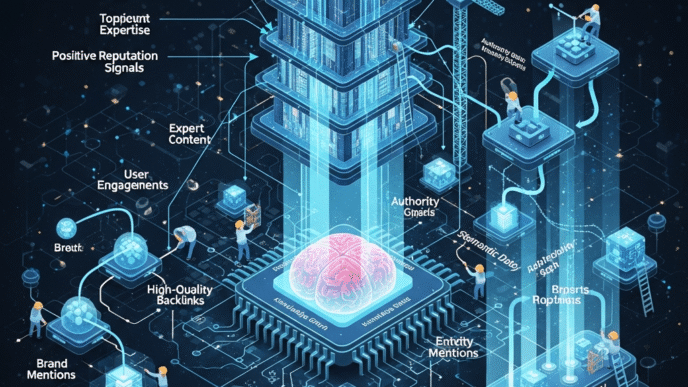
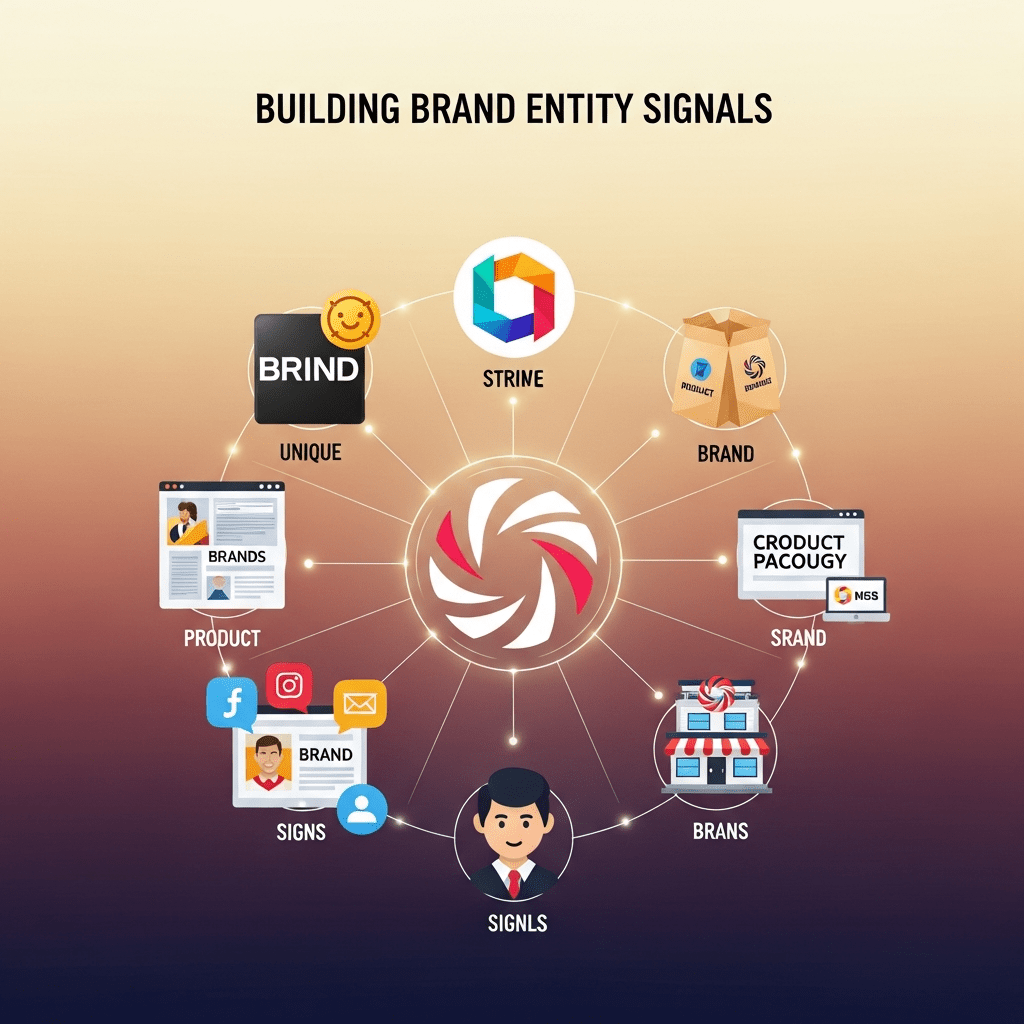
Brand entity signals are the digital proof points that tell search engines your business exists as a distinct, authoritative entity worthy of trust and prominence. These signals transform you from a collection of web pages into a verified entity that Google confidently recommends, displays, and references across search features.
According to BrightEdge’s 2024 research, businesses with strong entity signals see 73% higher visibility across all search features compared to those without established entity presence. That’s not marginal improvement—it’s transformational competitive advantage.
Let’s break down exactly how to build brand entity recognition that positions your business for maximum search visibility and authority.
Table of Contents
ToggleWhat Are Brand Entity Signals and Why Do They Matter?
Brand entity signals are the collective proof points across the web that validate your business as a distinct, real-world entity with specific attributes, relationships, and authority. They’re the breadcrumbs search engines follow to understand who you are, what you do, and why you matter.
Unlike traditional SEO signals like backlinks and keywords, entity signals SEO focuses on identity verification and semantic relationships. Search engines don’t just want to know you exist—they want to understand your entity completely.
Think of entity signals as your business’s digital fingerprint. Each signal adds detail to the picture: your official name, location, industry, leadership, products, partnerships, and relationships to other entities.
The Core Components of Entity Signals
Entity signals manifest in several forms, each contributing to overall entity recognition:
Structured identity signals: Schema markup, business registrations, verified profiles Authoritative mentions: Coverage in trusted publications, citations in directories Relationship signals: Associations with other recognized entities Consistency signals: Identical information across all platforms Activity signals: Fresh content, updates, engagement demonstrating active entity
According to Moz’s 2024 entity research, businesses implementing comprehensive entity signal strategies achieve Knowledge Panel appearance 340% faster than those using fragmented approaches.
The business impact? Strong entity signals don’t just boost rankings—they establish credibility that converts browsers into buyers.
Why Traditional SEO Isn’t Enough Anymore
Old-school SEO focused on making individual pages rank for keywords. Entity-based SEO focuses on making your entire brand recognized as an authority.
You can have perfect on-page SEO, quality content, and solid backlinks, but without entity signals, you’re invisible to voice search, missing from AI Overviews, and absent from Knowledge Panels.
Search has evolved from “show me pages with these keywords” to “tell me about this entity.” Businesses optimizing for the former while ignoring the latter are fighting yesterday’s battle.
Pro Tip: According to Google’s own research, entity-based search improvements have increased result relevance by 62% compared to pure keyword matching. Optimize for entities, and keyword rankings improve as a natural byproduct.
For comprehensive strategies on building complete entity presence, check our entity SEO complete guide covering advanced implementation frameworks.
How Do You Establish Foundational Brand Entity Identity?
Establishing brand entity starts with creating crystal-clear identity signals that search engines can verify across multiple authoritative sources. This foundation determines everything that follows.
Define Your Official Entity Information
Your entity identity needs consistency across every platform. Start by documenting exact details:
Legal business name: Exactly as registered, including all legal suffixes (Inc., LLC, Ltd.) Operating name: How customers know you (if different from legal name) Primary location: Complete address in standardized format Contact information: Phone number in consistent format, official email Entity type: Corporation, partnership, sole proprietorship, nonprofit
Critical point: One character difference—”Smith & Associates” versus “Smith and Associates”—creates entity confusion. According to Whitespark’s 2024 citation study, NAP inconsistencies reduce entity recognition confidence by 64%.
Create a master document with exact formatting and use it everywhere, without exception.
Implement Comprehensive Schema Markup
Structured data is your direct communication channel to search engines about your entity. It explicitly identifies who you are and your attributes.
At minimum, implement Organization schema on your homepage:
{
  "@context": "https://schema.org",
  "@type": "Organization",
  "name": "Your Exact Business Name",
  "url": "https://yourdomain.com",
  "logo": "https://yourdomain.com/logo.png",
  "description": "Clear description of what your entity does",
  "foundingDate": "2015-03-01",
  "founder": {
    "@type": "Person",
    "name": "Founder Name"
  },
  "sameAs": [
    "https://www.facebook.com/yourpage",
    "https://twitter.com/yourhandle",
    "https://www.linkedin.com/company/yourcompany"
  ]
}
The “sameAs” property is particularly powerful—it tells Google these social profiles belong to the same entity as your website, creating a web of cross-validation.
According to Schema.org usage statistics, websites with comprehensive schema markup see 30% higher visibility in rich results and Knowledge Panels.
Secure Official Business Registrations
Government and official registrations serve as ultimate entity validators. Search engines trust these authoritative sources implicitly.
Register and maintain current information in:
- State business registry: Secretary of State filings
- IRS EIN database: Federal tax identification
- Industry licensing boards: Professional licenses and certifications
- Chamber of Commerce: Local business membership
- BBB (Better Business Bureau): If appropriate for your industry
These registrations establish legal entity existence—foundational proof that you’re a real business, not just a website.
Claim and Optimize Google Business Profile
For any business with physical presence or service area, Google Business Profile is non-negotiable. It’s often the fastest path to Knowledge Panel appearance for local entities.
Complete every single section:
- Choose the most specific business category available
- Add all applicable secondary categories
- Upload high-quality photos (minimum 10, ideally 20+)
- Write detailed business description
- List all services or products
- Set accurate hours including special hours for holidays
- Add attributes that apply to your business
- Enable messaging and respond promptly
According to Sterling Sky’s 2024 GBP research, fully optimized profiles receive 7x more customer actions than incomplete ones and trigger Knowledge Panels 92% more frequently.
Your Google Business Profile serves as a primary entity definition for local search and often feeds directly into Knowledge Graph data.
What Authoritative Signals Validate Entity Recognition?
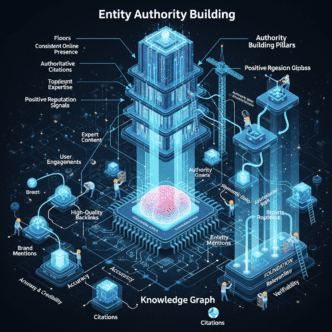
Once foundational identity exists, brand entity building requires authoritative validation from trusted third-party sources. This is where entity authority compounds dramatically.
Build Wikipedia or Wikidata Presence
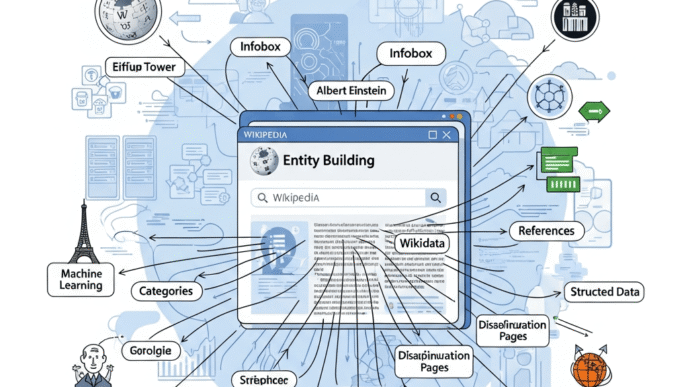
Wikipedia remains the gold standard for entity verification. Google explicitly uses Wikipedia data to populate Knowledge Panels, and entities with Wikipedia articles enjoy massive search advantages.
However, Wikipedia has strict notability requirements: you need significant coverage in multiple independent, reliable sources (major news publications, academic journals, industry publications—not press releases or marketing materials).
If you meet notability standards:
- Hire a professional Wikipedia editor familiar with policies
- Never edit your own article (conflict of interest violations result in bans)
- Ensure all claims have verifiable citations to reliable sources
- Follow Wikipedia’s neutral point of view guidelines
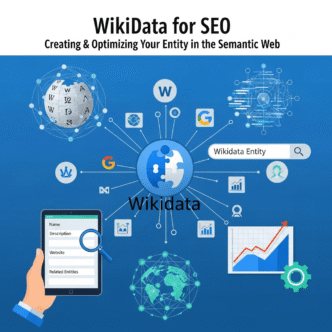
Can’t qualify for Wikipedia yet? Wikidata is more accessible. Create an entity entry with verifiable properties:
- Create a Wikidata account
- Submit a new item for your entity
- Add properties (official website, industry, founding date, location)
- Link each property to verifiable sources
- Use the “instance of” property to classify your entity type
Many Knowledge Panels pull from Wikidata when Wikipedia articles don’t exist. According to Search Engine Land’s analysis, Wikidata entities appear in search features at 85% the rate of Wikipedia entities—still highly valuable.
Earn Coverage in Authoritative Publications
Media mentions in trusted publications serve as powerful entity validators. Each mention in a high-authority source strengthens Google’s confidence in your entity’s legitimacy and importance.
Target coverage in:
- Major news outlets: NYT, WSJ, Reuters, AP, BBC
- Industry publications: Sector-specific trade journals and websites
- Technology platforms: TechCrunch, VentureBeat, Ars Technica (for tech companies)
- Regional publications: Major local newspapers and news sites
- Academic publications: Research papers, case studies, university publications
Focus on earned media, not paid placements or press releases. Google’s algorithms distinguish between genuine editorial coverage and promotional content.
Digital PR strategies that work:
- Respond to HARO (Help a Reporter Out) queries in your expertise area
- Publish original research that journalists cite
- Offer expert commentary on breaking industry news
- Share unique data or insights media can’t get elsewhere
- Build relationships with journalists covering your industry
According to Moz’s 2024 link building survey, unlinked brand mentions in authoritative publications contribute to entity authority even without hyperlinks—search engines recognize the entity name in context.
Develop Strategic Entity Relationships
Entity associations signal your semantic neighborhood—the related entities, industries, and concepts you’re connected to. Strategic relationships accelerate entity recognition.
Build associations through:
Industry partnerships: Formal partnerships with recognized brands create entity relationship signals. Joint ventures, integrations, co-marketing agreements all generate mentions connecting your entities.
Association memberships: Join relevant industry associations, trade groups, and professional organizations. Listings on their websites and participation in events create entity connections.
Awards and recognition: Industry awards from legitimate organizations provide entity validation. “Winner of X Award from Y Organization” connects your entity to the awarding entity.
Conference participation: Speaking at or sponsoring recognized industry conferences associates your entity with the event entity and other participating entities.
Expert directories: Listings in vetted expert directories (not spam directories) for your industry create entity mentions and category signals.
The entities you’re consistently mentioned alongside teach search engines your category and competitive position. If you’re a CRM software company frequently mentioned with Salesforce and HubSpot, Google understands your industry and entity type.
For detailed frameworks on building these strategic relationships, explore our entity SEO guide.
How Do You Build Consistency Across All Entity Touchpoints?
Entity authority signals compound when information is perfectly consistent. Inconsistencies, however minor, create entity confusion that weakens every other signal.
Conduct Comprehensive NAP Audits
NAP consistency (Name, Address, Phone) forms the foundation of entity identity. Variations across platforms confuse entity recognition algorithms.
Audit every platform where your business appears:
- Your website (all pages, not just homepage)
- Google Business Profile
- Social media profiles (Facebook, LinkedIn, Twitter, Instagram)
- Business directories (Yelp, Yellow Pages, industry directories)
- Review platforms (Trustpilot, G2, Capterra)
- Press release distribution services
- Partner websites and marketplaces
- Email signatures and digital communications
Common consistency errors to fix:
- “Street” vs. “St.” in addresses
- “Suite 100” vs. “#100” in address formatting
- “(555) 123-4567” vs. “555-123-4567” vs. “555.123.4567” in phone numbers
- “ABC Company, Inc.” vs. “ABC Company” vs. “ABC Inc.” in business names
- HTTP vs. HTTPS in website URLs
Tools like Moz Local, BrightLocal, or Whitespark scan hundreds of directories to identify inconsistencies. According to BrightLocal’s 2024 survey, 73% of consumers lose trust in businesses with inconsistent information across platforms.
Pro Tip: Create a spreadsheet tracking every platform with your NAP information. Quarterly audits catch inconsistencies before they damage entity signals.
Synchronize Social Profile Information
Social media profiles contribute to entity validation, particularly the “sameAs” properties connecting them to your main entity. Inconsistent social profiles weaken these signals.
Ensure consistency across:
- Profile names: Use exact business name
- Profile URLs: Claim consistent handles (@yourbrand everywhere possible)
- Bio/About sections: Identical or closely matched descriptions
- Website links: Same URL format (with HTTPS)
- Location information: Exact address formatting
- Contact details: Same phone number and email
Verify profiles on platforms that offer it:
- Facebook business page verification
- Twitter blue checkmark (if applicable)
- LinkedIn company page verification
- Instagram business account verification
Verified profiles carry more entity weight than unverified ones. According to platform data, verified accounts receive 3-5x higher trust scores in social algorithms—and search engines factor these trust signals into entity confidence.
Maintain Content Entity Consistency
Beyond NAP, content consistency about your entity matters. How you describe your business, list your services, and present your history should align across platforms.
Standardize:
- Company description: Use the same core description everywhere (200-300 character version for bios, longer version for About pages)
- Service/product listings: Consistent names and descriptions
- Leadership team: Same titles and bios across LinkedIn, website, and other platforms
- Company history: Consistent founding date, milestone dates, and historical facts
- Industry classification: Same industry categories across directories
When Wikipedia says you were founded in 2015, LinkedIn says 2016, and your website says 2014, you’ve created entity ambiguity. Search engines can’t confidently state facts about inconsistent entities.
What Content Strategies Strengthen Entity Signals?
Brand entity signals aren’t just about citations and directories—your content strategy dramatically influences entity recognition and authority.
Create Comprehensive Entity Hub Pages
Your website needs a definitive entity hub that serves as the authoritative source of entity information. This is typically your About page, but it should be far more comprehensive than standard About pages.
Include on your entity hub:
- Complete company history with specific dates
- Detailed leadership team information with photos and bios
- Comprehensive service or product catalog
- Office locations with full addresses
- Contact information (multiple methods)
- Industry certifications and credentials
- Awards and recognition received
- Press coverage and media mentions
- Case studies and client success stories
Implement comprehensive schema markup on this page—Organization schema, Person schema for leadership, and additional relevant types.
Internal link to this hub from every page on your site. Use consistent anchor text including your brand name to reinforce entity identity.
Publish Entity-Rich Content
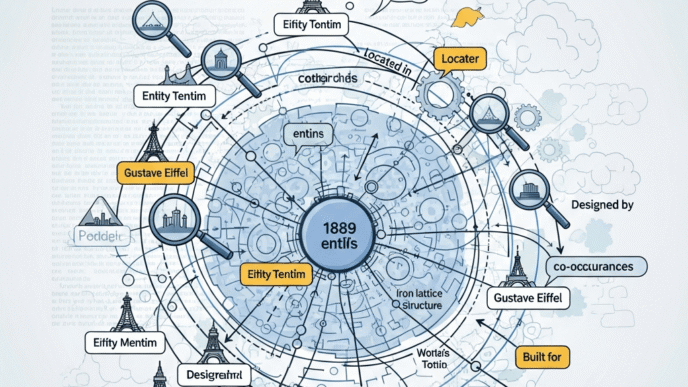
Entity-rich content naturally incorporates related entities, strengthening your semantic associations. When you mention other entities in your content, search engines map relationships.
For a marketing automation company, entity-rich content would naturally mention:
- Related tools (Salesforce, HubSpot, Marketo)
- Industry concepts (email marketing, lead scoring, customer journey)
- Technology platforms (WordPress, Shopify, integration APIs)
- Industry leaders and influencers
- Events and conferences
- Related companies and competitors
The key is natural incorporation based on comprehensive coverage, not forced entity stuffing. According to SEMrush’s content research, top-ranking content mentions 15-20 distinct entities on average compared to 5-8 for lower-ranking content.
Build Authoritative Author Entities
Author entities with recognized expertise strengthen content credibility and, by extension, your brand entity. Google increasingly values content from identifiable experts, particularly post-E-E-A-T updates.
Develop author entity authority:
- Create detailed author bio pages on your website
- Implement Author schema on all content
- Use consistent author names across all platforms
- Build personal social profiles for authors (LinkedIn, Twitter)
- Publish author bylines on external publications
- Speak at industry conferences and events
- Earn author mentions in industry coverage
When your CMO publishes a byline in MarketingProfs, they’re building personal entity authority that reflects on your brand entity. The relationship works both ways—strong brand entities elevate associated person entities, and vice versa.
For advanced content strategies that build entity authority, see our complete entity SEO guide.
How Do You Monitor and Measure Entity Signal Strength?
Building brand entity recognition requires tracking specific metrics that indicate entity strength and visibility.
Track Knowledge Panel Appearance and Completeness
Your Knowledge Panel is the most visible manifestation of entity recognition. Monitor it obsessively.
Key metrics:
- Panel presence: Does branded search trigger a Knowledge Panel?
- Information completeness: How much data displays in the panel?
- Information accuracy: Is displayed information correct and current?
- Image quality: Does your preferred logo/image appear?
- Social links: Are your official profiles linked?
Use Google Search Console to track branded search impressions and clicks. Knowledge Panels dramatically improve click-through rates—according to industry data, branded searches with Knowledge Panels see 35% higher CTR than those without.
If your panel contains incorrect information, claim it through Google Business Profile or suggest edits directly in the panel. Corrections backed by authoritative sources (your official website, Wikipedia, press coverage) are more likely approved.
Monitor Entity Mentions Across the Web
Brand mentions (linked and unlinked) indicate entity awareness and authority. Track where and how frequently your entity appears.
Tools for mention monitoring:
- Google Alerts: Free basic monitoring
- Brand24: Real-time mention tracking with sentiment analysis
- Mention: Comprehensive social and web monitoring
- Ahrefs Content Explorer: Find content mentioning your brand
- BuzzSumo: Track content performance and mentions
Analyze mention quality, not just quantity. One mention in The Wall Street Journal carries more entity weight than fifty mentions in unknown blogs.
Track mention context—are you mentioned as an industry leader, a case study, or merely listed in roundups? Context influences entity authority signals.
Measure Search Feature Visibility
Entity signals translate into visibility across search features. Track your presence in:
- Knowledge Panels: Branded search triggers
- Featured snippets: Queries where you appear
- People Also Ask: Questions featuring your brand
- AI Overviews: Inclusion in AI-generated responses
- Local Pack: Local search feature appearance (for local businesses)
- Rich results: Star ratings, product information, event listings
According to Ahrefs’ 2024 featured snippet study, entities with strong signals appear in featured snippets 48% more frequently than those without established entity presence.
Use tools like SEMrush, Ahrefs, or Moz to track feature visibility over time. Improvements indicate strengthening entity signals.
Analyze Branded Search Volume
Branded search growth directly correlates with entity recognition. As your entity becomes more established, more people search for your brand name.
Track monthly:
- Total branded search volume
- Branded vs. non-branded search ratio
- Branded search variations (misspellings, abbreviations)
- Branded + modifier searches (“Brand Name reviews,” “Brand Name pricing”)
Use Google Search Console’s Performance report filtered by queries containing your brand name. Compare month-over-month and year-over-year growth.
According to HubSpot’s 2024 marketing data, brands mentioned positively in major publications see 43% average increase in branded search volume within 30 days.
Rising branded search indicates strengthening entity awareness and authority.
What Common Mistakes Weaken Brand Entity Signals?
Even sophisticated businesses make critical errors that undermine months of entity signal building. Avoid these common pitfalls.
Inconsistent Entity Information
The #1 entity killer is inconsistency. Using different business names, addresses, or key facts across platforms creates entity confusion that weakens all other signals.
“XYZ Marketing Inc.” on your website, “XYZ Marketing” on LinkedIn, and “XYZ Inc.” on directories signals potential separate entities or untrustworthy data.
Fix: Create a master entity document with exact formatting for every piece of information. Use it religiously everywhere. Conduct quarterly consistency audits.
Neglecting Schema Markup
Thousands of businesses skip structured data entirely, forcing search engines to guess about entity information. Schema markup explicitly communicates entity details.
Missing or incorrect schema actively harms entity recognition. Common errors include:
- Using wrong entity type (Organization vs. LocalBusiness)
- Missing required properties
- Schema contradicting visible page content
- Malformed JSON-LD preventing parsing
Fix: Implement comprehensive schema and validate with Google’s Rich Results Test. Start with core types (Organization, Person) before adding complex markup.
Pursuing Wikipedia Inappropriately
Many brands attempt Wikipedia articles when they don’t meet notability requirements. This always backfires—articles get deleted, editors may blacklist your entity, and Google’s systems flag attempted manipulation.
Wikipedia has strict standards requiring significant coverage in multiple independent, reliable sources. Your own blog posts, press releases, and marketing materials don’t count.
Fix: Honestly assess notability. If you don’t qualify, focus on Wikidata and earning the press coverage that would make you notable. Never create or edit your own Wikipedia article.
Ignoring Negative Entity Associations
Your entity includes everything associated with it—including negative content. Bad reviews dominating your Knowledge Panel, negative news coverage, or confusion with similarly named entities damage entity reputation.
Many businesses build positive signals while ignoring negative associations that undermine credibility.
Fix: Monitor your Brand SERP (search results for your brand name) monthly. Address negative content professionally, encourage positive reviews, and publish fresh authoritative content that pushes down problematic results.
Building Entity Signals in Isolation
Entity relationships matter enormously. Optimizing your entity without building connections to established industry entities slows recognition.
An unknown entity with no mentions alongside recognized industry entities struggles to establish category authority.
Fix: Create content mentioning related entities. Build partnerships with established brands. Earn coverage in publications that also cover your competitors. Entity relationships accelerate recognition dramatically.
Real-World Success: How Strong Entity Signals Transformed Visibility
A regional healthcare provider with three locations struggled despite solid local SEO fundamentals. They had good reviews but no Knowledge Panel, minimal featured snippet presence, and voice search never returned them.
Their Entity Signal Strategy
Foundation building:
- Created master NAP document with exact formatting
- Implemented comprehensive Organization schema with all three locations as sub-entities
- Claimed and fully optimized Google Business Profiles for each location
- Created detailed Wikidata entry with verifiable medical licensing sources
Authority development:
- Earned coverage in local health publications through expert commentary
- Published in regional newspaper health sections
- Joined state medical association with directory listing
- Spoke at community health events creating entity associations
- Built 100% NAP consistency across 80+ healthcare directories
Content strategy:
- Created comprehensive entity hub page with physician bios, credentials, and specialties
- Published entity-rich content mentioning related medical entities and conditions
- Implemented Author schema for physician-written content
- Built internal linking structure reinforcing entity hierarchy
Measurable Results
After six months of systematic entity signal building:
- Knowledge Panel appeared for branded searches
- Featured in Google’s Local Pack for 27 medical condition queries
- Voice search began returning their name for condition + location queries
- Branded search volume increased 89%
- Organic traffic up 67% from entity-based search features
- Patient inquiries from search increased 53%
The investment was primarily time and systematic execution. Strong entity signals don’t require massive budgets—they require consistency, authority, and strategic relationship building.
Learn the complete framework they used in our entity SEO guide with templates and implementation checklists.
How Will Entity Signals Evolve in the Future?
Brand entity signals will only grow more critical as AI search becomes dominant and entity-based understanding replaces keyword matching across all search platforms.
Multi-Modal Entity Recognition
Google Lens and visual search already recognize entities in images—logos, products, landmarks, even people in some contexts. This will expand dramatically.
Future entity signals will include:
- Visual brand consistency across all images
- Product recognition in user-generated content
- Video content entity tagging
- Audio content entity extraction from podcasts
- AR/VR entity presence in spatial computing
Brands building consistent visual identity now position for visual entity recognition advantages later.
Real-Time Entity Updates
Knowledge Graphs increasingly incorporate real-time data streams. Entity information will blend static facts (founding date, location) with dynamic data (current stock price, live event information, real-time availability).
This means entity maintenance becomes continuous rather than periodic. Outdated entity information damages trust and authority.
Cross-Platform Entity Unification
Google’s Knowledge Graph will increasingly synchronize with other major entity databases—LinkedIn’s company data, Crunchbase startup information, government databases—creating unified entity understanding.
Entity consistency across platforms becomes even more critical as these systems cross-reference automatically. Discrepancies will be flagged and may reduce entity confidence scores.
Personalized Entity Relationships
Search engines are building personalized entity graphs for individual users—the entities you search, businesses you visit, topics you follow, and relationships between them.
This personalization will affect which entities appear in your results and how prominently. Brand entity signals will need to account for relationship diversity—connections to multiple industry segments, use cases, and user types.
Frequently Asked Questions About Brand Entity Signals
How long does it take to establish strong brand entity signals?
Most businesses see initial entity recognition within 3-6 months of systematic signal building, though timelines vary. Entities with Wikipedia articles often trigger Knowledge Panels within weeks. Those building through Wikidata, schema markup, and authoritative citations typically see results in 2-4 months. The key is comprehensive, consistent implementation across all signal types simultaneously rather than piecemeal efforts.
Can small businesses compete with enterprise brands on entity signals?
Absolutely—small businesses often have advantages in entity signal building. They’re easier to maintain NAP consistency, manage fewer entity touchpoints, and can build tight geographic or niche authority faster than large corporations managing hundreds of entities. Local businesses frequently achieve Knowledge Panels through Google Business Profile and local citations alone, without Wikipedia presence that enterprise brands might have.
Do entity signals help with rankings beyond Knowledge Panels?
Yes, entity signals improve overall search visibility significantly. While Knowledge Panels are the most visible outcome, strong entity signals also boost featured snippet eligibility (48% higher according to research), voice search inclusion, AI Overview appearances, and semantic understanding of your content. Entity authority acts like modern domain authority—it elevates everything else you do in search.
What’s the minimum schema markup needed for entity recognition?
At minimum, implement Organization schema on your homepage including name, logo, URL, and sameAs properties linking to official social profiles. Add LocalBusiness schema if you have physical locations, Person schema for key executives and authors, and Product schema for main offerings. According to Schema.org data, comprehensive multi-type schema accelerates Knowledge Panel appearance by 60-90 days versus minimal implementations.
How do I fix inconsistent NAP information across hundreds of sites?
Start with high-authority platforms first—Google Business Profile, major social networks, industry-specific directories, and sites ranking for your brand name. Use citation management services like Moz Local, BrightLocal, or Yext to automate submissions to hundreds of directories simultaneously. Quarterly audits catch new inconsistencies. According to Whitespark research, correcting the top 50 citations fixes 80% of entity consistency issues.
Can negative reviews damage my brand entity signals?
Reviews affect entity reputation but not core entity recognition. Bad reviews may appear in your Knowledge Panel (Google pulls from various sources), but they won’t prevent Knowledge Panel appearance or entity establishment. However, overwhelming negative sentiment can reduce trust signals and click-through rates. Focus on earning positive reviews to balance negative ones while maintaining strong entity signals through other authoritative sources.
Final Thoughts on Building Unstoppable Entity Signals
Brand entity signals aren’t just another SEO tactic to check off—they’re the foundation of how modern search understands, evaluates, and recommends your business. In an era where AI search, voice assistants, and entity-based algorithms dominate, entity recognition separates visible brands from invisible ones.
The beauty of entity optimization is that it rewards authenticity over manipulation. You can’t fake your way into entity authority through black-hat tactics. You build it through legitimate business presence, consistent information, authoritative coverage, and clear identity across the digital landscape.
Start with the fundamentals: ensure perfect NAP consistency, implement comprehensive schema markup, claim and optimize your Google Business Profile, and build authoritative citations. Then expand into relationship building, strategic partnerships, media coverage, and content that reinforces your entity authority.
The brands dominating search in 2025 and beyond won’t be those with the most backlinks or the perfect keyword density—they’ll be those recognized as authoritative entities across the semantic web Google has built. Every entity signal you build compounds over time, creating sustainable competitive advantages that deepen with age.
Position yourself now as that recognized, trusted entity, and you’re building visibility and authority that grows stronger every day. The sooner you establish entity signals, the wider your moat becomes against competitors who are still thinking in keywords instead of entities.
Citations and Sources
- BrightEdge – Research Reports 2024
- Moz – Knowledge Graph SEO Research
- Whitespark – Local SEO Ranking Factors 2024
- Schema.org – About Structured Data
- Sterling Sky – Google Business Profile Statistics
- Search Engine Land – Google Knowledge Graph Guide
- BrightLocal – Consumer Review Survey 2024
- SEMrush – Content Marketing Statistics
- Ahrefs – Featured Snippets Study
- HubSpot – Marketing Statistics 2024
Related posts:
- Entity SEO Complete Guide: Building Your Brand’s Knowledge Graph Presence (Visualization)
- What is Entity SEO? Understanding Entities in Modern Search Algorithms
- Is There Any Similarity Between Knowledge Graphs and Semantic Web? Here’s What SEO Professionals Need to Know.
- How Google’s Knowledge Graph Works: Understanding Entity Recognition & Ranking (Visualization)