

You’ve been publishing blog posts for six months. Your content is solid, your writing is engaging, and you’re covering topics you’re passionate about. Yet your Google Analytics shows a depressing reality: 47 visitors last month. Total.
Meanwhile, that blogger who started three months after you is pulling 15,000 monthly visitors. What’s their secret?
Here’s what nobody tells beginners: they’re not better writers. They’re better at blog keyword research.
The harsh truth is that 90% of bloggers target keywords they have zero chance of ranking for. They’re trying to compete with ESPN for “best basketball shoes” or against WebMD for “symptoms of flu” with a 2-month-old blog. It’s like bringing a butter knife to a gunfight.
But here’s the beautiful part: there are thousands of low competition keywords for blog posts sitting right in front of you, waiting to drive traffic to your site. You just need to know where to look and how to evaluate them.
This comprehensive guide reveals the exact keyword research strategy for new blogs with low authority that successful bloggers use to find those golden opportunities—keywords with decent search volume, minimal competition, and hungry audiences ready to read your content.
Let’s stop throwing darts blindfolded and start targeting keywords you can actually rank for.
Table of Contents
ToggleWhat Exactly is Blog Keyword Research and Why Most Bloggers Get It Wrong?
Blog keyword research is the systematic process of discovering and evaluating search terms that your target audience uses, then selecting the ones you can realistically rank for based on your blog’s current authority and competition levels.
Think of it as choosing your battles strategically. You wouldn’t challenge a heavyweight boxing champion on your first day in the gym, right? Yet bloggers do this constantly—targeting impossibly competitive keywords and wondering why they never rank.
The fundamental mistake most bloggers make is starting with topics they want to write about, then hoping people search for them. Successful bloggers flip this: they find what people are already searching for, then create content to match that demand.
Why traditional keyword research fails for new blogs:
Most keyword research advice comes from established sites with high domain authority. They can target keywords with KD (keyword difficulty) scores of 50+ because they have existing link equity and topical authority. New blogs following this advice are setting themselves up for failure.
The new blog reality:
- Your Domain Rating is probably 0-10
- You have minimal backlinks (if any)
- Google doesn’t trust you yet
- You’re competing against sites with 5+ years of authority
This means the rules are different. Keyword research for bloggers with new sites requires a completely different strategic approach focused on achievable wins that build momentum.
For comprehensive strategies on building blog authority through content, see Blog SEO: The 2025 Blueprint for High-Traffic Content Blogs.
How Do You Assess Your Blog’s Competitive Standing?
Before you research a single keyword, you need to understand where you actually stand in the SEO hierarchy. Your blog’s authority determines which keywords are realistic targets.
Understanding Your Domain Authority
Domain Authority (DA) or Domain Rating (DR) is a metric (0-100) indicating your site’s overall strength in search engines. Higher numbers mean you can compete for more difficult keywords.
How to check your blog’s authority:
Using Ahrefs: Enter your domain in Ahrefs Site Explorer, check the DR score
Using Moz: Use Moz Link Explorer to see your DA score
Using Semrush: Check Authority Score in Domain Overview
What your authority level means:
| Authority Level | Domain Rating | Realistic Keyword Difficulty | Strategy Focus |
|---|---|---|---|
| Brand New | DR 0-5 | KD 0-10 | Ultra-specific long-tail only |
| Beginner | DR 5-15 | KD 10-20 | Long-tail with some volume |
| Growing | DR 15-30 | KD 20-35 | Targeted niche keywords |
| Established | DR 30-50 | KD 35-50 | Competitive niche terms |
| Authority | DR 50+ | KD 50+ | Broad competitive keywords |
Pro Tip: Be brutally honest about your authority level. Targeting KD 40 keywords when you’re DR 8 wastes months of effort. Start where you can win, build authority through rankings, then move up the difficulty ladder. Patience creates sustainable growth.
Analyzing Your Current Keyword Performance
Look at what’s already working before hunting for new opportunities.
Using Google Search Console:
- Navigate to Performance → Search Results
- Sort queries by Impressions (high to low)
- Identify keywords where you rank positions 11-50
- Note your current average position for ranking keywords
What to look for:
Winning keywords: You’re ranking positions 1-10 for these—double down with related content
Opportunity keywords: Ranking positions 11-20—small improvements could jump you to page 1
Long-shot keywords: Ranking 21+—probably too competitive for your current authority
This analysis reveals your competitive edge—the types of keywords and topics where Google already sees you as somewhat relevant. Build from strength, not from scratch.
What Are the Essential Tools for Blog Keyword Research?
You can do basic keyword research for bloggers with free tools, but paid tools dramatically accelerate the process and reveal opportunities you’d otherwise miss.
Free Keyword Research Tools That Actually Work
1. Google Keyword Planner
What it does: Shows search volume and competition data directly from Google
How to access: Free with Google Ads account (you don’t need to run ads)
Best for: Validating search volume, finding basic keyword ideas
Limitations: Vague volume ranges unless you’re running active campaigns, limited competitive intelligence
What it does: Shows keywords you’re already ranking for and getting impressions
Best for: Identifying opportunity keywords, understanding current performance
Limitations: Only shows data for your site, no competitor analysis
3. AnswerThePublic
What it does: Visualizes questions and phrases people search around a topic
Best for: Finding question-based long-tail keywords
Limitations: Limited daily searches on free tier, no difficulty scores
4. Google Autocomplete & Related Searches
What it does: Shows real search suggestions from Google’s data
Best for: Finding natural language variations and related topics
How to use: Type your topic + space, note suggestions; scroll to bottom of results for “related searches”
5. AlsoAsked
What it does: Maps out “People Also Ask” questions in a visual tree
Best for: Discovering related question keywords and content angles
Limitations: Limited free searches, need paid version for full data
Premium Tools Worth the Investment
Comparison of top keyword research tools:
| Tool | Best For | Key Features | Price | Recommended For |
|---|---|---|---|---|
| Ahrefs | Comprehensive SEO | Keyword difficulty accuracy, competitor analysis, SERP features | $99+/mo | Serious bloggers, profitable niches |
| Semrush | All-in-one marketing | Huge keyword database, topic research, competitive intelligence | $129.95+/mo | Marketing agencies, multiple sites |
| Ubersuggest | Budget-conscious bloggers | Good data at affordable price, Chrome extension | $29+/mo | Beginners, side projects |
| KWFinder (Mangools) | Beginner-friendly | Simple interface, accurate KD scores, affordable | $29.90+/mo | New bloggers, easy learning curve |
| LowFruits | Low competition hunting | Specifically finds weak competition keywords | $29+/mo | New blogs, quick wins |
Pro Tip: Start with free tools until you’re making money from your blog or have validation that your niche is profitable. Then invest in Ahrefs or Semrush—the data quality and time savings justify the cost when you’re serious about growth.
How Do You Find Low Competition Keywords That Actually Drive Traffic?
This is where the magic happens. Finding low competition keywords for blog posts requires a systematic approach that most bloggers skip.
The Authority-Appropriate Keyword Formula
Match keyword difficulty to your current authority level using this formula:
Maximum KD = (Your DR ÷ 2) + 5
Examples:
- DR 0 blog → Target max KD 5
- DR 10 blog → Target max KD 10
- DR 20 blog → Target max KD 15
- DR 40 blog → Target max KD 25
This formula is conservative by design. You might occasionally rank for harder keywords, but consistently targeting within this range builds momentum through actual rankings rather than frustration through failed attempts.
Mining Long-Tail Keywords for Quick Wins
Long-tail keywords (4+ word phrases) are your secret weapon as a new blogger. They’re easier to rank for and often have better conversion rates because they’re more specific.
How to find long-tail opportunities:
Method 1: Alphabet Soup Technique
- Enter your main topic in Google
- Add space + each letter (a, b, c, etc.)
- Note all autocomplete suggestions
- Repeat with “how to [topic]”, “best [topic]”, “why [topic]”
Example for “keyword research”:
- keyword research for beginners
- keyword research tools free
- keyword research example
- keyword research vs topic research
Method 2: Question Mining
Use AnswerThePublic or AlsoAsked to find question-based keywords:
- “How to do keyword research for a new blog?”
- “What is the best keyword research tool for beginners?”
- Why is keyword research important for SEO?”
- “When should you do keyword research?”
Method 3: Modifier Stacking
Add modifiers to base keywords to create longer, less competitive variations:
Location modifiers: “keyword research for blogs in [niche]”
Time modifiers: “keyword research 2025”, “monthly keyword research”
Qualifier modifiers: “free keyword research“, “easy keyword research
Intent modifiers: “keyword research tutorial”, “keyword research guide”
Real-world example: Instead of targeting “keyword research” (KD 65), I targeted “keyword research for travel blogs with no traffic” (KD 8). The second phrase gets only 40 searches/month vs 8,000, but I actually ranked #3 within 6 weeks and get 25+ targeted visitors monthly—versus zero from the competitive term.
The Keyword Golden Ratio Method
The Keyword Golden Ratio (KGR) is a formula for finding ultra-low competition keywords with guaranteed ranking potential.
The KGR Formula:
KGR = (Allintitle results ÷ Search Volume)
If KGR < 0.25: Excellent opportunity—you’ll likely rank in top 50 within weeks
If KGR 0.25-1: Good opportunity—should rank with decent content
If KGR > 1: Too competitive—skip it
How to calculate KGR:
- Find a long-tail keyword (500 or less monthly searches)
- Google: allintitle:”your exact keyword phrase”
- Note the number of results
- Divide allintitle results by monthly search volume
Example:
Keyword: “how to do keyword research for recipe blogs”
- Monthly searches: 50
- Allintitle results: 8
- KGR: 8 ÷ 50 = 0.16 ✓ Excellent opportunity
Pro Tip: The KGR works best for keywords with under 500 monthly searches. Above that, the formula becomes less reliable. Focus KGR hunting on ultra-specific long-tail terms—these are your foundation builders.
What’s the Complete Keyword Research Process for New Blogs?
Stop randomly searching keywords and follow this systematic keyword research strategy for new blogs with low authority that builds your authority progressively.
Step 1: Identify Your Core Topics
Start with 3-5 broad topic areas where you have expertise and audience interest exists.
Selection criteria:
✓ You have knowledge or experience – Genuine expertise matters for E-E-A-T
✓ Audience exists – People actively search for information in this area
✓ Monetization potential – Could eventually generate revenue (ads, affiliates, products, services)
✓ Sustainable interest – You can write 50+ posts without running out of ideas
Example core topics for a new fitness blog:
- Home workouts for beginners
- Healthy meal prep
- Weight loss for busy professionals
- Fitness equipment reviews
- Exercise technique guides
These become your content pillars—broad enough to have many subtopics, specific enough to build authority.
Step 2: Generate Seed Keywords
Create a list of 20-30 seed keywords related to each core topic.
Where to find seed keywords:
Your own knowledge: What terms do people in your niche use?
Competitor analysis: What keywords do similar blogs rank for?
Forum mining: Browse Reddit, Quora, Facebook groups for common questions
Customer language: How do people describe their problems?
Amazon search: Product search suggestions reveal audience language
Google Trends: Related queries show connected topics
Example seed keywords for “home workouts for beginners”:
- home workout routine
- bodyweight exercises
- no equipment workout
- beginner fitness at home
- home gym setup
- workout without weights
- living room exercises
Don’t worry about volume or competition yet—you’re brainstorming possibilities.
Step 3: Expand Keywords with Research Tools
Take your seed keywords and multiply them into hundreds of variations using keyword research tools.
In Ahrefs:
- Enter seed keyword in Keywords Explorer
- Check “Matching terms” report (shows keywords containing your phrase)
- Check “Related terms” report (semantically related keywords)
- Filter by KD < 15 (or your authority-appropriate level)
- Filter by Volume > 50 (or your minimum threshold)
- Export results
In Ubersuggest:
- Enter seed keyword
- Review “Keyword Ideas” section
- Use filters: KD < 30, Volume > 50
- Export to spreadsheet
In Google Keyword Planner:
- Enter multiple seed keywords
- Get keyword ideas
- Download all keywords
- Sort by competition (Low only for new blogs)
Pro Tip: Use the “Questions” filter in most tools to find question-based keywords. These often have lower competition and match how people naturally search, making them perfect for new blogs.
Step 4: Evaluate Keyword Difficulty Manually
Don’t trust keyword difficulty scores blindly. They’re guidelines, not gospel. Manually verify competition for promising keywords.
Manual SERP analysis process:
- Google the exact keyword (incognito mode)
- Analyze the top 10 results:
Domain authority: Check DR/DA of ranking sites (use Ahrefs toolbar or MozBar browser extension)
Content quality: How comprehensive are top results?
Content type: What format ranks? (Lists, guides, reviews, etc.)
Relevance: Do results exactly match search intent?
Weak spots: Are any top 10 results mediocre or outdated?
- Look for opportunity signals:
✓ Forum threads or Q&A sites ranking (Reddit, Quora)—you can outrank these with proper content
✓ Old content (3+ years without updates)—freshness opportunity
✓ Thin content (under 800 words)—depth opportunity
✓ Low DR sites ranking (DR 20-40)—competition is beatable
✓ Missing key information in top results—content gap opportunity
- Look for difficulty signals:
✗ All top 10 are DR 60+ authority sites—probably too competitive
✗ Comprehensive, recently updated content—tough to outrank
✗ Big brand dominance (Forbes, Healthline, CNN)—very difficult
✗ Exact match domains in top 3—signals fierce competition
Real-world example: A keyword with KD 22 looked promising until I analyzed the SERP and saw all top 10 were DR 70+ sites with comprehensive 3,000+ word guides. I skipped it. Another keyword with KD 28 had Reddit threads, thin articles, and some DR 30 sites ranking—I created better content and ranked #4 within 8 weeks.
Step 5: Prioritize Keywords Strategically
You’ve now got a list of 100-500 potential keywords. Time to prioritize ruthlessly.
Keyword scoring framework:
Difficulty (40% weight):
- Can I realistically rank? (authority-appropriate)
- What does manual SERP analysis show?
Volume (30% weight):
- Enough search volume to drive meaningful traffic?
- Volume estimates vary by tool—cross-reference
Relevance (20% weight):
- Does it align with my expertise?
- Will it attract my target audience?
Value (10% weight):
- Commercial intent (easier to monetize)?
- Supports my business goals?
Traffic potential score calculation:
(Opportunity Score) = (Volume × Relevance × Value) ÷ Competition
Pro Tip: Create a spreadsheet with columns for keyword, volume, difficulty, DR of top 10 (average), opportunity score. Sort by opportunity score to identify your best targets. This systematic approach removes guesswork and emotional attachment to specific keywords.
For more on building a complete blog SEO strategy, check out Blog SEO: The 2025 Blueprint for High-Traffic Content Blogs.
How Do You Analyze Search Intent for Keyword Selection?
Ranking for a keyword is meaningless if the searcher wants something different than what you provide. Search intent analysis ensures your content matches what people actually want.
The Four Types of Search Intent
Google categorizes search intent into four primary types. Understanding which applies to your target keyword determines what content format to create.
1. Informational Intent
What it is: User wants to learn something or find information
Keyword signals: “how to,” “what is,” “guide to,” “learn,” “tutorial
Content type: Blog posts, guides, tutorials, explainers
Examples:
- “how to do keyword research for a blog”
- “what is keyword difficulty”
- “best practices for topic research”
2. Navigational Intent
What it is: User wants to find a specific website or page
Keyword signals: Brand names, product names, login terms
Content type: Homepage, brand pages, specific landing pages
Examples:
- “ahrefs keyword explorer”
- “semrush login”
- “moz keyword research tool”
Note: Don’t target navigational keywords for other brands—you won’t rank and shouldn’t want to
3. Commercial Investigation Intent
What it is: User is researching before making a decision/purchase
Keyword signals: “best,” “top,” “review,” “vs,” “comparison,” “alternative”
Content type: Reviews, comparisons, roundups, recommendations
Examples:
- “best keyword research tools for beginners”
- “ahrefs vs semrush for bloggers”
- “free keyword research tools review”
4. Transactional Intent
What it is: User ready to take action or make a purchase
Keyword signals: “buy,” “price,” “discount,” “deal,” “coupon,” “cheap”
Content type: Product pages, service pages, pricing pages
Examples:
- “buy ahrefs subscription”
- “semrush pricing plans”
- “keyword research service”
Note: Most blog content targets informational or commercial investigation intent, not purely transactional
Matching Content Type to Intent
Google shows specific content types based on what satisfies user intent. Creating the wrong format means you won’t rank regardless of quality.
How to determine correct content type:
- Google your target keyword
- Analyze what’s actually ranking:
- Blog posts/articles?
- Video content?
- Product pages?
- Forum discussions?
- List/roundup posts?
- Note common patterns:
- Average length?
- Format (listicle, how-to, guide)?
- Depth of coverage?
- Visual elements used?
Intent mismatch examples:
✗ Wrong: Writing a 3,000-word comprehensive guide for “what is keyword research” when top results are 800-word simple definitions
✓ Right: Writing an 800-word clear, concise explanation matching what ranks
✗ Wrong: Creating a listicle for “how to do keyword research step by step” when top results are detailed tutorials
✓ Right: Creating a comprehensive step-by-step guide with examples
Pro Tip: If video content dominates top results, consider creating a video + blog post combo. If Google shows “People Also Ask” boxes prominently, structure your content to answer those questions explicitly. Match the SERP, don’t fight it.
What Are the Best Keyword Research Strategies for Different Blog Niches?
Different blog niches require adapted keyword research for bloggers approaches. What works for tech blogs fails for recipe blogs.
Low Authority Blog Strategy (DR 0-15)
Your reality: Google doesn’t trust you yet. You need quick wins to build momentum.
Keyword targets:
- KD 0-12 only
- Long-tail (4+ words)
- Search volume: 30-300/month
- Ultra-specific topics
Strategy:
- Focus on Keyword Golden Ratio opportunities
- Target “how to [very specific thing]” queries
- Look for question keywords competitors miss
- Mine “People Also Ask” for sub-topics
- Create content clusters around tiny niches
Example targets for new personal finance blog:
- ✓ “how to budget for a single parent with student loans” (KD 5, 40 vol)
- ✓ “emergency fund calculator for freelancers” (KD 8, 70 vol)
- ✗ “how to budget” (KD 41, 18,000 vol) ← Too competitive
Pro Tip: Aim for 20-30 rankings in your first 6 months, even if they’re low-volume keywords. These build topical authority and demonstrate to Google you’re a real, helpful resource. Authority snowballs from small wins.
Growing Blog Strategy (DR 15-30)
Your reality: You have some traction. Time to pursue slightly more competitive keywords while still being strategic.
Keyword targets:
- KD 12-25
- Mix of long-tail and medium-tail (2-4 words)
- Search volume: 100-1,000/month
- Broader sub-niche topics
Strategy:
- Review Search Console for “opportunity keywords” (ranking 11-20)
- Target commercial investigation keywords (best, top, vs)
- Create comprehensive guides that outrank weak competition
- Build topic clusters with internal linking
- Start pursuing informational keywords with decent volume
Example targets for growing travel blog:
- ✓ “best carry-on luggage for international travel” (KD 18, 800 vol)
- ✓ “two week japan itinerary first time visitors” (KD 22, 600 vol)
- ✗ “best luggage” (KD 62, 35,000 vol) ← Still too broad
Established Blog Strategy (DR 30-50)
Your reality: Google trusts you in your niche. You can compete for valuable keywords.
Keyword targets:
- KD 25-40
- Medium-tail keywords (2-3 words)
- Search volume: 500-5,000/month
- Broader niche topics, some competitive terms
Strategy:
- Target primary keywords in your niche
- Create comprehensive pillar content
- Compete for commercial keywords with affiliate potential
- Update and expand older content to target bigger keywords
- Use topical authority to rank for related terms without trying
Example targets for established fitness blog:
- ✓ “best protein powder for weight loss” (KD 35, 3,500 vol)
- ✓ “home workout program for beginners” (KD 32, 2,800 vol)
- ✓ “intermittent fasting guide” (KD 38, 4,200 vol)
How Do You Conduct Competitive Keyword Gap Analysis?
Content gap analysis reveals keywords your competitors rank for that you don’t—instant opportunity identification.
Finding Competitors’ Best Keywords
Step-by-step competitive analysis:
1. Identify true competitors:
Don’t compare yourself to Forbes or Healthline. Find blogs with similar authority (within 20 DR points) covering your niche.
How to find comparable competitors:
- Google your target keywords, note sites ranking in positions 5-15
- Use Ahrefs “Competing Domains” feature
- Browse your niche manually, identify active blogs
- Check who ranks for keywords you already rank for
2. Export competitor keywords (in Ahrefs):
- Enter competitor domain in Site Explorer
- Go to Organic Keywords report
- Filter: Positions 1-20, KD < [your max], Volume > 50
- Export to CSV
3. Identify keyword gaps:
- Use Ahrefs Content Gap tool
- Enter 3-5 competitor domains
- Enter YOUR domain in the “But the following target doesn’t rank for” field
- Apply filters: KD appropriate to your level, minimum volume
- Export opportunities
4. Prioritize gap keywords:
Not all gaps are opportunities. Prioritize based on:
- You could reasonably rank (appropriate difficulty)
- Aligns with your expertise (relevance)
- Multiple competitors rank (validates traffic potential)
- Commercial value (monetization opportunity)
Real-world case study: A food blog with DR 22 analyzed three competitors (DR 25-30). They found 147 keywords competitors ranked for that they didn’t. After filtering for KD < 20 and volume > 100, they had 31 opportunities. They created content for the top 10, and within 4 months ranked in top 10 for 7 of them, adding 1,200+ monthly organic visitors.
Stealing Keyword Strategies from High Performers
Look beyond just which keywords competitors rank for—analyze their entire keyword strategy.
What to analyze:
Keyword patterns:
- What types of keywords do they target most?
- Average difficulty level of their rankings?
- Keyword formats (questions, listicles, how-tos)?
Content structure:
- How do they structure winning content?
- Average content length?
- Visual elements used?
- Internal linking strategy?
Topic clustering:
- How do they organize content themes?
- Pillar + cluster approach?
- Breadth vs depth strategy?
Update frequency:
- How often do they refresh content?
- Do they date/update older posts?
Pro Tip: Create a “swipe file” document tracking competitor strategies that work. When you see a competitor’s post ranking well, document what they did right. Over time, you’ll identify patterns worth emulating in your own content.
For comprehensive blog SEO strategies, explore Blog SEO: The 2025 Blueprint.
What Role Does Topic Research Play in Keyword Strategy?
Topic research blogging goes beyond individual keywords to understand entire subject areas and audience needs.
Moving from Keywords to Topics
Google’s algorithms now understand topics and context, not just exact keyword matches. This means you should think in topics, not just isolated keywords.
Topic-based keyword research approach:
1. Start with a core topic (e.g., “keyword research”)
2. Identify subtopics:
- Keyword research tools
- Keyword research process
- Keyword difficulty
- Search volume analysis
- Competitor keyword analysis
- Long-tail keywords
- Keyword intent
3. Find keywords for each subtopic:
Each subtopic should have:
- One pillar keyword (comprehensive guide)
- 5-10 supporting keywords (specific aspects)
- Question variations (PAA opportunities)
Example topic map:
Topic: Keyword Research for Bloggers
Pillar: “Complete keyword research guide for bloggers” (KD 18)
Supporting content:
- “Free keyword research tools for beginners” (KD 8)
- “How to check keyword difficulty” (KD 12)
- “Long-tail keyword examples” (KD 6)
- “Search volume vs keyword difficulty” (KD 10)
- “Keyword research spreadsheet template” (KD 5)
This creates comprehensive topic coverage that builds topical authority—Google recognizes you as an expert on the broader subject, not just one specific keyword.
Building Content Clusters Around Keywords
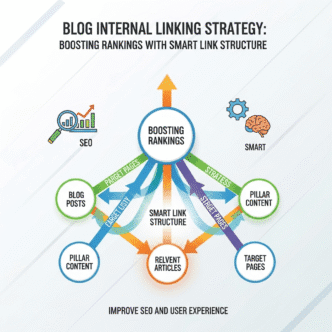
Content clusters organize your blog’s architecture around topic relationships, improving both SEO and user experience.
Cluster structure:
Pillar Content (1 per topic):
- Comprehensive guide covering topic broadly (2,500-4,000 words)
- Targets primary keyword (higher difficulty than cluster content)
- Links to all cluster content
- Gets updated regularly
Cluster Content (8-12 per pillar):
- Focused articles on specific subtopics (1,000-2,000 words)
- Targets long-tail and related keywords
- Links back to pillar and to related cluster posts
- Addresses specific questions or aspects
Benefits of cluster strategy:
✓ Builds topical authority faster than random content
✓ Internal linking becomes natural and strategic
✓ Easier to rank for competitive terms (pillar supported by clusters)
✓ Better user experience (readers find related content easily)
✓ Content planning becomes systematic, not random
Pro Tip: Don’t create the pillar first. Build 5-7 cluster posts first, get some rankings and traffic, then create your comprehensive pillar that links to proven cluster content. This approach builds momentum and validates topic interest before investing in a massive pillar post.
How Do You Optimize for Search Volume Analysis?
Search volume analysis helps you balance opportunity (volume) with reality (competition). Too many bloggers chase volume numbers without strategic thinking.
Understanding Search Volume Metrics
Search volume estimates how many times a keyword is searched per month. But this number is more complicated than it appears.
Volume considerations:
1. Volume varies by tool:
- Ahrefs, Semrush, and Ubersuggest show different numbers
- Google Keyword Planner shows ranges (not exact numbers)
- Cross-reference 2-3 tools for accuracy
2. Volume isn’t clicks:
- A keyword with 1,000 searches might only generate 200 clicks
- Featured snippets, ads, and “People Also Ask” steal clicks
- Position matters: #1 gets 30-40% of clicks, #10 gets 2-3%
3. Seasonality affects volume:
- “Tax deduction checklist” spikes January-April
- “Summer workout routine” peaks May-July
- Check Google Trends for seasonal patterns
4. Volume isn’t revenue:
- 500 searches with high commercial intent > 5,000 informational searches
- Consider conversion potential, not just traffic potential
Realistic traffic expectations:
| Keyword Volume | Ranking Position | Expected Monthly Clicks |
|---|---|---|
| 100 | #3 | 15-20 clicks |
| 500 | #3 | 75-100 clicks |
| 1,000 | #3 | 150-200 clicks |
| 100 | #8 | 3-5 clicks |
| 500 | #8 | 15-25 clicks |
| 1,000 | #8 | 30-50 clicks |
Pro Tip: For new blogs, target keywords with 50-500 monthly searches. This volume is enough to drive meaningful traffic but low enough that competition is beatable. Ten rankings for 200-volume keywords = 2,000 monthly searches = 400-600 actual visitors. That’s a strong foundation.
The Volume-Difficulty Sweet Spot
The best keywords balance decent volume with realistic difficulty. Finding this sweet spot accelerates growth.
The sweet spot formula for new blogs:
Ideal Volume: 100-500 searches/month
Maximum Difficulty: (Your DR ÷ 2) + 5
Why this works:
- Volume is high enough to drive traffic
- Competition is beatable with solid content
- You can target many keywords in this range
- Rankings come quickly (2-8 weeks vs 6-12 months)
Example sweet spot keywords for DR 10 blog:
✓ “how to use ubersuggest for keyword research” (KD 8, 180 vol)
✓ “keyword research spreadsheet template free” (KD 12, 210 vol)
✓ “low competition keywords in health niche” (KD 10, 140 vol)
✗ “keyword research tools” (KD 45, 12,000 vol) ← Volume great, difficulty too high
✗ “keyword research for blogs in Albania” (KD 2, 10 vol) ← Difficulty great, volume too low
What Advanced Keyword Research Techniques Accelerate Growth?
Once you master the basics, these advanced techniques find opportunities others miss.
The Reddit & Forum Mining Strategy
Online communities are goldmines for low competition keywords for blog posts because people use natural language, not SEO-optimized phrases.
How to mine forums for keywords:
1. Identify relevant communities:
- Reddit subreddits in your niche
- Facebook groups
- Quora topics
- Niche-specific forums
- LinkedIn groups
2. Look for recurring questions:
- “How do I…?”
- “What’s the best way to…?”
- “Can someone explain…?”
- “Why does…?”
- “Where can I find…?”
3. Extract search-worthy phrases:
Take the natural language question and check if people actually search for it:
Reddit: “Can someone explain why keyword difficulty scores vary so much between tools?”
Keyword version: “Why keyword difficulty different between tools” → Check volume and difficulty
4. Validate search volume:
Not every question becomes a search query. Use Google Keyword Planner or Ubersuggest to verify people actually search for the phrase (or variations).
5. Create better answers:
Forum answers are usually informal and incomplete. Your blog post can be the comprehensive, well-organized answer that ranks and drives traffic.
Real-world example: I found a Reddit thread asking “How do you do keyword research when you have literally zero backlinks?” searched as “keyword research no backlinks” (90 searches/month, KD 8). Created a guide, ranked #2 within 3 weeks, gets 30+ monthly visitors who are exactly my target audience (new bloggers).
The “People Also Ask” Expansion Method
The “People Also Ask” (PAA) box in Google search results is a treasure map to related keyword opportunities.
How to exploit PAA for keywords:
1. Google your seed keyword
2. Note all PAA questions (usually 4-8 shown initially)
3. Click each question to expand—Google loads more related questions with each click
4. Document 20-30 related questions from the expansion
5. Check search volume for question-based keywords
6. Create content answering multiple related questions in one comprehensive post
PAA keyword example:
Seed: “keyword research for bloggers”
PAA questions found:
- “What is the best keyword research tool for bloggers?”
- “How do I do keyword research for my blog?”
- “Do I need to pay for keyword research tools?”
- “What is keyword difficulty?”
- “How many keywords should I target per blog post?”
Each becomes a section in your comprehensive guide, or separate focused articles.
Pro Tip: Use tools like AlsoAsked or AnswerThePublic to automate PAA extraction. These tools map the entire question tree, revealing dozens of related queries in minutes instead of manual clicking.
The Seasonal Keyword Targeting Strategy
Seasonal keywords have predictable search volume spikes, allowing you to prepare content in advance and capture traffic at peak times.
How to identify seasonal opportunities:
1. Use Google Trends:
- Enter your keyword
- Set date range to “Past 5 years”
- Look for repeating patterns
2. Identify the pattern:
- Annual peaks (tax topics in Q1)
- Holiday-related (gift guides November-December)
- Weather/seasonal (gardening spring/summer)
- Event-driven (back to school August-September)
3. Time your content publication:
Publish seasonal content 4-6 weeks BEFORE the search volume spike:
- Google needs time to crawl and index
- You need time to build initial rankings
- Early publication captures the entire spike window
4. Update yearly:
Seasonal content should be refreshed annually:
- Update dates (guides for 2025 → 2026)
- Add new information/products
- Verify all links still work
- Refresh screenshots or examples
Example seasonal keyword strategy:
Target: “Keyword research for affiliate marketing beginners”
Trend: Spikes in January (New Year resolution + new affiliate marketers)
Action plan:
- Publish in mid-November
- Update in early December
- Promote heavily in January
- Maintain evergreen status year-round
- Refresh following November
For complete blog SEO strategies including seasonal planning, check out Blog SEO: The 2025 Blueprint.
How Do You Use Keyword Difficulty Checkers Effectively?
Keyword difficulty checkers provide quick assessments, but understanding what they measure and their limitations is crucial.
Understanding Keyword Difficulty Scores
Keyword difficulty (KD) scores estimate how hard it is to rank in the top 10 for a given keyword, usually on a 0-100 scale.
What KD scores actually measure:
Ahrefs KD: Based on number of backlinks needed to compete (analyzes referring domains to current top 10)
Semrush KD: Considers multiple factors including backlinks, search volume, and SERP features
Moz Difficulty: Analyzes link profiles of ranking pages and your site’s authority
Important: Different tools use different calculation methods, so scores vary significantly.
Example:
Keyword: “blog keyword research guide”
- Ahrefs: KD 28
- Semrush: KD 42
- Moz: 35
KD Score interpretation:
| Score Range | Difficulty | Who Can Compete |
|---|---|---|
| 0-15 | Very Easy | Any blog with decent content |
| 15-30 | Easy | Blogs with DR 10-20 |
| 30-40 | Medium | Blogs with DR 20-35 |
| 40-60 | Hard | Blogs with DR 35-50 |
| 60-80 | Very Hard | Authority sites DR 50+ |
| 80-100 | Extremely Hard | Major publications only |
Pro Tip: Never trust KD scores blindly. Always do manual SERP analysis for your final keyword targets. I’ve seen KD 15 keywords dominated by DR 70+ sites (impossible), and KD 40 keywords with weak competition I easily outranked.
Manual SERP Analysis to Validate Difficulty
Trust but verify: Use KD scores for initial filtering, then validate manually before committing time to content creation.
The 5-minute manual difficulty check:
1. Google the exact keyword (incognito)
2. Check DR/DA of top 10 results:
- Install MozBar or Ahrefs SEO Toolbar (free browser extensions)
- Scan the top 10 results
- Note average DR/DA
- Your DR should be within 20 points of the average
3. Look for weakness signals:
✓ Opportunity signals:
- Reddit, Quora, or forum threads ranking
- Thin content (under 800 words)
- Old content (3+ years without updates)
- DR 20-40 sites in top 10
- Poor formatting or user experience
- Obvious information gaps
✗ Difficulty signals:
- All top 10 are DR 60+ authority brands
- Recent, comprehensive content (updated within 6 months)
- Perfect match of search intent
- Strong visual elements and engagement
- Authority sites (Forbes, Healthline, government sites)
4. Check SERP features:
Some SERP features make it harder to get clicks:
- Featured snippets (steals clicks)
- Local pack (if you’re not local)
- Shopping results (e-commerce focus)
- Video carousels
- “People Also Ask” boxes
5. Make go/no-go decision:
Go: 3+ opportunity signals, your DR within 20 points of average
No-go: 2+ difficulty signals, DR gap over 30 points
Real-world validation example:
Keyword: “how to find profitable keywords for affiliate marketing
- Ahrefs KD: 18 (looks promising)
- Manual check revealed:
- Top 3: Authority sites (DR 70+)
- Positions 4-6: DR 50+ affiliate sites
- Positions 7-10: DR 35-45
- My DR: 15
- Decision: Skip it. Despite low KD score, actual competition too strong
- Alternative: “how to find affiliate keywords in woodworking niche” (KD 12, DR 20-30 in results) ✓
What’s Your 30-Day Keyword Research Action Plan?
Stop feeling overwhelmed. Here’s a practical, step-by-step keyword research strategy for new blogs you can implement immediately.
Week 1: Foundation and Assessment
Day 1-2: Audit Your Current Position
- [ ] Check your Domain Rating (Ahrefs, Moz, or Ubersuggest)
- [ ] Analyze current rankings in Google Search Console
- [ ] Identify any keywords you already rank for
- [ ] Document your authority level
Day 3-4: Define Core Topics
- [ ] List 5 broad topics you can write about authoritatively
- [ ] Validate audience interest (Google Trends, forums, Reddit)
- [ ] Choose 3 topics as your initial focus
- [ ] Brainstorm 20-30 seed keywords per topic
Day 5-7: Tool Setup and Familiarization
- [ ] Sign up for Google Search Console and Analytics
- [ ] Create account with chosen keyword tool (start with free options)
- [ ] Install browser extensions (MozBar or Ahrefs toolbar)
- [ ] Watch tutorials on your chosen tool(s)
Week 2: Keyword Discovery
Day 8-10: Generate Keyword Lists
- [ ] Run seed keywords through research tools
- [ ] Export 200-300 potential keywords
- [ ] Use alphabet soup technique in Google autocomplete
- [ ] Mine PAA questions for each seed keyword
- [ ] Check Reddit/forums for natural language queries
Day 11-12: Filter and Organize
- [ ] Import keywords to spreadsheet
- [ ] Filter by appropriate KD level (based on your DR)
- [ ] Filter by minimum volume (50+ searches/month)
- [ ] Remove irrelevant or off-topic keywords
- [ ] Organize by topic/subtopic
Day 13-14: Competitive Analysis
- [ ] Identify 3-5 competitor blogs (similar authority)
- [ ] Run content gap analysis
- [ ] Add 30-50 gap keywords to your list
- [ ] Note competitor content strategies that work
Week 3: Keyword Validation
Day 15-18: Manual SERP Analysis
- [ ] Select your 50 most promising keywords
- [ ] Manually analyze SERPs for each
- [ ] Check average DR of ranking pages
- [ ] Look for opportunity and difficulty signals
- [ ] Mark 20-30 validated opportunities
Day 19-20: Search Intent Verification
- [ ] Categorize keywords by intent (informational, commercial)
- [ ] Note required content format for each
- [ ] Ensure you can create that content type
- [ ] Group related keywords for cluster content
Day 21: Prioritization
- [ ] Score keywords using opportunity formula
- [ ] Rank by priority (difficulty, volume, relevance, value)
- [ ] Select top 20 keywords for immediate targeting
- [ ] Plan topic clusters around related keywords
Week 4: Implementation Planning
Day 22-23: Content Calendar Creation
- [ ] Map top 20 keywords to content calendar
- [ ] Assign realistic publishing dates
- [ ] Group cluster content around pillars
- [ ] Plan internal linking strategy
Day 24-26: First Content Pieces
- [ ] Write 2-3 articles targeting your easiest keywords
- [ ] Implement on-page SEO optimization
- [ ] Publish and submit to Search Console
- [ ] Monitor initial performance
Day 27-30: System Refinement
- [ ] Document your keyword research process
- [ ] Create templates for efficiency
- [ ] Set up tracking for rankings and traffic
- [ ] Plan ongoing research schedule (monthly check-ins)
Pro Tip: Don’t try to research 500 keywords perfectly before writing anything. Research 20, write content for 5-10 of them, then research 20 more. This iterative approach builds momentum and lets you validate your research methodology with real results.
How Do You Track Keyword Performance and Adjust Strategy?
Keyword research for bloggers doesn’t end when you publish. Tracking performance and adapting strategy based on results separates successful bloggers from struggling ones.
Essential Metrics to Monitor
Track these metrics for every target keyword:
In Google Search Console:
Impressions: How often you appear in search results
- Increasing impressions = Google finding you relevant
- Flat/declining = need content improvement or promotion
Clicks: Actual traffic from this keyword
- Low clicks despite high impressions = poor title/meta
- Growing clicks = strategy working
Average Position: Where you rank on average
- Positions 1-3: Dominant, protect this ranking
- Positions 4-10: Good, can optimize to move up
- Positions 11-20: Opportunity, update content
- Positions 21+: Either too competitive or needs major improvement
CTR (Click-through rate): Percentage who click when they see you
- Position 1: Expect 30-40% CTR
- Position 5: Expect 8-12% CTR
- Position 10: Expect 2-4% CTR
- Lower than expected = improve title/meta description
In Rank Tracking Tools:
Daily position tracking: Monitor ranking fluctuations
- Use Ahrefs Rank Tracker, Semrush Position Tracking, or AccuRanker
- Track your top 50-100 target keywords
- Note significant movements (5+ positions)
SERP feature tracking: See which features you trigger
- Featured snippets
- People Also Ask
- Image results
- Video results
Competitor position tracking: Monitor if competitors outrank you
- Identifies when to update content
- Shows when you’re losing ground
When to Pivot vs When to Persist
Not every keyword target will succeed. Knowing when to pivot strategy and when to be patient is crucial.
Persist (keep optimizing) if:
✓ You’re ranking positions 11-30 after 8-12 weeks
- Action: Update content, add depth, build internal links
✓ Rankings slowly improving (position 45 → 32 → 21)
- Action: Be patient, keep promoting
✓ Impressions growing even if position isn’t
- Action: Google discovering you, just needs time
✓ SERP analysis shows you can compete
- Action: Improve content quality to match/exceed top 10
Pivot (change strategy) if:
✗ Not ranking at all after 16+ weeks (position 50+)
- Problem: Probably too competitive for your authority
- Action: Target easier related keywords instead
✗ Ranking well but zero traffic (high position, no clicks)
- Problem: No actual search volume or wrong intent
- Action: Research better keywords with validated volume
✗ Can’t create competitive content for this keyword
- Problem: Topic outside your expertise/resources
- Action: Focus on topics where you have genuine advantage
✗ All top 10 are DR 70+ authority sites
- Problem: Unrealistic competition level
- Action: Find long-tail variations with easier competition
Real-world example: I targeted “blog SEO checklist” (KD 25) with my DR 18 blog. After 12 weeks, I ranked #47. Manual check revealed all top 10 were DR 60+ sites with 3,000+ word comprehensive guides. I pivoted to “blog SEO checklist for beginners with no budget” (KD 9), ranked #4 in 6 weeks, now drives 40+ monthly visitors. Sometimes retreating to better ground is the winning move.
What Common Keyword Research Mistakes Kill Blog Growth?
Let me save you from the mistakes that waste months of effort and leave bloggers frustrated and traffic-less.
The Fatal Keyword Research Errors
1. Targeting Keywords Way Above Your Authority Level
The mistake: DR 5 blog targeting KD 40+ keywords hoping “great content will win”
Why it fails: Google’s algorithm heavily weights authority for competitive terms. You’ll never rank, period.
The fix: Target keywords within your authority range. Build up through rankings, don’t try to skip levels.
2. Obsessing Over High Volume at Any Cost
The mistake: Only targeting 1,000+ search volume keywords, ignoring easier opportunities
Why it fails: High volume = high competition. You get zero traffic from keywords you can’t rank for.
The fix: Ten rankings for 100-volume keywords = 1,000 potential visits. Start small, accumulate wins.
3. Ignoring Search Intent Completely
The mistake: Writing comprehensive guides when searchers want quick answers (or vice versa)
Why it fails: Google won’t rank content that doesn’t match what users actually want.
The fix: Always Google your keyword first. Analyze what actually ranks before creating content.
4. Never Doing Manual SERP Analysis
The mistake: Trusting keyword difficulty scores without verification
Why it fails: KD scores are rough estimates. Reality often differs dramatically.
The fix: Spend 5 minutes manually checking competition before committing to content creation.
5. Targeting Too Few Keywords
The mistake: Publishing 10 articles targeting 10 keywords, then wondering why traffic stalls
Why it fails: You need volume. Most posts won’t rank or drive much traffic individually.
The fix: Target 50-100 keywords in year one. Build a diverse portfolio. Traffic compounds.
6. Giving Up Too Quickly
The mistake: Publishing content, checking rankings after 2 weeks, declaring SEO “doesn’t work”
Why it fails: SEO takes time. Most rankings develop over 8-16 weeks, sometimes longer.
The fix: Publish, wait 12 weeks, then evaluate. Be patient but strategic.
7. Researching Keywords But Never Publishing
The mistake: Spending 3 months “perfecting” keyword research without writing anything
Why it fails: Analysis paralysis. No content = no rankings = no traffic = no learning.
The fix: Research 20 keywords, write 5 articles, research 20 more. Iterate and learn.
Pro Tip: Set a “good enough” threshold. If a keyword passes your authority filter, has 50+ volume, and manual check shows opportunity—just create the content. Perfect is the enemy of done in SEO. You’ll learn more from publishing imperfectly than researching endlessly.
Frequently Asked Questions About Blog Keyword Research
Q: How many keywords should I target per blog post?
Target one primary keyword and 3-5 related secondary/LSI keywords per post. Trying to rank for too many unrelated keywords dilutes your focus and confuses search engines about your topic. Create separate, focused posts for distinct keywords rather than cramming everything into one article.
Q: Should I target keywords with zero search volume if the topic is relevant?
Occasionally, yes—if you have strong reasons to believe there’s actual search demand not reflected in tools. Zero-volume keywords sometimes indicate data gaps, especially for very new topics. But don’t make this your primary strategy. 80% of your content should target validated search volume.
Q: How long does it take to rank for keywords after publishing?
For low-competition keywords (KD 0-15), expect initial rankings in 2-8 weeks. For medium competition (KD 15-30), allow 8-16 weeks. Higher competition may take 4-6 months. Very competitive keywords can take 12+ months even with excellent content. Patience and persistence matter more than perfection.
Q: Can I target multiple keywords from the same article?
Yes, if they’re closely related and have the same search intent. One comprehensive guide can rank for a primary keyword plus related long-tail variations. But don’t try to target “keyword research tools” and “link building strategies” in the same post—create separate focused content.
Q: What’s better: many short posts or fewer long comprehensive guides?
For new blogs: Start with focused 1,000-1,500 word posts targeting specific long-tail keywords. Once you have 20-30 posts and some authority, create comprehensive 3,000+ word pillar guides. Shorter posts get you ranking faster and validate topic interest before investing in massive content.
Q: Do I need paid keyword research tools or are free tools enough?
Free tools work for basic research, but paid tools save massive time and reveal opportunities you’d miss. Start with free tools (Google Keyword Planner, Search Console, AnswerThePublic) until you’re making money from your blog or have validation your niche is profitable. Then invest in Ahrefs or Semrush—the ROI justifies the cost.
Q: How do I know if search volume data is accurate?
Search volume is always an estimate, never exact. Different tools use different methodologies, so numbers vary. Cross-reference 2-3 tools for important keywords. Focus on relative volume (keyword A is bigger than keyword B) rather than treating any specific number as gospel truth.
Q: Should I target keywords my competitors already rank for?
Absolutely, but strategically. If competitors rank for a keyword, it validates there’s traffic potential. Focus on keywords where competitors ranking are similar to or only slightly higher than your authority level. Targeting keywords where DR 80 sites dominate is futile when you’re DR 10.
Q: What if I can’t find any low-competition keywords in my niche?
You’re not looking hard enough or specifically enough. Every niche has low-competition opportunities, but you need to go narrow. Instead of “weight loss,” target “weight loss for postpartum mothers over 40 with thyroid issues.” Get specific until you find openings. They exist in every niche.
Q: How often should I do keyword research?
Initial setup: Dedicate 2-4 weeks to building your first keyword list (200-300 targets). Ongoing: Spend 2-4 hours monthly researching 20-30 new keywords, checking rankings, and identifying opportunities. Quarterly: Deep dive into new content gaps and competitor analysis. Make it routine, not a one-time event.
Final Thoughts: From Keyword Research to Real Traffic
Here’s what it comes down to: blog keyword research is the foundation of everything. Without strategic keyword targeting, you’re creating content in a vacuum, hoping someone somewhere might find it useful.
The bloggers winning in 2025 aren’t necessarily better writers or more knowledgeable—they’re better strategists. They know which battles to fight and which to avoid. They target keywords they can actually rank for, build authority through small wins, then scale up to bigger opportunities.
The three pillars of successful keyword research:
- Strategic targeting – Match difficulty to your authority, focus on achievable wins
- Systematic process – Follow a repeatable research workflow, not random guessing
- Consistent implementation – Research keywords, create content, track results, adjust strategy
You don’t need to master everything in this guide immediately. Start with the basics: understand your authority, use free tools to find 20 low-competition keywords, create content targeting those keywords, and track what happens.
Your immediate next steps:
Today: Check your Domain Rating and identify your realistic keyword difficulty range.
This week: Research 20 keywords using the techniques in this guide, validate them with manual SERP analysis.
This month: Create and publish 4-5 articles targeting your validated keywords.
Next quarter: Analyze results, identify what’s working, research 20 more keywords, repeat.
The compound effect is real. Your first keyword might drive 10 visitors monthly. Your twentieth might drive 50. Your hundredth targeted keyword might be the one that breaks through and drives 500+ monthly visitors because you’ve built enough topical authority that Google finally trusts you.
The choice is simple:
Continue writing about whatever topics pop into your head and hope for traffic, or invest a few hours in strategic keyword research that identifies exactly what your audience is searching for and which opportunities you can realistically capture.
Start researching today. Your future traffic depends on the keywords you choose now.
Additional Resources:
Related posts:
- Google Discover Optimization: Getting Editorial Content Featured in Feeds
- Google Discover Optimization: Getting Editorial Content Featured in Feeds (Statistics)
- Blog Monetization and SEO: Balancing Revenue with User Experience
- Content Cluster Strategy: Building Topical Authority with Hub and Spoke Model