
You’ve heard the whispers at every marketing conference. Seen the LinkedIn posts. Maybe even felt that knot in your stomach when someone casually drops “Yeah, we’re using AI for SEO now” like it’s no big deal.
Here’s the truth: AI and machine learning have fundamentally changed SEO, and if you’re still optimizing like it’s 2019, you’re not just behind—you’re invisible.
But here’s the good news (and why you’re reading this): You don’t need a computer science degree to understand AI SEO. You don’t need to know how to code. You just need to understand the basics—what’s actually happening behind the scenes when Google decides who ranks #1.
This guide is for the overwhelmed marketer, the curious business owner, the SEO professional who’s been “meaning to learn this AI stuff.” We’re starting from absolute zero and building up to the point where you can confidently implement machine learning basics for SEO strategies.
No jargon overload. No pretending you should already know this. Just clear, practical explanations that’ll make you think, “Oh, that’s it? I can do this.”
Let’s demystify AI together.
Table of Contents
ToggleWhat Exactly Is AI? (And Why Should SEOs Care?)
Artificial Intelligence (AI) is when computers can perform tasks that typically require human intelligence—learning, reasoning, problem-solving, understanding language.
Think of it this way: Traditional programming is like giving someone exact directions. “Turn left at the corner. Go 500 feet. Turn right.”
AI is like saying, “Get me to the coffee shop,” and the system figures out the best route based on traffic, time of day, your preferences, and patterns it’s learned from millions of other trips.
The “Aha!” Moment for SEO
Google processes 8.5 billion searches every day. There’s no way humans could manually evaluate every website for every query.
That’s where AI comes in. Google uses artificial intelligence to:
- Understand what people actually mean (not just the words they type)
- Evaluate content quality at scale
- Predict which results will satisfy users
- Learn from billions of user interactions
Pro Tip: Stop thinking of Google as a search engine. Think of it as an AI-powered answer engine that’s constantly learning what makes users happy.
The bottom line? Understanding AI SEO basics isn’t about keeping up with trends. It’s about understanding how search actually works now.
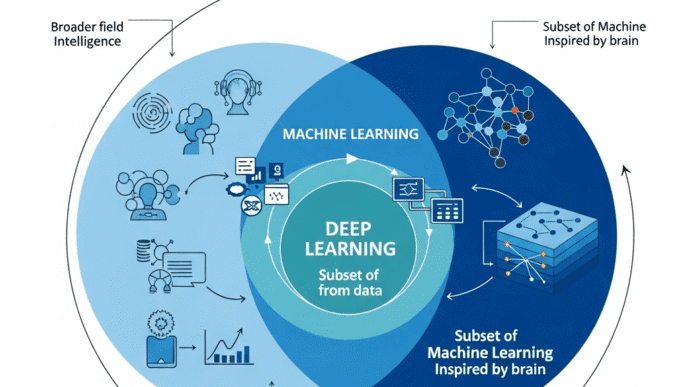
What’s the Difference Between AI, Machine Learning, and Deep Learning?
This confuses everyone at first. Let’s clear it up with a simple visual:
| Term | What It Means | SEO Example |
|---|---|---|
| Artificial Intelligence (AI) | Broad concept: computers acting intelligently | Google’s entire search algorithm |
| Machine Learning (ML) | Subset of AI: systems learn from data without explicit programming | RankBrain learning which results satisfy users |
| Deep Learning | Subset of ML: neural networks with many layers | BERT understanding context and nuance in language |
Think of It Like Transportation
AI = All forms of moving without walking
Machine Learning = Vehicles (cars, trains, planes)
Deep Learning = Specific advanced vehicles (self-driving cars)
How This Applies to SEO
Traditional SEO (pre-2015):
You followed rules. Google had explicit criteria. Match keywords → Get rankings.
AI-powered SEO (now):
Google’s AI learns what “good content” looks like by analyzing millions of search results and user behavior patterns.
You can’t trick machine learning. It sees patterns you don’t even realize you’re creating.
How Did We Get Here? The Evolution of AI in Search
Understanding where we came from helps you grasp where we’re going.
The Timeline That Changed Everything
2000-2011: The Keyword Era
- Google matched exact keywords
- “SEO” meant keyword density and backlinks
- Easy to manipulate, low-quality results
2011-2015: The Quality Revolution
- Google Panda (2011): Targeted low-quality content
- Google Penguin (2012): Cleaned up spammy links
- Hummingbird (2013): Started understanding context
2015-2019: AI Takes Over
- RankBrain (2015): First machine learning algorithm
- BERT (2019): Natural language understanding
- Neural matching: Connecting concepts, not just words
2020-2025: The AI Explosion
- Core Web Vitals (2020): User experience signals
- MUM (2021): Multimodal understanding
- Helpful Content Updates (2022-2024): Quality focus
- AI Overviews/SGE (2023-2024): AI-generated answers
- Gemini integration (2024-2025): Advanced AI everywhere
Reality Check: The shift from “keyword optimization” to “understanding AI in search” happened gradually, then suddenly. Most SEOs are still catching up.
Each update made Google smarter. Each change made old tactics less effective. By 2025, AI search optimization isn’t optional—it’s how search works.
What Are the Core AI Concepts Every SEO Beginner Needs to Know?
Let’s break down the five essential concepts. Master these, and you’ll understand 80% of what matters.
1. Natural Language Processing (NLP)
What it is: How computers understand human language.
Why it matters for SEO:
Google doesn’t just match words anymore. It understands meaning, context, synonyms, and intent.
Real-world example:
Search: “best phone for seniors”
Old Google: Matched pages with those exact words
NLP-powered Google: Understands you want:
- Easy-to-use devices
- Large screens
- Simple interfaces
- Emergency features
- Not tech specs and gaming performance
What you need to do:
Write naturally. Focus on semantic keywords (related concepts) not just exact-match phrases.
2. Machine Learning (ML)
What it is: Systems that improve themselves based on data and experience.
Why it matters for SEO:
Google’s algorithms learn from billions of searches to predict what users want.
Real example:
RankBrain noticed that when people searched “grey console developed by Sony,” they clicked on PlayStation results. It learned that “grey console” means PlayStation, even though that exact phrase wasn’t on the pages.
What you need to do:
Stop trying to “trick” algorithms. Focus on user satisfaction. Machine learning finds patterns in user behavior.
3. Training Data
What it is: The information AI systems learn from.
For Google, training data includes:
- Billions of search queries
- Which results people click
- How long they stay on pages
- Whether they come back and search again
- Links between websites
- User engagement signals
Why it matters:
Every search and click trains Google to be smarter. Your content is constantly being evaluated against this data.
4. Algorithms
What it is: The set of rules and processes that determine rankings.
The key shift:
Old algorithms: Fixed rules (10 backlinks = X points)
AI algorithms: Learning systems that adapt
What you need to know:
Google runs hundreds of algorithms simultaneously. You can’t optimize for individual algorithms—you optimize for the overall goal: user satisfaction.
5. User Signals
What it is: Data about how people interact with search results.
Key signals Google’s AI analyzes:
- Click-through rate (CTR) from search results
- Time on page (dwell time)
- Bounce rate
- Pogo-sticking (clicking back to search)
- Return visits
- Social sharing
Critical insight:
These signals train AI to understand quality. If users consistently click away from your content, AI learns it’s not satisfying their intent.
How Does Google Actually Use AI? (The Big Three)
Let’s talk about the three major AI systems you need to understand.
RankBrain: Google’s First AI Algorithm
Launched in October 2015, RankBrain was Google’s first machine learning system for processing search results.
What RankBrain does:
- Interprets ambiguous or new queries
- Understands relationships between words
- Learns from user behavior
- Adjusts rankings based on satisfaction
Why it matters:
Before RankBrain, Google struggled with queries it had never seen. Now it handles them by understanding patterns and user intent.
Example of RankBrain in action:
Query: “the grey-haired president of the US”
RankBrain understands this is asking about a specific president based on hair color, even if no page uses that exact phrase.
| Before RankBrain | After RankBrain |
|---|---|
| Exact phrase matching | Conceptual understanding |
| Struggled with new queries | Handles unknowns well |
| Static rules | Learning system |
| Keyword-focused | Intent-focused |
BERT: Understanding Language Like Humans
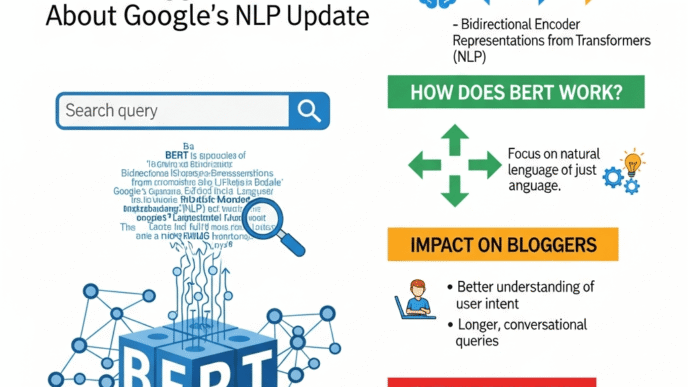
BERT (Bidirectional Encoder Representations from Transformers) rolled out in October 2019 and changed everything about language understanding.
What makes BERT special:
- Reads words in context (both directions)
- Understands prepositions and small words
- Grasps nuance and subtlety
- Processes natural, conversational queries
The famous example:
Query: “2019 brazil traveler to usa need a visa”
Before BERT: Google focused on “brazil,” “usa,” “visa” but missed the direction.
After BERT: Google understands “to” is critical—a Brazilian traveling TO the USA needs different visa info than an American traveling TO Brazil.
Why beginners need to know this:
BERT affects 100% of English queries now. It rewards naturally written, contextually accurate content.
What this means for your content:
- Write naturally, like you’re explaining to a friend
- Don’t awkwardly stuff keywords
- Context and clarity matter more than keyword density
MUM: The Multimodal AI Powerhouse
MUM (Multitask Unified Model) launched in May 2021 and is 1,000 times more powerful than BERT.
MUM’s capabilities:
- Understands 75 languages simultaneously
- Processes text, images, and video together
- Answers complex, multi-step questions
- Generates insights across formats
Real-world MUM example:
Query: “I hiked Mt. Adams. What should I do differently to prepare for Mt. Fuji in the fall?”
MUM understands:
- You have hiking experience (Mt. Adams context)
- You’re comparing two mountains
- Season matters (fall conditions)
- You need comparative advice
It can pull from hiking forums, weather data, training guides—across multiple languages—to give comprehensive answers.
For beginners:
MUM is why comprehensive, multi-format content wins. Text + images + video = better AI understanding.
What’s Different About AI SEO vs Traditional SEO?
Let’s get real about what actually changed.
The Fundamental Shifts
| Aspect | Traditional SEO | AI-Powered SEO |
|---|---|---|
| Focus | Keywords & backlinks | User intent & satisfaction |
| Content | Keyword density | Semantic relevance |
| Ranking | Technical optimization | Experience signals |
| Success | Rankings | User satisfaction metrics |
| Approach | One-time optimization | Continuous learning |
| Links | Quantity | Quality + context |
What Still Matters (Don’t Throw Out Your Playbook)
AI didn’t kill traditional SEO fundamentals:
✅ High-quality, original content
✅ Fast page speed
✅ Mobile optimization
✅ Clean site structure
✅ Authoritative backlinks
✅ Proper technical SEO
What changed: HOW you approach these fundamentals.
Example:
Traditional link building:
Get 100 backlinks from any sites = good
AI-powered link evaluation:
Google’s AI evaluates:
- Is the linking site topically relevant?
- Does the link make sense in context?
- Do users actually click it?
- Is the author credible?
One contextual, relevant link beats 10 random directory listings.
The New Rules That Matter Most
Rule #1: Intent beats exact-match keywords
You can rank for “best running shoes” without using that exact phrase if you nail the user’s true intent.
Rule #2: User satisfaction is everything
If people love your content (measured by engagement), you rank. If they hate it (measured by quick exits), you don’t. Simple.
Rule #3: E-E-A-T is non-negotiable
Experience, Expertise, Authoritativeness, Trustworthiness—AI algorithms actively look for these signals.
Rule #4: Comprehensive beats superficial
AI rewards depth. A thorough 2,000-word article beats a shallow 5,000-word article every time.
Rule #5: Technical excellence is table stakes
Core Web Vitals, mobile-first, structured data—these aren’t optional anymore. They’re the baseline.
How Do I Actually Start Learning AI SEO? (The Practical Steps)
Theory is great. Let’s talk about what you do tomorrow.
Step 1: Understand Your Current Content Through AI Eyes
Audit your top 10 pages:
Ask these questions:
- Does each page satisfy ONE clear intent?
- Is the content comprehensive?
- Do you answer questions fully?
- Does it demonstrate expertise?
- Would users be satisfied?
Use these free tools:
- Google Search Console (see what Google thinks)
- Google Analytics 4 (check engagement metrics)
- PageSpeed Insights (check Core Web Vitals)
Step 2: Learn to Think About Topics, Not Just Keywords
Traditional keyword research:
Target: “best coffee maker”
Create: One page optimized for that phrase
AI-era topic research:
Hub topic: Coffee Makers
Cluster content:
- Best coffee makers for beginners
- Drip vs espresso machines
- How to choose a coffee maker
- Coffee maker maintenance guide
- Budget coffee makers under $100
All internally linked, covering the topic comprehensively.
Pro Tip: Google rewards topical authority. Cover a subject thoroughly and you’ll rank for hundreds of related queries you never explicitly optimized for.
Step 3: Focus on User Intent, Not Keywords
The four types of search intent:IntentWhat User WantsContent TypeExample QueryInformationalTo learnGuides, explanations”what is machine learning”NavigationalSpecific siteBrand pages”facebook login”CommercialTo researchComparisons, reviews”best email marketing software”TransactionalTo buyProduct pages”buy iphone 15 pro”
Match your content format to intent.
Huge mistake: Writing a product comparison when someone wants a quick definition. AI notices mismatches.
Step 4: Write Content AI Can Understand
Practical tips for AI-friendly content:
Use clear structure:
- Descriptive H2/H3 headings
- Short paragraphs (like this article)
- Bullet points and lists
- Tables for comparisons
Answer questions directly:
- Put answers in the first paragraph
- Use question-format headings
- Create FAQ sections
Add semantic richness:
- Use related terms naturally
- Include synonyms and variations
- Cover subtopics thoroughly
- Link to related content
Show expertise:
- Add author bios
- Cite authoritative sources
- Include original insights
- Update content regularly
Step 5: Implement Basic Structured Data
Structured data (Schema markup) helps AI understand your content’s meaning and context.
Priority schema types for beginners:
- Article schema (blog posts)
- FAQ schema (question sections)
- How-To schema (step-by-step guides)
- Review schema (product reviews)
Don’t panic: You don’t need to code. Tools like Yoast SEO, Rank Math, or Google’s Schema Markup Helper do this for you.
Why it matters:
Structured data gives AI explicit information about your content. It’s like putting labels on everything in your house—AI can find and understand things faster.
Step 6: Monitor the Right Metrics
Traditional metrics still matter:
- Organic traffic
- Keyword rankings
- Backlinks
AI-era metrics matter MORE:
- Engagement rate (GA4)
- Average session duration
- Pages per session
- Bounce rate
- Return visitor rate
- Featured snippet captures
- AI Overview appearances
The key question:
Are people finding what they need? AI knows if they are.
What Are the Biggest Myths About AI SEO? (Let’s Debunk Them)
Separating fact from fiction matters when you’re just starting.
Myth #1: “AI Will Replace SEO Professionals”
The truth:
AI changes WHAT SEOs do, but doesn’t eliminate the need for strategy, creativity, and human judgment.
What AI handles:
- Data analysis
- Pattern recognition
- Content suggestions
What humans do better:
- Strategy development
- Creative ideation
- Brand voice
- Understanding business goals
- Building relationships
The reality: AI makes good SEOs better by handling tedious tasks. It exposes bad SEOs who only knew outdated tactics.
Myth #2: “You Need Technical Skills to Do AI SEO”
The truth:
You need to understand AI concepts (which you’re learning now), not build AI systems.
What you actually need:
- Basic understanding of how AI works
- Ability to interpret tool recommendations
- Critical thinking about AI suggestions
- Willingness to test and learn
Think of it like driving—you don’t need to be a mechanic, but you should understand basic maintenance.
Myth #3: “AI-Generated Content Can’t Rank”
The truth:
Google doesn’t penalize AI content specifically. It penalizes LOW-QUALITY content, regardless of who (or what) created it.
From Google’s own guidance:
“Appropriate use of AI or automation is not against our guidelines. This means it is not used to generate content primarily to manipulate search rankings.”
The reality:
- Well-edited AI content CAN rank
- Poorly-written human content WON’T rank
- Quality matters most
Best practice for beginners:
Use AI for research and drafts, but add human expertise, original insights, and quality editing.
Myth #4: “Keyword Research Is Dead”
The truth:
Exact-match keyword stuffing is dead. Keyword research as concept research is more important than ever.
Modern keyword research means:
- Understanding user intent
- Identifying topic clusters
- Finding question patterns
- Analyzing semantic relationships
- Discovering content gaps
Tools like Ahrefs, SEMrush, and AnswerThePublic are still essential. You’re just using them differently.
Myth #5: “AI SEO Is Too Expensive”
The truth:
Many powerful AI tools are free or affordable.
Free AI-powered SEO tools:
- Google Search Console (free)
- Google Analytics 4 (free)
- ChatGPT (free tier)
- Google Gemini (free)
- AnswerThePublic (limited free)
Affordable paid tools:
- Surfer SEO (starts $89/month)
- Frase (starts $14.99/month)
- NeuronWriter (starts $23/month)
Budget approach:
Start with free tools, learn the basics, invest in paid tools as you see ROI.
What Common Mistakes Do Beginners Make With AI SEO?
Learn from others’ mistakes. Here’s what to avoid.
Mistake #1: Obsessing Over Exact Keywords
The problem:
New SEOs still think, “I must use ‘best coffee maker’ exactly 47 times.”
Why it’s wrong:
AI understands concepts, not just keyword matches. Unnatural repetition hurts more than it helps.
Do this instead:
Use your main keyword naturally in:
- Title tag (once)
- First paragraph (once)
- A few headings (naturally)
- Throughout content (when it makes sense)
Then focus on related concepts and semantic keywords.
Mistake #2: Ignoring User Experience
The problem:
Focusing solely on “optimizing for Google” while creating terrible user experiences.
Why it’s wrong:
AI learns from user behavior. If people hate your site (slow, confusing, spammy), AI notices.
Do this instead:
- Fast loading times
- Clean, readable design
- Clear navigation
- Mobile-friendly layout
- No intrusive ads
- Easy-to-scan content
Good UX = good AI signals.
Mistake #3: Creating Thin, AI-Generated Content at Scale
The problem:
“I’ll use ChatGPT to create 100 articles this week!”
Why it’s wrong:
AI can detect patterns in AI-generated content. More importantly, thin content doesn’t satisfy users.
Do this instead:
Use AI for:
- Research
- Outlines
- First drafts
Then add:
- Original insights
- Personal experience
- Expert analysis
- Unique data
- Quality editing
Mistake #4: Forgetting About E-E-A-T
The problem:
Publishing content without demonstrating expertise or authority.
Why it’s wrong:
Google’s AI actively looks for trust signals, especially for important topics (health, finance, safety).
Do this instead:
- Add author bios with credentials
- Cite authoritative sources
- Update content regularly
- Get industry mentions
- Build topical authority
Mistake #5: Not Testing and Measuring
The problem:
Implementing changes without tracking results.
Why it’s wrong:
AI SEO requires experimentation. You need data to know what works.
Do this instead:
- Set baseline metrics
- Make one change at a time
- Track for 30-60 days
- Analyze results
- Iterate based on data
How Will AI Continue Changing SEO? (What’s Coming Next)
Understanding future trends helps you prepare now.
Trend #1: AI Overviews Dominate Search Results
What’s happening:
Google’s AI Overviews (formerly SGE) now appear for 60%+ of queries in the US.
What it means:
Traditional “10 blue links” are becoming less prominent. AI-generated answers appear at the top.
How to prepare:
- Optimize to be cited in AI Overviews
- Focus on being THE authoritative source
- Structure content for easy AI extraction
- Build brand recognition beyond search
Trend #2: Multimodal Search Goes Mainstream
What’s happening:
Search blends text, images, video, and voice seamlessly.
What it means:
You can search with a photo, ask a question verbally, and get video + text results.
How to prepare:
- Optimize images with descriptive alt text
- Create video content with transcripts
- Ensure content works across formats
- Use schema for all content types
Trend #3: Personalization Gets Hyper-Specific
What’s happening:
AI tailors results based on individual user history, preferences, location, and context.
What it means:
Rankings will vary more than ever. There’s no single “#1 position” anymore.
How to prepare:
- Focus on overall visibility patterns
- Build direct traffic and brand awareness
- Create content for different user segments
- Track engagement over rankings
Trend #4: Zero-Click Searches Increase
What’s happening:
Users get answers directly in search without clicking to websites.
What it means:
Traditional “drive traffic to get leads” models are challenged.
How to prepare:
- Get featured in answer boxes
- Focus on commercial and transactional queries
- Build email lists and communities
- Create content that requires clicking for full value
Trend #5: Voice and Conversational Search Growth
What’s happening:
By 2025, over 50% of searches are voice-based or conversational.
What it means:
People ask questions naturally: “Hey Google, what’s the best Italian restaurant near me?”
How to prepare:
- Target question-based keywords
- Use conversational language
- Optimize for local search
- Create FAQ content
- Focus on featured snippets
What Resources Should Beginners Use to Keep Learning?
Your learning AI SEO journey doesn’t end here. Here’s how to keep growing.
Essential Free Resources
Official Google Resources:
- Google Search Central – Official documentation
- Google Search Console Help – Free tool guidance
- Google SEO Starter Guide – Fundamentals
Learning Platforms:
- Moz Beginner’s Guide to SEO – Comprehensive free course
- Ahrefs Blog – Excellent tutorials and guides
- Search Engine Journal – Industry news and guides
Community & Forums:
- r/SEO on Reddit – Active community
- WebmasterWorld – Long-standing forum
- SEO Twitter/X – Follow industry experts
Recommended Beginner-Friendly Tools
For learning and practice:
- Google Search Console (free) – Your SEO foundation
- Google Analytics 4 (free) – Understanding traffic
- ChatGPT (free tier) – AI experimentation
- AnswerThePublic (limited free) – Question research
- Ubersuggest (limited free) – Keyword basics
When you’re ready to invest:
- Surfer SEO ($89/month) – Content optimization
- Ahrefs ($129/month) – Comprehensive SEO toolkit
- SEMrush ($129.95/month) – All-in-one platform
Key People to Follow
AI & SEO Thought Leaders:
- Lily Ray (Amsive Digital) – Algorithm updates & AI insights
- Barry Schwartz (Search Engine Roundtable) – Daily news
- Marie Haynes – Technical SEO & algorithm expertise
- Ross Simmonds – Content & distribution
- Cyrus Shepard – SEO strategy
Pro Tip: Follow 5-10 SEO experts on LinkedIn or Twitter. You’ll stay current without information overload.
Creating Your Learning Plan
Month 1: Foundations
- Read this guide thoroughly
- Set up Google Search Console & Analytics
- Audit your existing content
- Learn basic AI SEO concepts
Month 2: Practical Application
- Choose one page to optimize
- Implement improvements
- Track results
- Learn one new tool
Month 3: Expand Skills
- Create topic cluster content
- Implement structured data
- Study competitors
- Join SEO community
Month 4+: Continuous Growth
- Test new strategies
- Stay current with updates
- Build your SEO process
- Consider advanced training
What Should You Do Right Now? (Your Next Steps)
You’ve learned a lot. Let’s turn knowledge into action.
Immediate Actions (Today)
1. Set up your foundation:
- Create Google Search Console account
- Install Google Analytics 4
- Bookmark key learning resources
2. Audit one page:
- Choose your most important page
- Check if it satisfies user intent
- Evaluate comprehensiveness
- Note improvement opportunities
3. Start learning naturally:
- Read 2-3 blog posts from SEO experts weekly
- Follow 5 SEO professionals on social media
- Bookmark seoprojournal.com/blog-seo for ongoing learning
This Week
1. Content audit:
- Review your top 10 pages
- Identify thin or outdated content
- Prioritize updates
2. Competitor research:
- Find your top 3 ranking competitors
- Analyze their content depth
- Note what they do differently
3. User intent check:
- Search your target keywords
- Examine top-ranking results
- Understand what Google rewards
This Month
1. Create your first optimized piece:
- Choose a target topic (not just keyword)
- Research comprehensively
- Write for users first, search engines second
- Implement what you learned
2. Learn one AI tool:
- Start with free tools (ChatGPT, Google Gemini)
- Practice content research
- Experiment with outlines
- Always add human expertise
3. Track your baseline:
- Document current rankings
- Note traffic levels
- Track engagement metrics
- You need data to measure improvement
Real Success Stories: Beginners Who Mastered AI SEO
Let’s see proof that starting from zero works.
Case Study 1: The Side-Hustle Blogger
Background:
Sarah, a marketing coordinator with no SEO experience, started a personal finance blog in January 2024.
What she did:
- Learned AI SEO basics through free resources
- Created comprehensive topic clusters (not just keyword-focused posts)
- Used ChatGPT for research, added personal money-saving experiences
- Focused on user intent and question-based content
- Implemented basic schema markup
Results after 6 months:
- 15,000 monthly organic visitors
- 12 featured snippets captured
- 2 AI Overview citations
- First affiliate commission: $2,400
Key lesson:
“I stopped trying to game Google and started genuinely helping people. AI rewards useful content.”
Case Study 2: The Local Business Owner
Background:
Mike owned a plumbing business with a basic website getting 50 visitors/month.
What he did:
- Learned about voice search optimization (most local searches are voice)
- Created comprehensive service pages answering common questions
- Added FAQ schema to every page
- Focused on local intent and “near me” optimization
- Built topical authority around plumbing issues
Results after 4 months:
- 1,200 monthly organic visitors
- 5x increase in phone calls
- Ranking #1 for “emergency plumber [city]”
- $25,000 additional monthly revenue
Key lesson:
Understanding how AI works with local search changed my business. I’m not an SEO expert, but I understand the basics.”
Case Study 3: The Career Changer
Background:
Jessica, a former teacher, wanted to transition into digital marketing. Started learning SEO in her spare time.
What she did:
- Took free courses on machine learning basics for SEO
- Practiced on a personal blog about teaching resources
- Documented her learning journey
- Built portfolio case studies
- Learned AI tools (free versions)
Results after 8 months:
- Landed junior SEO position at agency
- Blog ranking for 50+ education keywords
- Created portfolio showcasing AI SEO knowledge
- Salary increased $15,000 from teaching
Key lesson:
“I proved I understood modern SEO by showing results, not just theory. The AI fundamentals gave me an edge.”
Your AI SEO Vocabulary: Essential Terms Defined Simply
Building your AI SEO glossary helps you sound (and be) confident.
Core AI Terms
Algorithm
A set of rules that determine how things work. Google’s algorithms decide what ranks.
Artificial Intelligence (AI)
When computers perform tasks that usually require human intelligence—learning, understanding, problem-solving.
Machine Learning (ML)
A type of AI where systems improve from experience without being explicitly programmed. Google learns from billions of searches.
Deep Learning
Advanced machine learning using neural networks. Powers things like BERT and image recognition.
Natural Language Processing (NLP)
How AI understands human language—meaning, context, intent.
Neural Network
Computing systems inspired by human brains, used for pattern recognition and learning.
Training Data
The information AI systems learn from. For Google: searches, clicks, user behavior.
SEO-Specific Terms
RankBrain
Google’s first machine learning algorithm (2015) for understanding search queries and user intent.
BERT
AI system (2019) that understands context and nuance in language, especially small words like “to,” “for,” “without.”
MUM
Multitask Unified Model (2021)—1,000x more powerful than BERT, understands 75 languages and multiple formats.
Gemini
Google’s latest AI model (2024-2025) powering search, multimodal understanding, and AI Overviews.
E-E-A-T
Experience, Expertise, Authoritativeness, Trustworthiness—quality signals AI looks for.
Semantic Search
Search focused on meaning and context, not just keyword matching.
Entity
A distinct thing or concept Google understands independently—people, places, things, ideas.
Knowledge Graph
Google’s database of billions of entities and their relationships.
User Intent
What someone is actually trying to accomplish with their search.
Topical Authority
When a site is recognized as an expert on a subject through comprehensive, quality content.
Modern Search Terms
AI Overviews (formerly SGE)
AI-generated answer summaries appearing at the top of search results.
Featured Snippet
The answer box at position zero in search results.
Schema Markup
Code that helps search engines understand your content’s meaning and context.
Core Web Vitals
Google’s page experience metrics: loading speed (LCP), interactivity (FID), visual stability (CLS).
Zero-Click Search
When users get answers directly in search without clicking to a website.
Final Thoughts: You’re Ready to Start Your AI SEO Journey
Here’s what you need to remember from this 5,000-word journey into AI for SEO beginners:
The core truth:
AI hasn’t made SEO more complicated—it’s made it more human. Focus on satisfying user intent with quality content, and AI will reward you.
The mindset shift:
Stop thinking “How do I trick Google?” Start thinking “How do I genuinely help my audience?” AI sees through manipulation.
The action plan:
- Understand the basics (you just did ✓)
- Apply one concept at a time
- Measure results
- Keep learning
- Stay consistent
The biggest mistake you can make:
Doing nothing because you feel overwhelmed. Start small. Optimize one page. Learn one tool. Build from there.
The opportunity:
Most businesses STILL don’t understand AI-powered SEO. You now have knowledge that gives you a competitive advantage.
Final Pro Tip: Bookmark this guide. Come back to it monthly as you implement strategies. Each time you’ll understand more deeply.
Remember: Every SEO expert started exactly where you are—confused, overwhelmed, wondering if they could learn this stuff.
The difference between them and people who gave up? They started. They stayed consistent. They kept learning.
You can do this. You’re already ahead of 90% of people who never even try to understand how AI impacts search.
Now go optimize something. Your first ranking improvement is waiting.
For more beginner-friendly SEO guides and strategies, visit seoprojournal.com/blog-seo where we break down complex topics into actionable steps.
Frequently Asked Questions About AI and Machine Learning for SEO
Do I need coding skills to do AI SEO?
No. Understanding AI concepts is different from building AI systems. You need to know how AI works (like this guide teaches) and how to use AI-powered tools, but you don’t need programming skills. Think of it like driving a car—you don’t need to be a mechanic to drive effectively.
How long does it take to learn AI SEO basics?
Most beginners grasp core AI SEO fundamentals in 30-60 days with consistent learning (1-2 hours per week). Becoming proficient takes 6-12 months of practical application. The key is starting with foundations and building up gradually rather than trying to learn everything at once.
Can small businesses compete with AI SEO?
Absolutely. AI actually levels the playing field. Small businesses can outcompete larger sites by focusing on niche expertise, local relevance, and comprehensive topic coverage. Google’s AI rewards quality and user satisfaction, not budget size. Small businesses with genuine expertise often beat big brands.
Is AI-generated content bad for SEO?
No, if used correctly. Google doesn’t penalize AI content specifically—it penalizes low-quality content. The best approach: use AI for research and drafts, then add human expertise, original insights, and quality editing. Pure AI content with no human input typically underperforms, but AI-assisted content created by experts can rank well.
What’s the most important AI concept for SEO beginners?
User intent. Understanding that AI algorithms prioritize satisfying what users actually want (not just matching keywords) is the foundational concept. Master user intent, and everything else becomes clearer. Google’s AI learns from user behavior—if people are satisfied with your content, you’ll rank.
How often do AI algorithms change?
Google makes thousands of small updates yearly, but major AI updates happen 2-4 times per year. Rather than chasing every change, focus on fundamentals: quality content, user satisfaction, and technical best practices. These principles remain constant even as specific algorithms evolve.
What free tools can help me learn AI SEO?
Start with Google Search Console (see how Google views your site), Google Analytics 4 (track user behavior), ChatGPT or Google Gemini (experiment with AI), and AnswerThePublic (find questions people ask). These free tools provide 80% of what beginners need to practice and learn effectively.
Should I learn traditional SEO or AI SEO first?
Learn them together—they’re not separate things. Modern SEO IS AI-powered SEO. Understanding traditional fundamentals (keywords, backlinks, technical SEO) is essential, but you need to approach them through the lens of how AI evaluates them. This guide bridges both for complete understanding.
How do I know if my content is “AI-friendly”?
Ask these questions: (1) Does it satisfy user intent completely? (2) Is it comprehensive and well-structured? (3) Does it demonstrate expertise? (4) Do users engage with it (low bounce rate, good time on page)? (5) Is it technically sound (fast, mobile-friendly)? If yes to all, it’s AI-friendly.
What’s the biggest AI SEO mistake beginners make?
Obsessing over exact-match keywords while ignoring user experience and content quality. Beginners often think “I need to use this phrase 50 times” when AI actually evaluates semantic meaning, user satisfaction, and comprehensive topic coverage. Focus on helping users, not keyword stuffing.
Related Resources:
- Google Search Central: SEO Starter Guide
- Moz: Beginner’s Guide to SEO
- Search Engine Journal: AI in SEO
- Ahrefs Blog: SEO Basics
- Google: How Search Works
- SEO Pro Journal: Blog & SEO Resources
🤖 AI & Machine Learning SEO Learning Path
Powered by seoprojournal.com | Your Guide to Modern SEO
Welcome to Your AI SEO Journey
This interactive guide helps you understand how AI and machine learning are transforming SEO. Track your progress, explore key concepts, and master the fundamentals of AI-powered search optimization.
📈 Evolution of AI in Search (2015-2025)
🎯 AI Algorithm Impact on SEO Practices
Interactive Learning Modules
🧠 Artificial Intelligence
Computers performing tasks requiring human intelligence: learning, reasoning, problem-solving.
📚 Machine Learning
Systems that improve from experience without explicit programming. Powers Google's ranking decisions.
🔤 Natural Language Processing
How AI understands human language—meaning, context, and intent behind searches.
🎯 User Intent
What users actually want to accomplish. AI focuses on satisfying intent, not just matching keywords.
🏆 E-E-A-T
Experience, Expertise, Authoritativeness, Trustworthiness—quality signals AI actively seeks.
🔗 Semantic Search
Understanding meaning and context rather than exact keyword matching.
| Algorithm | Launch Year | Primary Function | Impact |
|---|---|---|---|
| RankBrain | 2015 | Query interpretation & understanding | First ML ranking signal |
| BERT | 2019 | Natural language understanding | Affects 100% of queries |
| MUM | 2021 | Multimodal understanding (75 languages) | 1,000x more powerful than BERT |
| Gemini | 2024-2025 | Advanced AI integration | Powers AI Overviews |
| Aspect | Traditional SEO | AI-Powered SEO |
|---|---|---|
| Focus | Keywords & backlinks | User intent & satisfaction |
| Content Approach | Keyword density | Semantic relevance |
| Success Metric | Rankings | User engagement |
| Optimization | One-time setup | Continuous adaptation |
| Link Building | Quantity matters | Quality + context |
| Technical SEO | Crawlability | Experience signals |
Your 4-Month Learning Path
Month 1: Foundations
Learn AI basics, set up Google Search Console & Analytics, understand core concepts
Month 2: Practical Application
Optimize your first page, implement improvements, track results, learn tools
Month 3: Expand Skills
Create topic clusters, implement structured data, study competitors
Month 4+: Continuous Growth
Test new strategies, stay current with updates, build your SEO process
📊 SEO Skills Demand: Traditional vs AI-Powered (2025)
🕐 AI Search Timeline
RankBrain Launch
Google's first machine learning algorithm. Changed how search handles unknown queries.
BERT Revolution
Natural language processing breakthrough. Now affects 100% of English queries.
MUM Arrives
1,000x more powerful than BERT. Multimodal understanding across 75 languages.
AI Overviews (SGE)
AI-generated answers at top of search results. Now appearing in 60%+ of queries.
Gemini Integration
Google's most advanced AI powers search. Multimodal understanding becomes standard.
🎯 Test Your Knowledge
What percentage of English queries does BERT affect?
What does E-E-A-T stand for?
What is the primary focus of AI-powered SEO?
🎓 Recommended Learning Resources
| Resource Type | Platform | Cost | Best For |
|---|---|---|---|
| Official Documentation | Google Search Central | Free | Understanding Google's perspective |
| Comprehensive Guides | Moz Beginner's Guide | Free | SEO fundamentals |
| Practical Tools | Google Search Console | Free | Monitoring performance |
| Content Optimization | Surfer SEO | $89/mo | On-page optimization |
| Research & Analysis | Ahrefs | $129/mo | Comprehensive SEO toolkit |
| Learning Blog | seoprojournal.com | Free | AI SEO insights & guides |
🚀 Continue Your AI SEO Journey
Visit seoprojournal.com for more guides, tutorials, and expert insights
© 2025 SEO Pro Journal | Your Trusted Source for AI & SEO Education
 is AI SEO gold. Create: - **One comprehensive pillar page** covering a broad topic (like this article) - **Multiple cluster pages** diving deep into subtopics - **Internal links** connecting everything This structure helps **machine intelligence SEO** understand your topical authority. Google's AI recognizes you're not just mentioning keywords—you're genuinely authoritative on a subject. **Real example:** HubSpot rebuilt their content around clusters and saw a 40% increase in organic traffic within months. ### 3. Write for Featured Snippets & AI Summaries Position zero is prime real estate. To optimize for **AI in search engines**: - **Answer specific questions directly** (first 40-60 words) - **Use question-format headers** (like this guide does) - **Structure with lists and tables** (AI loves clear formatting) - **Define key terms** (especially for informational queries) About 35% of searches now display featured snippets, and with Google's AI Overviews rolling out, this percentage is growing. ### 4. Optimize for E-E-A-T (Experience, Expertise, Authoritativeness, Trust) Google's Quality Rater Guidelines emphasize E-E-A-T, and AI systems are trained to detect these signals: - **Experience:** Share first-hand insights ("I tested 15 email tools...") - **Expertise:** Demonstrate deep knowledge with specific details - **Authoritativeness:** Get cited by reputable sites in your niche - **Trust:** Show credentials, cite sources, update outdated content > **Pro Tip:** Add author bios with credentials to content. Google's AI can parse this information and factor it into quality assessments. ### 5. Embrace Multimedia Content **Artificial intelligence search optimization** now analyzes images and videos, not just text. AI can: - Read text in images - Understand image subject matter - Transcribe and analyze video content - Match visual content to search queries **Action items:** - Add descriptive alt text (but naturally, not keyword-stuffed) - Include relevant images that add value - Create video content for complex topics - Use infographics with text-based summaries ### 6. Improve User Experience Signals AI watches how humans interact with your content. Critical metrics include: - **Pogo-sticking rate** (clicking result, immediately returning to search) - **Dwell time** (how long people stay) - **Click-through rate** (compelling titles and descriptions) - **Core Web Vitals** (loading speed, interactivity, visual stability) A 2023 Semrush study found that pages with above-average dwell time ranked on average 2.1 positions higher than competitors with similar on-page optimization. ### 7. Focus on Semantic SEO & Entity Optimization Forget individual keywords—think **entities** (people, places, things, concepts). **Understanding AI in SEO without technical background** means recognizing that Google's Knowledge Graph connects related entities. **Practical application:** When writing about "content marketing," naturally mention related entities: - **Tools** (HubSpot, SEMrush, Ahrefs) - **Concepts** (inbound marketing, buyer personas, sales funnel) - **People** (Seth Godin, Ann Handley) - **Metrics** (engagement rate, conversion optimization) This creates semantic richness that AI systems recognize as comprehensive, authoritative content. ## What Tools Can Help Non-Technical Marketers With AI SEO? You don't need to be a data scientist to leverage AI. Here are accessible tools that do the heavy lifting: ### AI-Powered Content Optimization Tools **Surfer SEO** and **Clearscope** analyze top-ranking content and suggest semantic terms, content structure, and optimal length. They reverse-engineer what's working for AI algorithms. **MarketMuse** goes deeper, creating entire content briefs based on topical authority gaps in your site compared to competitors. ### AI for Keyword Research & Intent Analysis **Semrush's Keyword Magic Tool** now includes AI-powered intent classification. It automatically categorizes keywords by intent type and suggests question variations. **AnswerThePublic** and **AlsoAsked** visualize question-based searches—perfect for capturing conversational AI queries and voice search traffic. ### Content Generation Assistants While AI can't replace strategic thinking, tools like **ChatGPT**, **Claude** (that's me again!), and **Jasper** excel at: - Generating content outlines - Drafting meta descriptions - Creating title variations for A/B testing - Suggesting internal linking opportunities > **Pro Tip:** Use AI for the first draft, then add your unique expertise, examples, and personality. This hybrid approach delivers the best results. ### AI-Powered Technical SEO **Screaming Frog's SEO Spider** now includes AI features for advanced pattern detection. **Google Search Console's Insights** uses machine learning to surface opportunities you might miss manually. For [AI and machine learning approaches in SEO](https://seoprojournal.com/ai-machine-learning-for-seo-beginners/), these tools democratize advanced optimization that once required developer expertise. ## What Common Mistakes Should You Avoid With AI SEO? Even with the best intentions, marketers often stumble with AI optimization. Here are the pitfalls to sidestep: ### Mistake #1: Keyword Stuffing 2.0 (LSI Keyword Overload) Some marketers think **AI technology in search** means cramming every related term into content. Wrong. Google's AI detects unnatural language patterns. **Instead:** Write naturally and comprehensively. Related terms appear organically when you thoroughly cover a topic. ### Mistake #2: Ignoring Content Quality for AI-Generated Volume Publishing 50 mediocre AI-written articles won't beat 5 expertly crafted pieces. Google's Helpful Content Update specifically targets this. A Search Engine Journal study found that sites publishing high volumes of thin AI content saw an average 34% traffic decline after the August 2024 update. ### Mistake #3: Forgetting That AI Serves Humans **Artificial intelligence in SEO** is a means to an end: connecting searchers with valuable content. Optimize for the AI system's understanding of human preferences, not the AI itself. Ask yourself: "Would this content satisfy someone with this question?" If yes, you're on track. ### Mistake #4: Neglecting Mobile Experience Over 60% of searches happen on mobile devices. Google's AI prioritizes mobile-first indexing. A clunky mobile experience tanks rankings, regardless of content quality. ### Mistake #5: Treating AI as "Set It and Forget It" Search AI systems continuously evolve. What worked six months ago might be outdated. Stay current with [AI developments in SEO strategies](https://seoprojournal.com/ai-machine-learning-for-seo-beginners/) and test regularly. ## How Will AI in SEO Evolve in the Next Few Years? Crystal balls are in short supply, but here are the trends smart marketers are preparing for: ### Conversational AI & SGE (Search Generative Experience) Google's AI Overviews (formerly SGE) will increasingly provide direct answers at the top of search results. This doesn't mean SEO is dead—it means adapting strategy. **Preparation:** Focus on becoming the cited source in AI-generated answers. Clear, authoritative, well-structured content gets referenced. ### Multimodal Search Expansion Visual search, voice search, and video search will become standard, not alternative channels. **AI in search engines** will seamlessly blend these modalities. **Opportunity:** Create diverse content formats covering the same topics. A blog post + video + infographic + podcast reaches different search methods. ### Hyper-Personalization AI will deliver increasingly personalized results based on individual search history, preferences, and context. This makes broad keyword ranking less meaningful. **Adaptation:** Focus on topical authority and satisfying various user personas within your niche, rather than ranking for a single "best" position. ### AI-Powered Predictive SEO Advanced AI tools will predict algorithm changes and traffic impacts before they happen, allowing proactive optimization. **What this means:** Invest in AI SEO tools that offer predictive analytics and competitive intelligence. ## Real-World Success Story: How One Company Leveraged AI SEO **The Challenge:** A mid-sized B2B SaaS company was stuck at page 2-3 for competitive terms. Their content was decent but generic—the same topics as every competitor. **The AI SEO Transformation:** 1. **Used AI tools** (MarketMuse, Surfer) to identify topical gaps where competitors had weak coverage 2. **Created comprehensive pillar content** around three core topics—[implementing machine learning for search visibility](https://seoprojournal.com/ai-machine-learning-for-seo-beginners/) 3. **Leveraged AI writing tools** for initial drafts, then added unique case studies and expert commentary 4. **Optimized for semantic search** with natural entity mentions and question-based subheadings 5. **Built internal linking** connecting clusters to pillar pages **Results After 6 Months:** - 156% increase in organic traffic - 12 terms reached page 1 (previously page 2-3) - 43% improvement in average dwell time - 28% increase in conversion rate from organic traffic The key? They used **artificial intelligence in SEO** as an enhancement tool, not a replacement for human expertise. ## Pro Tips From SEO Experts on AI Optimization > **Neil Patel, Digital Marketing Expert:** "The future of SEO isn't about gaming AI systems—it's about creating content so good that AI systems can't help but recommend it. Focus on being the best answer, not just a ranked answer." > **Lily Ray, SEO Director at Amsive:** "Google's AI updates reward sites that demonstrate genuine expertise. The question isn't 'how do I trick the AI?' but 'how do I prove I'm the authority AI should trust?'" > **Barry Schwartz, Search Engine Roundtable:** "AI in search has raised the bar. Average content won't cut it anymore. You need to be exceptional, thorough, and genuinely helpful. The good news? AI also gives you tools to get there faster." ## Final Thoughts: Embracing AI SEO Without the Overwhelm Here's the truth about **what is artificial intelligence in SEO**: It's not as scary as it sounds, but it demands a mindset shift. Stop thinking about "beating" algorithms. Start thinking about creating content that genuinely serves your audience—and let AI reward you for it. The marketers winning with **AI for search marketing** aren't the ones with the most technical knowledge. They're the ones who: - **Understand their audience deeply** (better than any AI can) - **Create authentic, valuable content** (with AI assistance, not AI replacement) - **Stay curious and adaptable** (because AI will keep evolving) - **Focus on intent over keywords** (answering real questions, not just ranking) The [intersection of AI and SEO strategy](https://seoprojournal.com/ai-machine-learning-for-seo-beginners/) isn't about choosing between human creativity and machine efficiency—it's about combining both. You don't need to become a data scientist. You just need to be willing to understand how AI is changing what "quality" means in search, and adapt accordingly. Ready to dive deeper into specific AI applications? Check out [advanced machine learning techniques for SEO professionals](https://seoprojournal.com/ai-machine-learning-for-seo-beginners/) or explore [practical AI tools for everyday SEO tasks](https://seoprojournal.com/ai-machine-learning-for-seo-beginners/). --- ## Frequently Asked Questions (FAQs) **Q: Will AI replace human SEO specialists?** No. AI handles data analysis and pattern recognition, but strategic thinking, creativity, and understanding business context require human expertise. The most effective approach combines AI efficiency with human insight. **Q: Do I need coding skills to do AI SEO?** Absolutely not. Modern AI SEO tools have user-friendly interfaces. Understanding concepts matters more than technical implementation. Focus on strategy; tools handle the complexity. **Q: Is AI-generated content penalized by Google?** Not automatically. Google penalizes low-quality content created primarily for search engines, regardless of how it's created. AI-assisted content with genuine value and human expertise is fine. Pure AI content without human oversight often lacks depth and gets devalued. **Q: How often do Google's AI algorithms update?** Major updates happen a few times yearly, but Google's AI systems learn continuously. Small adjustments happen daily. Focus on long-term quality rather than chasing every fluctuation. **Q: Can small businesses compete with AI SEO against big brands?** Yes! AI actually levels the playing field. Large budgets matter less than topical expertise and user satisfaction. Niche authority beats generic coverage every time. **Q: What's the single most important thing for AI SEO success?** **Search intent alignment.** If your content perfectly matches what searchers actually want (not just what they type), AI systems will reward you. Everything else supports this foundation. **Q: Should I rewrite all my old content for AI optimization?** Not all at once. Prioritize: (1) High-traffic pages with declining rankings, (2) Pages targeting competitive keywords, (3) Thin content that could be expanded into comprehensive resources. Update strategically, not desperately. **Q: How do I measure AI SEO success differently from traditional SEO?** Look beyond rankings. Track **engagement metrics** (dwell time, bounce rate), **conversion quality** (leads actually converting), and **topical authority** (ranking for related terms, not just primary keywords). AI rewards holistic performance.](https://seoprojournal.com/wp-content/uploads/2025/11/What-is-Artificial-Intelligence-in-SEO-332x332.png)
 is AI SEO gold. Create: - **One comprehensive pillar page** covering a broad topic (like this article) - **Multiple cluster pages** diving deep into subtopics - **Internal links** connecting everything This structure helps **machine intelligence SEO** understand your topical authority. Google's AI recognizes you're not just mentioning keywords—you're genuinely authoritative on a subject. **Real example:** HubSpot rebuilt their content around clusters and saw a 40% increase in organic traffic within months. ### 3. Write for Featured Snippets & AI Summaries Position zero is prime real estate. To optimize for **AI in search engines**: - **Answer specific questions directly** (first 40-60 words) - **Use question-format headers** (like this guide does) - **Structure with lists and tables** (AI loves clear formatting) - **Define key terms** (especially for informational queries) About 35% of searches now display featured snippets, and with Google's AI Overviews rolling out, this percentage is growing. ### 4. Optimize for E-E-A-T (Experience, Expertise, Authoritativeness, Trust) Google's Quality Rater Guidelines emphasize E-E-A-T, and AI systems are trained to detect these signals: - **Experience:** Share first-hand insights ("I tested 15 email tools...") - **Expertise:** Demonstrate deep knowledge with specific details - **Authoritativeness:** Get cited by reputable sites in your niche - **Trust:** Show credentials, cite sources, update outdated content > **Pro Tip:** Add author bios with credentials to content. Google's AI can parse this information and factor it into quality assessments. ### 5. Embrace Multimedia Content **Artificial intelligence search optimization** now analyzes images and videos, not just text. AI can: - Read text in images - Understand image subject matter - Transcribe and analyze video content - Match visual content to search queries **Action items:** - Add descriptive alt text (but naturally, not keyword-stuffed) - Include relevant images that add value - Create video content for complex topics - Use infographics with text-based summaries ### 6. Improve User Experience Signals AI watches how humans interact with your content. Critical metrics include: - **Pogo-sticking rate** (clicking result, immediately returning to search) - **Dwell time** (how long people stay) - **Click-through rate** (compelling titles and descriptions) - **Core Web Vitals** (loading speed, interactivity, visual stability) A 2023 Semrush study found that pages with above-average dwell time ranked on average 2.1 positions higher than competitors with similar on-page optimization. ### 7. Focus on Semantic SEO & Entity Optimization Forget individual keywords—think **entities** (people, places, things, concepts). **Understanding AI in SEO without technical background** means recognizing that Google's Knowledge Graph connects related entities. **Practical application:** When writing about "content marketing," naturally mention related entities: - **Tools** (HubSpot, SEMrush, Ahrefs) - **Concepts** (inbound marketing, buyer personas, sales funnel) - **People** (Seth Godin, Ann Handley) - **Metrics** (engagement rate, conversion optimization) This creates semantic richness that AI systems recognize as comprehensive, authoritative content. ## What Tools Can Help Non-Technical Marketers With AI SEO? You don't need to be a data scientist to leverage AI. Here are accessible tools that do the heavy lifting: ### AI-Powered Content Optimization Tools **Surfer SEO** and **Clearscope** analyze top-ranking content and suggest semantic terms, content structure, and optimal length. They reverse-engineer what's working for AI algorithms. **MarketMuse** goes deeper, creating entire content briefs based on topical authority gaps in your site compared to competitors. ### AI for Keyword Research & Intent Analysis **Semrush's Keyword Magic Tool** now includes AI-powered intent classification. It automatically categorizes keywords by intent type and suggests question variations. **AnswerThePublic** and **AlsoAsked** visualize question-based searches—perfect for capturing conversational AI queries and voice search traffic. ### Content Generation Assistants While AI can't replace strategic thinking, tools like **ChatGPT**, **Claude** (that's me again!), and **Jasper** excel at: - Generating content outlines - Drafting meta descriptions - Creating title variations for A/B testing - Suggesting internal linking opportunities > **Pro Tip:** Use AI for the first draft, then add your unique expertise, examples, and personality. This hybrid approach delivers the best results. ### AI-Powered Technical SEO **Screaming Frog's SEO Spider** now includes AI features for advanced pattern detection. **Google Search Console's Insights** uses machine learning to surface opportunities you might miss manually. For [AI and machine learning approaches in SEO](https://seoprojournal.com/ai-machine-learning-for-seo-beginners/), these tools democratize advanced optimization that once required developer expertise. ## What Common Mistakes Should You Avoid With AI SEO? Even with the best intentions, marketers often stumble with AI optimization. Here are the pitfalls to sidestep: ### Mistake #1: Keyword Stuffing 2.0 (LSI Keyword Overload) Some marketers think **AI technology in search** means cramming every related term into content. Wrong. Google's AI detects unnatural language patterns. **Instead:** Write naturally and comprehensively. Related terms appear organically when you thoroughly cover a topic. ### Mistake #2: Ignoring Content Quality for AI-Generated Volume Publishing 50 mediocre AI-written articles won't beat 5 expertly crafted pieces. Google's Helpful Content Update specifically targets this. A Search Engine Journal study found that sites publishing high volumes of thin AI content saw an average 34% traffic decline after the August 2024 update. ### Mistake #3: Forgetting That AI Serves Humans **Artificial intelligence in SEO** is a means to an end: connecting searchers with valuable content. Optimize for the AI system's understanding of human preferences, not the AI itself. Ask yourself: "Would this content satisfy someone with this question?" If yes, you're on track. ### Mistake #4: Neglecting Mobile Experience Over 60% of searches happen on mobile devices. Google's AI prioritizes mobile-first indexing. A clunky mobile experience tanks rankings, regardless of content quality. ### Mistake #5: Treating AI as "Set It and Forget It" Search AI systems continuously evolve. What worked six months ago might be outdated. Stay current with [AI developments in SEO strategies](https://seoprojournal.com/ai-machine-learning-for-seo-beginners/) and test regularly. ## How Will AI in SEO Evolve in the Next Few Years? Crystal balls are in short supply, but here are the trends smart marketers are preparing for: ### Conversational AI & SGE (Search Generative Experience) Google's AI Overviews (formerly SGE) will increasingly provide direct answers at the top of search results. This doesn't mean SEO is dead—it means adapting strategy. **Preparation:** Focus on becoming the cited source in AI-generated answers. Clear, authoritative, well-structured content gets referenced. ### Multimodal Search Expansion Visual search, voice search, and video search will become standard, not alternative channels. **AI in search engines** will seamlessly blend these modalities. **Opportunity:** Create diverse content formats covering the same topics. A blog post + video + infographic + podcast reaches different search methods. ### Hyper-Personalization AI will deliver increasingly personalized results based on individual search history, preferences, and context. This makes broad keyword ranking less meaningful. **Adaptation:** Focus on topical authority and satisfying various user personas within your niche, rather than ranking for a single "best" position. ### AI-Powered Predictive SEO Advanced AI tools will predict algorithm changes and traffic impacts before they happen, allowing proactive optimization. **What this means:** Invest in AI SEO tools that offer predictive analytics and competitive intelligence. ## Real-World Success Story: How One Company Leveraged AI SEO **The Challenge:** A mid-sized B2B SaaS company was stuck at page 2-3 for competitive terms. Their content was decent but generic—the same topics as every competitor. **The AI SEO Transformation:** 1. **Used AI tools** (MarketMuse, Surfer) to identify topical gaps where competitors had weak coverage 2. **Created comprehensive pillar content** around three core topics—[implementing machine learning for search visibility](https://seoprojournal.com/ai-machine-learning-for-seo-beginners/) 3. **Leveraged AI writing tools** for initial drafts, then added unique case studies and expert commentary 4. **Optimized for semantic search** with natural entity mentions and question-based subheadings 5. **Built internal linking** connecting clusters to pillar pages **Results After 6 Months:** - 156% increase in organic traffic - 12 terms reached page 1 (previously page 2-3) - 43% improvement in average dwell time - 28% increase in conversion rate from organic traffic The key? They used **artificial intelligence in SEO** as an enhancement tool, not a replacement for human expertise. ## Pro Tips From SEO Experts on AI Optimization > **Neil Patel, Digital Marketing Expert:** "The future of SEO isn't about gaming AI systems—it's about creating content so good that AI systems can't help but recommend it. Focus on being the best answer, not just a ranked answer." > **Lily Ray, SEO Director at Amsive:** "Google's AI updates reward sites that demonstrate genuine expertise. The question isn't 'how do I trick the AI?' but 'how do I prove I'm the authority AI should trust?'" > **Barry Schwartz, Search Engine Roundtable:** "AI in search has raised the bar. Average content won't cut it anymore. You need to be exceptional, thorough, and genuinely helpful. The good news? AI also gives you tools to get there faster." ## Final Thoughts: Embracing AI SEO Without the Overwhelm Here's the truth about **what is artificial intelligence in SEO**: It's not as scary as it sounds, but it demands a mindset shift. Stop thinking about "beating" algorithms. Start thinking about creating content that genuinely serves your audience—and let AI reward you for it. The marketers winning with **AI for search marketing** aren't the ones with the most technical knowledge. They're the ones who: - **Understand their audience deeply** (better than any AI can) - **Create authentic, valuable content** (with AI assistance, not AI replacement) - **Stay curious and adaptable** (because AI will keep evolving) - **Focus on intent over keywords** (answering real questions, not just ranking) The [intersection of AI and SEO strategy](https://seoprojournal.com/ai-machine-learning-for-seo-beginners/) isn't about choosing between human creativity and machine efficiency—it's about combining both. You don't need to become a data scientist. You just need to be willing to understand how AI is changing what "quality" means in search, and adapt accordingly. Ready to dive deeper into specific AI applications? Check out [advanced machine learning techniques for SEO professionals](https://seoprojournal.com/ai-machine-learning-for-seo-beginners/) or explore [practical AI tools for everyday SEO tasks](https://seoprojournal.com/ai-machine-learning-for-seo-beginners/). --- ## Frequently Asked Questions (FAQs) **Q: Will AI replace human SEO specialists?** No. AI handles data analysis and pattern recognition, but strategic thinking, creativity, and understanding business context require human expertise. The most effective approach combines AI efficiency with human insight. **Q: Do I need coding skills to do AI SEO?** Absolutely not. Modern AI SEO tools have user-friendly interfaces. Understanding concepts matters more than technical implementation. Focus on strategy; tools handle the complexity. **Q: Is AI-generated content penalized by Google?** Not automatically. Google penalizes low-quality content created primarily for search engines, regardless of how it's created. AI-assisted content with genuine value and human expertise is fine. Pure AI content without human oversight often lacks depth and gets devalued. **Q: How often do Google's AI algorithms update?** Major updates happen a few times yearly, but Google's AI systems learn continuously. Small adjustments happen daily. Focus on long-term quality rather than chasing every fluctuation. **Q: Can small businesses compete with AI SEO against big brands?** Yes! AI actually levels the playing field. Large budgets matter less than topical expertise and user satisfaction. Niche authority beats generic coverage every time. **Q: What's the single most important thing for AI SEO success?** **Search intent alignment.** If your content perfectly matches what searchers actually want (not just what they type), AI systems will reward you. Everything else supports this foundation. **Q: Should I rewrite all my old content for AI optimization?** Not all at once. Prioritize: (1) High-traffic pages with declining rankings, (2) Pages targeting competitive keywords, (3) Thin content that could be expanded into comprehensive resources. Update strategically, not desperately. **Q: How do I measure AI SEO success differently from traditional SEO?** Look beyond rankings. Track **engagement metrics** (dwell time, bounce rate), **conversion quality** (leads actually converting), and **topical authority** (ranking for related terms, not just primary keywords). AI rewards holistic performance.](https://seoprojournal.com/wp-content/uploads/2025/11/What-is-Artificial-Intelligence-in-SEO-688x387.png)