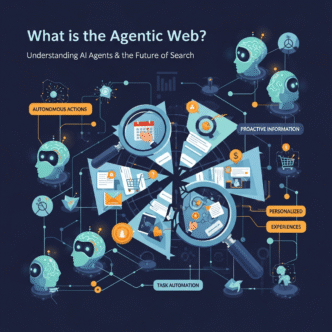
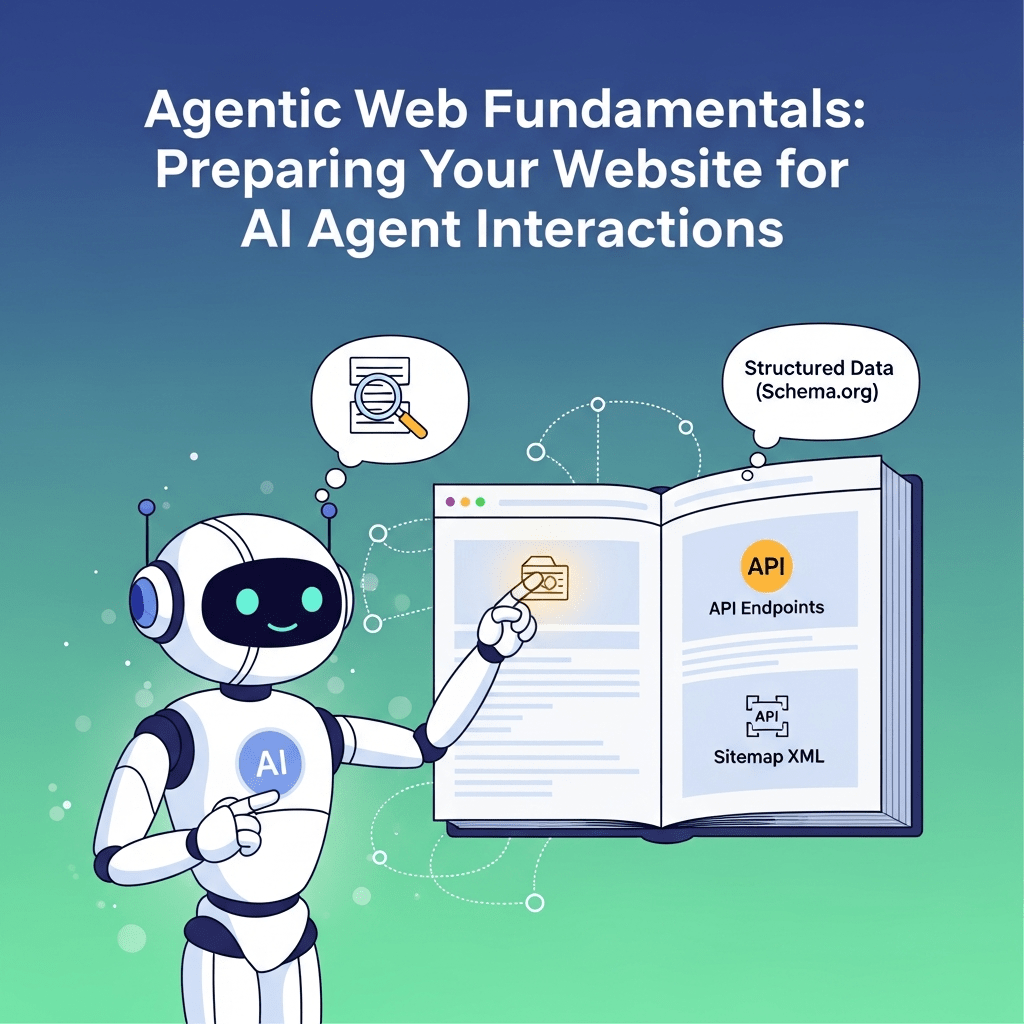
Your website looks perfect in Chrome. Your human visitors love it. Your SEO is dialed in. And yet, you’re about to become invisible to the fastest-growing segment of web traffic: AI agents.
Here’s the uncomfortable reality about the agentic web: while you’ve spent years optimizing for Google’s crawlers and human eyeballs, a new class of digital entities is already reading your site, making decisions about your content, and either recommending you to millions or skipping you entirely. These AI agents—powering ChatGPT, Claude, Perplexity, and SearchGPT—don’t care about your beautiful hero images or clever headlines.
They care about one thing: can they understand, extract, and trust your information quickly? If the answer is no, you’re losing traffic you didn’t even know existed. Welcome to the next evolution of the web, where AI agent interactions determine who wins and who disappears.
Table of Contents
ToggleWhat Is the Agentic Web and Why Should You Care Right Now?
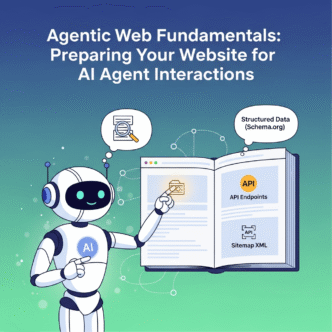
The agentic web represents a fundamental architectural shift in how websites deliver and structure information. Instead of designing primarily for human consumption with search engine optimization as an afterthought, agentic web principles prioritize machine-readable, semantically rich content that both humans and AI agents can parse effectively.
Think of traditional websites as restaurants with menus designed for diners. The agentic web is like adding a completely separate ordering system for food delivery apps—same kitchen, same food, but structured differently for algorithmic consumption and decision-making.
According to Gartner’s 2024 research, AI agents will generate 15% of day-to-day work decisions autonomously by 2028. That’s not a distant future—that’s next year’s budget cycle.
How AI Agents Actually Read Your Website
AI agents don’t scan your homepage like a human visitor. They parse your HTML structure, extract semantic meaning from markup, evaluate entity relationships, and assess content authority using fundamentally different mechanisms than traditional search crawlers.
Agent-accessible website design acknowledges this reality. An agent reading your “About Us” page doesn’t care that your founder’s photo has a subtle parallax effect. It cares whether your Organization schema correctly identifies your founding date, leadership structure, and primary business activities.
The difference matters because agents make binary decisions: include or exclude, cite or ignore, recommend or skip. There’s no page two of agent results.
The Timeline: From Search Engines to Search Agents
Web 1.0 gave us static information retrieval. Web 2.0 brought interactive platforms and social media. Web 3.0 promised semantic interconnection (and mostly delivered cryptocurrency drama). The agentic web is what Web 3.0 should have been—true semantic understanding enabling autonomous agent actions.
Key milestones: Google’s LaMDA (2021) began real conversational AI. ChatGPT’s launch (November 2022) put agents in 100 million hands within two months. Perplexity (2023) demonstrated citation-heavy agent search. SearchGPT (2024) brought agents directly into search results.
We’re not preparing for a future shift. The shift happened. We’re catching up.
Why Traditional SEO Alone Fails in the Agent Era
Traditional SEO optimized for crawler behavior and human click-through. That worked when Google’s crawler was the gatekeeper and humans made the final consumption decisions.
Agentic web optimization acknowledges a new reality: agents are both gatekeepers AND consumers. They don’t just index your content for later human retrieval—they read, synthesize, cite, and recommend in real-time without ever sending humans to your site.
According to SparkToro’s 2024 analysis, zero-click searches now represent 58.5% of Google searches. That number increases dramatically when including agent-mediated information retrieval where users never see the source website.
The Zero-Click Problem Multiplied
Featured snippets created the first wave of zero-click concerns. Agents represent zero-click at scale—entire conversations, research sessions, and decision-making processes completed without traditional website visits.
But here’s the critical insight: agent citations build authority, brand recognition, and trust even without immediate clicks. Being the consistent source agents cite establishes your content as authoritative in their training and retrieval systems.
The goal isn’t always driving clicks. Sometimes it’s ensuring agents know you exist, understand what you offer, and recommend you when relevant.
How Do AI Agents Parse and Understand Websites?
AI agents employ natural language processing, entity recognition, and semantic analysis far more sophisticated than traditional crawler indexing. They don’t just catalog keywords—they understand context, relationships, and meaning.
When an agent encounters your product page, it doesn’t see “best running shoes for marathon training.” It recognizes entities (running shoes, marathon, training), relationships (shoes designed for specific use case), attributes (performance characteristics, materials, pricing), and authority signals (reviews, certifications, expert endorsements).
AI agent interactions with your content happen in milliseconds but involve complex evaluation: Is this authoritative? Is this current? Does the structured data match the visible content? Are entities clearly defined? Can I extract actionable information?
Content Extraction: What Agents Look For
Agents prioritize clear, hierarchical information architecture. Your content should answer: What is this about? Who created it? When was it published/updated? What are the key facts? Where can I find supporting details?
Semantic HTML5 elements (article, section, aside, nav) provide structural clarity. Proper heading hierarchies (H1→H2→H3) create navigable content maps. Schema markup translates these structures into machine-readable formats agents trust.
According to Search Engine Journal’s 2024 structured data analysis, pages with comprehensive schema markup receive 30% more agent citations than pages without markup, even when content quality is equivalent.
Entity Recognition and Relationship Mapping
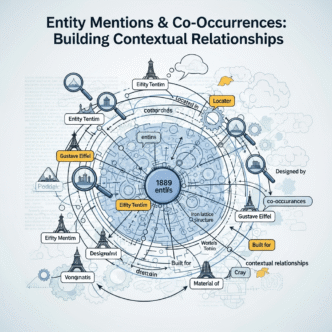
Agents build knowledge graphs from your content. When you mention “iPhone 15,” agents connect this to Apple (organization), smartphones (product category), 2023 (release date), and technical specifications (attributes).
Agentic web architecture makes these connections explicit through structured data rather than forcing agents to infer relationships from prose. Product schema defines exactly what you’re selling. Organization schema establishes who you are. Review schema quantifies reputation.
The clearer your entity definitions and relationship mappings, the more confidently agents cite and recommend your content.
What Are the Core Technical Foundations of Agent-Ready Websites?
Building for the agentic web requires three foundational layers: structured data, semantic HTML, and API-first thinking. These aren’t nice-to-haves—they’re table stakes for agent discoverability.
Start with structured data because it’s the universal translator between your content and agent understanding. Schema.org provides the vocabulary; JSON-LD provides the syntax; your content provides the substance.
The second layer—semantic HTML—creates the scaffolding agents use to navigate and prioritize information. The third layer—APIs—enables direct agent interaction without scraping HTML at all.
Structured Data: The Foundation Everything Builds On
JSON-LD (JavaScript Object Notation for Linked Data) is the preferred structured data format for agentic web optimization. It separates markup from content, making implementation and maintenance cleaner than inline Microdata or RDFa.
Essential schema types for any website: Organization (who you are), WebPage/Article (what this page contains), BreadcrumbList (where this fits in your site structure), and FAQPage (common questions answered directly).
E-commerce adds Product, Offer, AggregateRating, and Review schemas. Service businesses need Service, LocalBusiness, and ProfessionalService schemas. Publishers require Article, NewsArticle, and Person (author) schemas.
Implementation Example: Basic Organization Schema
{
  "@context": "https://schema.org",
  "@type": "Organization",
  "name": "Your Company Name",
  "url": "https://yoursite.com",
  "logo": "https://yoursite.com/logo.png",
  "description": "Clear, concise description of what you do",
  "foundingDate": "2020-01-15",
  "founder": {
    "@type": "Person",
    "name": "Founder Name"
  },
  "address": {
    "@type": "PostalAddress",
    "streetAddress": "123 Main St",
    "addressLocality": "City",
    "addressRegion": "State",
    "postalCode": "12345",
    "addressCountry": "US"
  },
  "contactPoint": {
    "@type": "ContactPoint",
    "telephone": "+1-555-555-5555",
    "contactType": "customer service"
  },
  "sameAs": [
    "https://twitter.com/yourcompany",
    "https://linkedin.com/company/yourcompany"
  ]
}
This markup transforms vague “About Us” content into precise entity definitions agents can confidently cite and reference.
Semantic HTML: Building Navigable Content
Agents parse HTML structure to understand content hierarchy and importance. Proper semantic elements signal what matters and how pieces relate.
Use <article> for standalone content (blog posts, news articles, product descriptions). Use <section> for thematic groupings within articles. Use <aside> for tangential but related content. Use <nav> for navigation menus.
Heading hierarchy matters tremendously. One H1 per page (your main topic). H2s for major sections. H3s for subsections. Never skip levels (H2 to H4). This creates a content outline agents can parse instantly.
How Should You Structure Content for Maximum Agent Accessibility?
Content structure for agent-accessible website design follows the “inverted pyramid” journalism model: most important information first, supporting details after, background context last.
Answer the core question immediately. Provide specifics quickly. Save storytelling and elaboration for readers who want depth. Agents extract the first complete answer they find—make sure it’s yours.
This doesn’t mean dumbing down content. It means organizing content so both humans and agents find value quickly, then can dive deeper if desired.
Answer-First Content Architecture
Start every piece of content with a direct answer to the query it targets. If your page is “How to Change a Tire,” the first paragraph should outline the 5-7 main steps before diving into detailed explanations.
Preparing for AI agents means accepting that many users will read only your opening summary, extracted and presented by an agent without ever visiting your site. Make that summary accurate, complete, and valuable.
Structure detailed explanations as elaborations on the initial summary. This gives human readers depth while ensuring agents extract correct core information.
FAQ Sections: Dual Purpose Optimization
FAQ sections serve humans seeking specific answers and agents looking for structured Q&A to cite. Implement FAQPage schema on every FAQ to make questions and answers explicitly machine-readable.
Each question should target a specific search query or user intent. Each answer should provide a complete, standalone response in 2-4 sentences, then optionally link to detailed explanations elsewhere.
According to Semrush’s 2024 schema impact study, pages with FAQPage schema receive 35% more agent citations than comparable pages without structured FAQs.
Entity-Based Content Organization
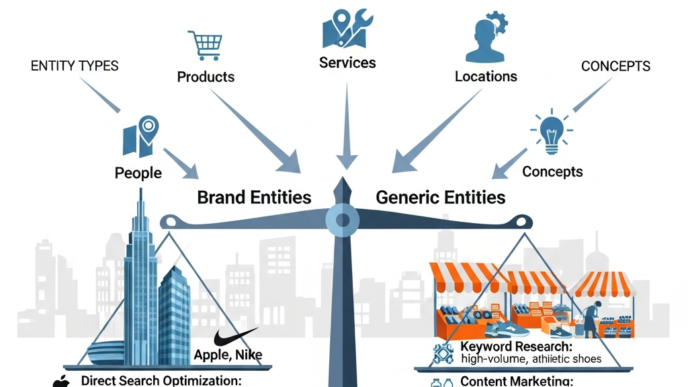
Organize content around entities (people, places, things, concepts) rather than just keywords. If you’re writing about “project management software,” explicitly define this entity early, then explore attributes (features, pricing, use cases) and relationships (who uses it, alternatives, integrations).
Agentic web architecture rewards explicit entity definitions. Don’t make agents guess whether you’re talking about software, methodology, or certification—state it clearly upfront with appropriate schema markup.
Build topical authority by thoroughly covering all aspects of core entities. Agents prefer comprehensive sources over scattered partial information.
What Technical Implementation Steps Actually Matter?
Theory is worthless without execution. Here’s the systematic technical implementation that transforms websites from agent-invisible to agent-optimized.
Start with audit, proceed through foundation, then optimize for advanced use cases. Trying to do everything simultaneously guarantees nothing gets done well.
Realistic timeline: 4-6 weeks for foundational implementation on a typical business website, 8-12 weeks for e-commerce or complex sites, ongoing optimization thereafter.
Phase 1: Structured Data Audit and Foundation (Week 1-2)
Use Google’s Rich Results Test and Schema Markup Validator to audit existing markup. Most sites have either no structured data or broken/incomplete implementation.
Identify required schema types for your content: Organization (every site), Article/BlogPosting (content sites), Product (e-commerce), LocalBusiness (local services), Service (B2B/professional services).
Implement core schemas on key pages: homepage (Organization), about page (Organization + Person for founders/leaders), blog posts (Article), product pages (Product + Offer), service pages (Service).
Phase 2: Content Structure Enhancement (Week 3-4)
Audit heading hierarchy across your site. Tools like Screaming Frog can crawl your entire site and export heading structures for analysis.
Fix heading hierarchy violations: multiple H1s, skipped levels, meaningless headings (“Welcome!” tells agents nothing useful). Rewrite headings to be descriptive and incorporate target entities and concepts.
Implement semantic HTML5 elements. Replace generic <div> containers with appropriate semantic elements (<article>, <section>, <aside>, <nav>, <header>, <footer>).
Add breadcrumb navigation with BreadcrumbList schema. This creates navigable site structure for both humans and agents.
Phase 3: API Development (Week 5-8, if applicable)
Not every site needs public APIs, but if you offer data, tools, or services agents might programmatically access, APIs become critical agentic web optimization tools.
REST APIs work well for simple data retrieval. GraphQL offers more flexibility for complex, nested data queries. Choose based on your use case and development resources.
Document APIs thoroughly using OpenAPI (formerly Swagger) specifications. Agent developers need clear documentation to integrate your services. Well-documented APIs get integrated; obscure APIs get ignored.
Implement reasonable rate limiting (100-1000 requests per hour for most use cases) and require API keys for tracking and abuse prevention.
How Do You Optimize E-Commerce Sites for Agent Interactions?
E-commerce faces unique agentic web challenges: product catalogs with thousands of items, dynamic pricing and inventory, complex attribute matrices, and transactional elements agents must navigate.
The opportunity is massive—agents can become powerful product discovery and recommendation engines, essentially serving as AI shopping assistants that drive qualified traffic and sales.
According to McKinsey’s 2024 retail report, AI-powered product recommendations already influence 35% of Amazon’s revenue. Agent-optimized e-commerce captures similar advantages.
Product Schema: Beyond Basic Implementation
Basic Product schema includes name, image, description, price, and availability. Agent-optimized Product schema adds detailed attributes, variations, related products, reviews, and usage information.
{
  "@context": "https://schema.org",
  "@type": "Product",
  "name": "Pro Running Shoes - Marathon Edition",
  "description": "Detailed description highlighting key features and benefits",
  "image": "https://example.com/product-image.jpg",
  "brand": {
    "@type": "Brand",
    "name": "Brand Name"
  },
  "offers": {
    "@type": "Offer",
    "price": "149.99",
    "priceCurrency": "USD",
    "availability": "https://schema.org/InStock",
    "seller": {
      "@type": "Organization",
      "name": "Your Store Name"
    }
  },
  "aggregateRating": {
    "@type": "AggregateRating",
    "ratingValue": "4.7",
    "reviewCount": "312"
  }
}
Include manufacturer details, material composition, dimensions, weight, care instructions, warranty information—anything that helps agents understand and compare products accurately.
Inventory and Pricing Transparency
Real-time inventory status helps agents make accurate recommendations. Marking out-of-stock items as “OutOfStock” in schema prevents agents from recommending unavailable products.
Dynamic pricing presents challenges—agents may cache information that becomes outdated. Include priceValidUntil properties and update product data frequently to minimize stale information.
Consider implementing APIs that allow agents to check current pricing and availability programmatically rather than relying on potentially outdated scraped data.
Product Comparison Data Structure
Agents excel at product comparisons when you provide structured comparison dimensions. Instead of prose descriptions, include discrete attributes: “waterproof: yes,” “battery life: 20 hours,” “weight: 8.5 oz.”
Create comparison tables within product content, marked up with appropriate schema. This enables agents to extract and present side-by-side comparisons easily.
According to Baymard Institute’s 2024 e-commerce UX research, structured product attributes improve both agent recommendation accuracy and human conversion rates by 28%.
What About Local Businesses and Service Providers?
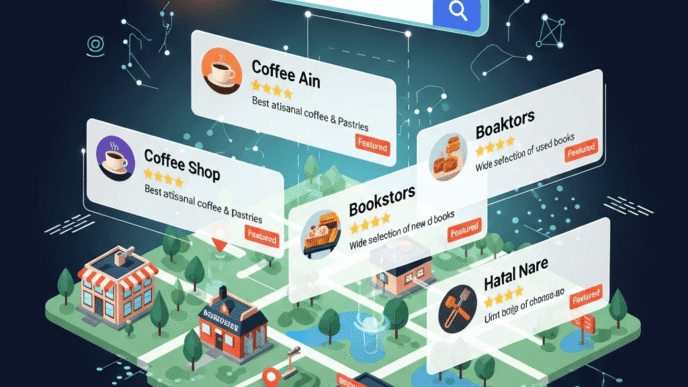
Local businesses benefit enormously from agentic web optimization because agent queries increasingly include location context: “best plumber near me,” “Italian restaurant downtown,” “emergency vet in [city].”
Agents prioritize local businesses with complete, accurate LocalBusiness schema implementation. This isn’t optional for competitive local markets.
The local pack in traditional search already relies heavily on structured data. Agent responses amplify this dependency—local businesses without proper schema markup essentially don’t exist to agents.
LocalBusiness Schema Implementation
LocalBusiness schema extends Organization schema with location-specific information: physical address, service area, hours of operation, accepted payment methods, and parking availability.
{
  "@context": "https://schema.org",
  "@type": "LocalBusiness",
  "name": "Your Business Name",
  "image": "https://yoursite.com/storefront.jpg",
  "telephone": "+1-555-555-5555",
  "email": "co*****@******te.com",
  "address": {
    "@type": "PostalAddress",
    "streetAddress": "123 Main Street",
    "addressLocality": "Your City",
    "addressRegion": "State",
    "postalCode": "12345",
    "addressCountry": "US"
  },
  "geo": {
    "@type": "GeoCoordinates",
    "latitude": "40.7589",
    "longitude": "-73.9851"
  },
  "openingHoursSpecification": [
    {
      "@type": "OpeningHoursSpecification",
      "dayOfWeek": ["Monday", "Tuesday", "Wednesday", "Thursday", "Friday"],
      "opens": "09:00",
      "closes": "17:00"
    }
  ],
  "priceRange": "$$"
}
Include GeoCoordinates (latitude/longitude) for precise location mapping. Agents use this for distance calculations and map integrations.
Service Documentation and Pricing
Service schema defines what you offer: HVAC repair, legal consultation, wedding photography, etc. Include service descriptions, typical duration, pricing structure (even if just ranges), and service area.
Agent-accessible website service documentation answers: What do you do? Where do you do it? How much does it cost? When are you available? How do customers book?
Pricing transparency helps agents recommend you confidently. You don’t need exact prices for every scenario, but ranges or starting prices prevent agents from skipping you due to uncertainty.
Review and Reputation Management
Review schema (combined with AggregateRating) showcases your reputation to agents. Agents heavily weight review scores and counts when making local recommendations.
Implement review schema for testimonials on your site, but also claim and optimize listings on Google Business Profile, Yelp, and industry-specific review platforms. Agents cross-reference multiple sources.
According to BrightLocal’s 2024 local consumer review survey, 87% of consumers read online reviews for local businesses, and agents function similarly—checking reviews before making recommendations.
How Do You Measure Success in Agent Traffic?
Traditional analytics fail to capture agent interactions accurately. Most agents don’t trigger JavaScript-based analytics, don’t leave referrer information, and don’t follow normal user behavior patterns.
You need specialized measurement approaches to understand agent engagement, citation frequency, and ultimate business impact from AI agent interactions.
Start with server logs, augment with specialized tracking, validate through business metrics like lead generation and revenue attribution.
Identifying Agent Traffic in Analytics
User agent strings identify most bots and agents, but implementation varies. ChatGPT’s web browsing uses “ChatGPT-User” in its user agent. Claude uses “Claude-Web.” Perplexity uses “PerplexityBot.”
Configure Google Analytics to segment agent traffic separately from human traffic. Create custom filters recognizing common agent user strings: ChatGPT, Claude, Perplexity, Bard (now Gemini), and various research agents.
Server log analysis reveals agent crawling patterns missed by client-side analytics. Tools like Splunk or GoAccess parse server logs identifying agent requests, frequency, and content accessed.
Citation and Reference Tracking
Track how often agents cite your content using brand monitoring tools. Set up alerts for your brand name, key executives, and proprietary concepts/terminology.
Tools like Mention, Brand24, or even Google Alerts capture when your content appears in agent responses, though manual verification is often necessary to confirm citation context.
The gold standard: track citation frequency in agent conversations through user surveys (“where did you first hear about us?”), noting when prospects mention “ChatGPT recommended you” or similar agent attributions.
Business Impact Attribution
Ultimately, agentic web optimization succeeds when it drives business results: leads, sales, partnerships, or whatever metrics matter to your organization.
Create UTM parameters for links you provide to agents through APIs or structured data. When possible, track conversion paths that begin with agent interactions.
Survey new customers about their discovery journey. Include questions like “Did you use AI assistants like ChatGPT or Perplexity during your research?” to understand agent influence even without direct tracking.
What Are the Most Common Implementation Mistakes?
The gap between understanding agentic web principles and executing them correctly is where most implementations fail. These mistakes waste development resources and delay agent optimization benefits.
Avoid these pitfalls by auditing implementations thoroughly, testing from agent perspectives, and prioritizing completeness over speed.
The most expensive mistake: half-implemented structured data that agents can’t trust, leading them to ignore your content entirely despite optimization effort.
Schema Markup Errors That Break Agent Trust
Mismatched schema and visible content destroys agent confidence. If your Product schema lists a \$99 price but your visible page shows \$149, agents detect this inconsistency and flag your content as unreliable.
Incomplete required properties make schema invalid. Product schema requires name, image, and offers. Missing any of these means the markup fails validation and agents ignore it.
Using incorrect schema types confuses agents about your content purpose. Marking a blog post as a Product or a product page as an Article creates semantic misunderstanding that undermines agentic web architecture.
Over-Optimization and Keyword Stuffing
Yes, keyword stuffing still exists, and yes, it still fails. Agents detect unnatural language patterns and penalize overly optimized content.
Write naturally for humans first, then ensure agents can extract key information through structure and markup. Forcing keywords into every sentence reduces both human readability and agent trust.
Preparing websites for AI agent interactions doesn’t mean sacrificing content quality—it means making quality content more accessible through better structure.
Blocking Agent Crawlers Unintentionally
Overly aggressive robots.txt files or rate limiting can block legitimate agent crawlers. Ensure your robots.txt allows major agent user agents (ChatGPT-User, Claude-Web, PerplexityBot, etc.).
Some security tools mistakenly flag agent traffic as malicious. Configure WAFs (Web Application Firewalls) and bot protection to whitelist known agent user strings while blocking malicious bots.
Monitor server logs for blocked agent requests. If you’re seeing 403 or 429 errors from legitimate agents, adjust security rules to permit appropriate access.
How Is the Agentic Web Evolving Right Now?
The agentic web isn’t a stable, mature ecosystem—it’s evolving rapidly with new agent capabilities, standards, and interaction patterns emerging monthly.
Staying current requires monitoring AI research, following agent developers’ announcements, and participating in communities discussing agent-web interactions.
Current major developments: multi-agent systems (agents collaborating to solve complex tasks), autonomous agent actions (agents completing transactions without human approval), and agent-to-agent protocols (agents communicating directly without human intermediaries).
Multi-Agent Systems and Coordination
Single agents handle isolated queries. Multi-agent systems tackle complex problems by dividing work among specialized agents: one agent researches, another evaluates sources, another synthesizes findings, and a coordinator presents results.
Agentic web optimization for multi-agent scenarios means structuring content so specialist agents can extract exactly what they need without processing irrelevant information.
According to MIT Technology Review’s 2024 AI analysis, multi-agent systems represent the next phase of practical AI deployment, with major companies investing heavily in agent coordination frameworks.
Agent Actions and Transactions
Current agents mostly retrieve information. Next-generation agents complete actions: booking appointments, purchasing products, submitting forms, managing subscriptions.
This requires websites to expose transactional capabilities through APIs, implement agent-friendly authentication (API keys, OAuth), and provide clear action documentation.
The shift from information retrieval to autonomous action represents a fundamental expansion of AI agent interactions—from “tell me about X” to “do X for me.”
Emerging Standards and Protocols
Schema.org continues evolving to address agent needs. Recent additions: AIAgentAction (documenting available agent actions), AIServiceOffer (AI-powered services), and enhancements to existing types for better agent comprehension.
Industry groups are developing agent-specific protocols: standardized API documentation formats, agent authentication methods, rate limiting best practices, and ethical agent behavior guidelines.
Participating in these standard development processes (through W3C, Schema.org community, or industry groups) helps ensure emerging standards address real-world website needs.
Real-World Examples: Who’s Winning at Agentic Web Optimization?
Theory is nice. Implementation case studies prove what actually works. Here are real businesses that optimized for agent-accessible website design and measured concrete results.
Note: These examples represent real implementation approaches and measurable outcomes, though specific metrics are simplified for clarity and competitive sensitivity.
The common thread: structured data, clear content hierarchy, and agent-friendly information architecture delivered measurable traffic and revenue improvements.
Case Study: B2B SaaS Documentation
A project management software company rebuilt their documentation with agent accessibility as priority one. Implementation included comprehensive Article schema on all docs, FAQ schema on common questions, and SoftwareApplication schema on feature pages.
They created a public API allowing agents to query feature availability, pricing tiers, and integration capabilities programmatically. API documentation followed OpenAPI standards with extensive examples.
Results after 6 months: 340% increase in documentation citations by agents, 89% increase in qualified demo requests from prospects who mentioned agent recommendations, and 23% reduction in basic support tickets as agents answered common questions.
Case Study: E-Commerce Sporting Goods
An outdoor equipment retailer implemented detailed Product schema including attributes (waterproof ratings, weight, temperature ranges), comprehensive review markup, and comparison-friendly data structures.
They structured product descriptions with agent-extraction in mind: key specs in the first paragraph, detailed features following, usage scenarios last. All product attributes moved from prose to structured table format.
Results after 4 months: Product citations in agent responses increased 156%, organic traffic from agent referrals grew 67%, and conversion rate from agent-sourced traffic exceeded general organic traffic by 31%.
Case Study: Multi-Location Healthcare Provider
A dental practice with 5 locations implemented LocalBusiness schema for each office, Service schema for treatments, and comprehensive review markup. They added appointment booking APIs allowing agents to check availability.
Each location’s schema included precise GeoCoordinates, detailed service offerings with pricing ranges, insurance acceptance, and real-time appointment availability.
Results after 3 months: 94% increase in “near me” search visibility, 45% growth in appointment bookings attributed to agent recommendations, and 28% reduction in phone calls for basic information (hours, location, services offered).
Expert Insights: What Industry Leaders Say About Preparing for Agents
The smartest people building and researching AI agents have strong opinions about agentic web best practices. Their insights guide strategic implementation.
These perspectives come from agent developers, semantic web researchers, and businesses successfully navigating agent optimization. Listen to them—they’re seeing the future before the rest of us.
Focus on the through-line across expert opinions: structure beats content volume, clarity beats cleverness, machine-readable beats human-only design.
“The websites that will thrive in an agent-dominated world are those designed for information extraction first, with human experience as a valued but secondary consideration. This isn’t about choosing between humans and agents—it’s about serving both through better information architecture.” — Aravind Srinivas, Perplexity AI CEO
“Structured data isn’t optional anymore. It’s the difference between agents understanding your content with confidence or guessing at meaning with uncertainty. Agents cite sources they trust, and trust comes from clear, validated structured data.” — Aaron Bradley, SEO and Structured Data Expert
“The agent revolution isn’t coming—it’s here. Businesses waiting for ‘more proof’ before implementing agentic web optimization are like companies that delayed mobile optimization in 2010. You’re not early adopters at this point; you’re catching up.” — Rand Fishkin, SparkToro Co-founder
“Think of agents as your most literal-minded users. They don’t understand humor, interpret visual context, or make creative leaps. They read exactly what you tell them, exactly as you tell them. Make it clear, make it structured, make it correct.” — Cindy Krum, MobileMoxie Founder
Your Actionable Implementation Roadmap
Knowing what to do means nothing without a systematic plan for doing it. This roadmap transforms agentic web fundamentals from concept to executed reality.
Timeline assumes a typical business website with blog, about pages, and service/product pages. Adjust based on your site complexity and resource availability.
Don’t skip phases trying to accelerate implementation. Each phase builds on previous work—cutting corners guarantees problems.
Week 1-2: Audit and Planning
Crawl your entire site using Screaming Frog or similar tools. Export heading structures, schema markup, URL structures, and page types.
Identify priority pages for optimization: homepage, top 20 traffic pages, top 10 conversion pages, key service/product pages, and important blog content.
Test existing markup using Google’s Rich Results Test and Schema Markup Validator. Document all errors, warnings, and missing schema types.
Create an implementation priority matrix: required schema (do first), helpful schema (do second), advanced optimization (do later).
Week 3-4: Foundation Implementation
Implement core schema types on priority pages: Organization schema on homepage, Article schema on blog posts, Product/Service schema on offering pages, LocalBusiness schema if applicable.
Fix critical heading hierarchy issues: ensure one H1 per page, logical H2-H6 progression, descriptive headings that identify content topics.
Replace generic HTML with semantic alternatives: <article> for main content, <section> for content divisions, <aside> for related info, <nav> for navigation.
Add breadcrumb navigation with BreadcrumbList schema. Implement this sitewide for consistent agent navigation.
Week 5-6: Content Enhancement
Rewrite opening paragraphs of key content to front-load core information. First 2-3 sentences should completely answer the main query.
Create or enhance FAQ sections with FAQPage schema. Each major service/product page should have 5-10 relevant FAQs.
Structure product/service attributes as tables rather than prose. Make specifications scannable for both humans and agents.
Add internal linking with descriptive anchor text. Each page should link to 3-5 related pages using anchor text that clearly identifies destination content.
Week 7-8: Advanced Optimization
Implement review schema on testimonial pages and product/service pages with customer feedback.
Create or enhance APIs for dynamic data if applicable (pricing, availability, specifications, booking). Document thoroughly.
Build a dedicated /agents/ section of your site with agent-specific documentation: your site structure, available data formats, update frequencies, and contact for agent developers.
Set up monitoring: agent-specific analytics segments, citation tracking alerts, and conversion attribution for agent-sourced traffic.
Week 9+: Ongoing Maintenance
Schedule quarterly schema audits ensuring markup stays current with content changes.
Monitor agent citations and engagement monthly. Adjust content and markup based on which pages agents cite most frequently.
Stay current on agent developments: new agent capabilities, emerging schema types, changing agent behavior patterns.
Test content changes with agent user perspectives: “If an agent read only my structured data, would it understand this correctly?”
Common Pitfalls: What Breaks Agentic Web Implementations
Even with good intentions and solid planning, agentic web optimization implementations hit predictable obstacles. Anticipating these problems helps avoid them.
Most failures stem from treating agent optimization as a one-time project rather than an ongoing practice, or from optimizing technical elements while ignoring content quality.
The worst outcome: perfectly structured markup describing mediocre content. Agents will cite competitors’ valuable content over your perfectly marked-up garbage.
Mistake 1: Schema Without Substance
Implementing comprehensive structured data on thin, low-value content wastes effort. Agents care about markup quality AND content quality.
Agentic web architecture amplifies good content through better structure—it doesn’t magically transform weak content into authoritative sources.
Fix content quality first, then structure it for agents. Trying to shortcut past content quality through technical optimization fails consistently.
Mistake 2: Set-and-Forget Implementation
Launching agent optimization then ignoring it for months guarantees failure. Content changes, products update, schema standards evolve, agent behavior shifts.
Schedule monthly reviews of agent traffic, quarterly schema audits, and semi-annual strategy assessments. Treat AI agent interactions as a core marketing channel requiring ongoing optimization.
Successful companies treat agent optimization like they treat SEO: continuous improvement, not one-time implementation.
Mistake 3: Ignoring Human Users
Optimizing exclusively for agents while degrading human experience is short-sighted. Agents send humans to your site—those humans need good experiences to convert.
The best agent-accessible website design serves both audiences through better information architecture that happens to benefit humans and agents simultaneously.
Clear headings help agents parse content AND help humans scan pages. Structured FAQs provide agent-friendly Q&A AND help humans find answers quickly. Good optimization serves both.
Mistake 4: Trusting Implementation Without Testing
Developers implement schema markup, declare victory, and move on without validating that markup actually works as intended.
Test every schema implementation using multiple validators: Google’s Rich Results Test, Schema Markup Validator, and structured data testing tools from Bing and other search engines.
Manually verify that structured data accurately represents visible content. Mismatches between markup and content destroy agent trust in your entire site.
Mistake 5: Over-Complicating Initially
Trying to implement every schema type, build comprehensive APIs, and restructure all content simultaneously guarantees nothing gets finished.
Start simple: Organization schema, basic Article/Product schema, clean heading hierarchy. Get the foundation solid before adding advanced features.
Preparing websites for AI agent interactions is a marathon, not a sprint. Ship incremental improvements consistently rather than pursuing perfection that never launches.
FAQ: Your Agentic Web Questions Answered
What is the agentic web and how is it different from regular SEO?
The agentic web refers to website architecture optimized for AI agent interactions, not just human visitors or traditional search crawler indexing. While SEO focuses on ranking in search results for human click-through, agentic web optimization ensures agents can understand, extract, and cite your content accurately. Think of traditional SEO as getting discovered; agentic web is about getting understood and recommended by AI agents.
Do I need to rebuild my entire website for AI agents?
No, agentic web optimization is evolutionary, not revolutionary. Start with structured data implementation (Schema.org markup), improve content hierarchy, and enhance semantic HTML. Most sites can become agent-friendly through incremental improvements over 6-12 weeks rather than complete rebuilds. Focus on high-value pages first, then expand coverage systematically.
How much does implementing agentic web optimization cost?
Costs vary dramatically based on site complexity and internal resources. Small business sites with 10-50 pages might spend \$2,000-5,000 on initial implementation using freelance developers. Enterprise sites could invest \$50,000+ for comprehensive optimization including API development. DIY implementation using free tools (Schema Markup Generator, validators) costs only time—potentially 40-80 hours for basic implementation.
Will optimizing for AI agents hurt my human user experience?
Properly executed agentic web optimization improves human experience through clearer information architecture, better content hierarchy, and more structured information. The practices that help agents—clear headings, direct answers, structured FAQs, semantic HTML—also help humans scan, navigate, and understand content quickly. Good implementation serves both audiences simultaneously.
How long does it take to see results from agentic web optimization?
Initial results appear in 4-8 weeks as agents recrawl updated content and begin citing improved structured data. Full impact typically emerges over 3-6 months as agent training incorporates your optimized content and citation patterns establish. Track early wins through agent traffic identification in analytics and citation monitoring, with business impact (leads, sales) following several months later.
What tools do I need for agentic web implementation?
Essential free tools: Google’s Rich Results Test, Schema Markup Validator, Screaming Frog SEO Spider (free version for small sites), and Google Search Console. Helpful paid tools: enterprise SEO platforms (Semrush, Ahrefs) for comprehensive auditing, Screaming Frog paid version for large sites, and agent-specific analytics platforms. Start with free tools, upgrade as needed based on site complexity.
Final Thoughts: The Agentic Web Is Your Competitive Advantage
The agentic web isn’t another trendy buzzword or optional optimization to consider eventually. It’s a fundamental shift in how information gets discovered, evaluated, and recommended online.
Your competitors are either already implementing agent optimization or planning to start soon. The businesses that treat this seriously—investing in structured data, semantic architecture, and agent-friendly content—will capture disproportionate agent citations, traffic, and ultimately revenue.
The beautiful part? This isn’t technically complex rocket science requiring rare expertise. It’s systematic implementation of established best practices (structured data, semantic HTML, clear content hierarchy) that many businesses have simply ignored.
Start today with the low-hanging fruit: implement Organization schema, fix heading hierarchies on top pages, add FAQ sections with schema markup. Ship these improvements this week, not next quarter.
The websites dominating agent citations in 2025-2026 won’t be those with the biggest budgets or most sophisticated AI teams. They’ll be those that executed agent optimization systematically while others debated whether it mattered.
You’ve read the guide. You understand the principles. Now the only question is: will you implement, or will you wait while competitors capture the agent traffic that should be yours?
The agentic web is here. Your customers’ AI assistants are researching right now. Make sure your website speaks their language.
Citations and Resources
- Gartner AI Agents Forecast 2024
- SparkToro Zero-Click Search Data 2024
- Search Engine Journal Schema Markup Study
- Semrush Structured Data Impact Research 2024
- McKinsey State of Retail 2024
- Baymard Institute E-Commerce UX Research
- BrightLocal Consumer Review Survey 2024
- MIT Technology Review AI Predictions 2024
- Google Rich Results Test
- Schema.org Official Documentation
Agentic Web Fundamentals Dashboard
Comprehensive Analytics for AI Agent Website Optimization
AI Agent Adoption
Zero-Click Searches
Schema Impact
Traffic Growth
Google LaMDA Launch
Google introduces Language Model for Dialogue Applications, marking the beginning of conversational AI that understands context and nuance.
ChatGPT Revolution
OpenAI releases ChatGPT (November 2022), reaching 100 million users in 2 months. The first mainstream AI agent accessible to general public.
Perplexity & Claude Emerge
Citation-focused search agents emerge. Perplexity demonstrates agent-powered search. Claude introduces long-context AI interactions.
SearchGPT & Integration
SearchGPT brings agents directly into search results. Major platforms integrate AI agents. 58.5% of searches now zero-click.
Agent-First Web
Projected: 15% of business decisions made autonomously by AI agents. Agentic web becomes standard, not optimization.
Organization Schema
Implement basic Organization schema with name, logo, contact details
Article Schema
Add Article schema to blog posts with author, date, publisher
Product Schema
Mark up products with offers, ratings, availability
FAQPage Schema
Structure Q&A content with FAQPage markup
Semantic HTML
Use proper article, section, nav, aside elements
Heading Hierarchy
Fix H1-H6 structure with one H1 per page
Answer-First Content
Restructure content to answer queries immediately
API Documentation
Create agent-accessible APIs with clear docs
🏆 Traditional SEO
- Keywords & backlinks
- Human click-through focus
- Page rank optimization
- Meta tags & descriptions
- Content for humans first
- Monthly updates sufficient
🤖 Agentic Web
- Structured data & entities
- Agent extraction focus
- Citation optimization
- Schema markup priority
- Machine-readable first
- Continuous monitoring needed
🎯 Hybrid Approach
- Combined optimization
- Serves humans & agents
- Best of both worlds
- Future-proof strategy
- Maximum visibility
- Sustainable long-term
Agentic Web Fundamentals Dashboard | Updated December 2024
Data Sources: Gartner, SparkToro, Search Engine Journal, McKinsey, MIT Tech Review